Archive for September, 2024
Between Chester and Me: Wisdom Speaks at age 8
Posted in Uncategorized on September 28, 2024| Leave a Comment »
Between Chester and Me
Posted in short story, tagged acceptance, appreciation, choice, encouragement, experience, family, fiction, gratitude, inspiration, love, people with special needs, perspective, positive attitudes, short story, writing on September 28, 2024| Leave a Comment »
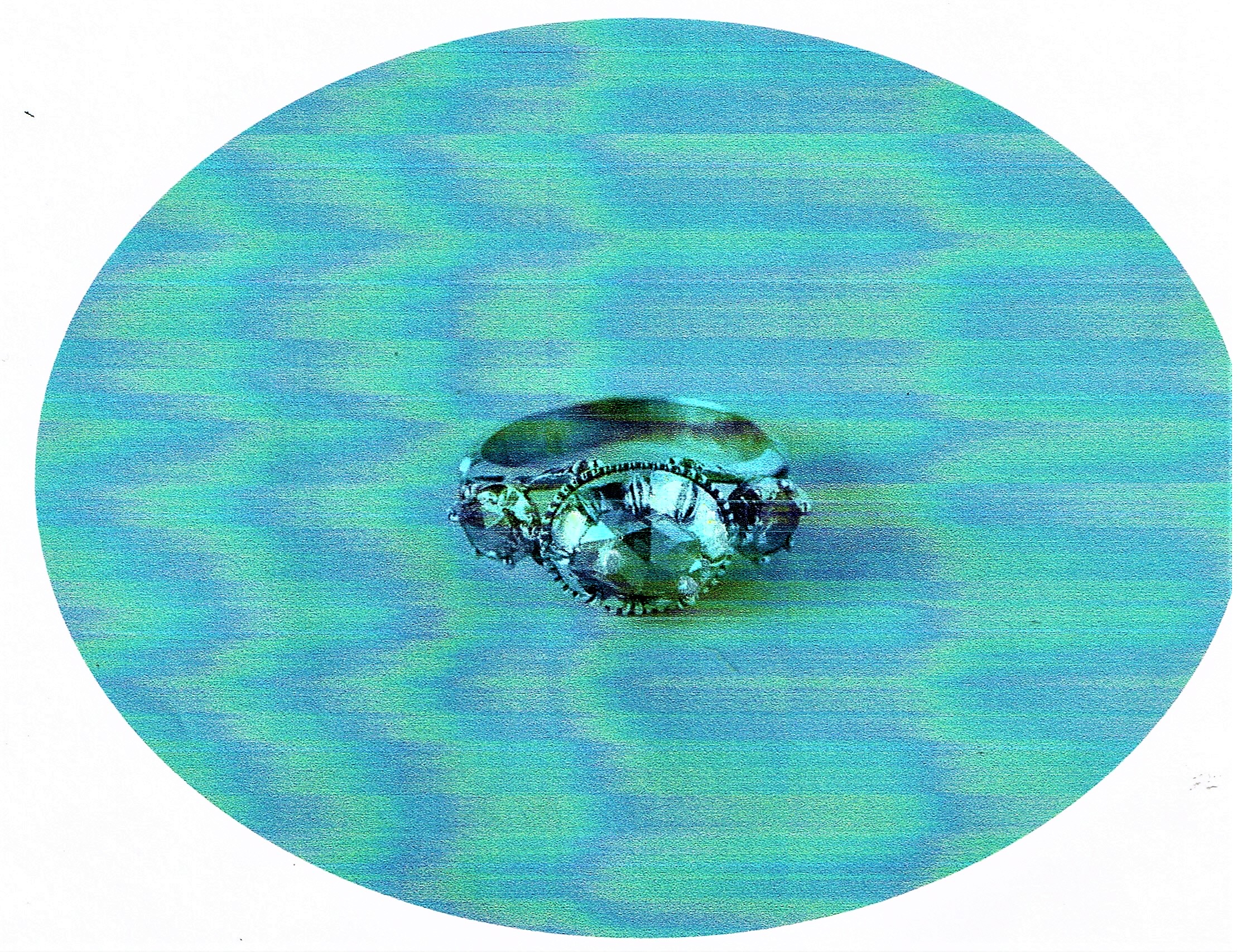
A friend is a gift you give yourself. (Robert Louis Stevenson)
BETWEEN CHESTER AND ME
Mom and her friends said Chester’s dad was nuts for sending him to an expensive private school after he failed third grade in public school. Again. Especially since the money he spent on out-of-parish tuition could have replaced that worthless pickup truck he drove. But I pretended I didn’t hear. Mom didn’t care what I thought anyway. She said I may be eight years old, but I could give out eighty-years-worth of opinion. Seems to me I wasn’t allowed to have one different notion about anything, much less too many.
“We get nasty notes about how much money we owe,” Chester told me, his mouth so full of crooked teeth, even I stared, and I was his best friend. “But Dad always pays. Late maybe. Just has to borrow a little once in a while.”
“So, doesn’t change a single game we play,” I said. “Uhm. You can’t come over today. I’ve got a doctor’s appointment, just for a check-up. See you at school tomorrow.”
I ran off before Chester saw the lie in me. I wish he wouldn’t tell me about his money problems. His dad’s dark shaggy beard and one pair of paint-spattered jeans told me he didn’t have much, unless he owned more than one pair of pants with a star-shaped tear in the knee with copper flecks of something on the seat. Chester wore old clothes like the ones we gave to the Salvation Army, things that were too shabby to wear, but too good for rags. Mom said I should never say anything mean to him. But I shouldn’t bring him home either.
“Stacey, Chester’s not all there. Do you know what I mean?” she said.
“Not all where?” I lifted the lid to the sugar jar and tapped the sides. I thought about sucking on one of the crystal chunks that fell into the center, but I didn’t really want it. Besides, it would fall apart as soon as I picked it up. Just like most of my arguments with my mother.
“Don’t pretend ignorance,” Mom said. “You never know what someone like that is going to do. Besides, it wouldn’t hurt for you to play with another girl now and then.”
I knew better than to argue anymore. I always ended up with extra chores if I did. But Mom didn’t understand. The other girls wanted to be fashion designers or actresses. Or they played with dolls in boring lace dresses and talked for them in voices that sounded like they’d been sucking in helium balloons. I never understood how someone could prefer fancy-pretend to football. Of course, some of the boys would think they had to be bosses. I hated that. Chester never played by those rules.
Once I broke a string on a brand-new gold yo-yo. I tried to tie the broken part back on but knew that wouldn’t work. I was just being stubborn and trying to prove a point about how I lost good birthday money on a piece of junk. So, I got mad and hurled the worthless thing at a fat old tree. Chester grabbed the two broken halves and covered his ears with them.
“Hey, Stacey? Look, my head’s winding the string.” He squatted down and stood up again until he got dizzy. Then he stuck his tongue out at me, and I laughed so hard I forgot to be in a bad mood.
In class, Chester would suck in air through his teeth and fold his arithmetic papers like an accordion. Sometimes his answers were so wrong the other kids laughed their heads off. Then it would take Mrs. Craftwood at least five minutes to quiet everybody down. But I wouldn’t laugh, even if Chester said something really funny, like the time he asked if the earth was hollow like the globe in the science room.
“Yeah, hollow like his head,” Jerry Freeman whispered. Then he stared at me. “Are you going to marry Hollow Head?” Every freckle on Jerry’s face flashed malice.
I tripped him when he went to sharpen his pencil. He bruised his elbow when he fell into another kid’s desk. I claimed it was an accident, but I didn’t look the least bit sorry. Mrs. Craftwood sent me to spend the afternoon in the principal’s office, and I had to sweep floors after school, but it was worth it.
Chester kept a tiny, gray velvet box hidden in his pocket. A ring with a big white diamond lay in a soft spongy space inside. He said it belonged to his mom. She died and went to heaven not long after he was born.
“You can’t touch it, Stacey,” he said. “Only I can do that ‘cause it belonged to my mom. I like to hold it and pretend she’s right next to me. Dad said she had hair dark as molasses and a voice that made the angels cry.”
He rolled the ring in his palm, then held the jewel to the sun, as if he could see more than a few sparkly places. Then he carefully put the ring back inside, and we ran to find swings next to one another on the playground. If there weren’t any, we climbed the monkey bars, and he never seemed to care that I always beat him to the top.
One day in the lunchroom, Mrs. Craftwood saw Chester take the ring out of his pocket. She dragged him to the principal’s office. I threw away the other half of my bologna sandwich and followed them. They didn’t close the door. I saw everything.
“This ring had to be stolen,” Mrs. Craftwood told Mrs. Austin, “because this boy’s father is incapable of affording something like this.”
Mrs. Austin glared at Chester. “Stealing is a sin, son. You should know that.”
After school when Chester’s dad got to the principal’s office I sat outside the office and listened again. I knew that he had a job in a big, important office a long time ago, but the company closed one day, and he never found another job like it. Then after his wife died, he moved into an old four-room house on the edge of town and did odd jobs now and then. Folks said he didn’t seem to care anymore. But when he charged into Mrs. Austin’s office, it was clear he cared about something.
He didn’t say anything while she and Mrs. Craftwood accused Chester of stealing. Then he asked if either one of them took a close look at the ring.
“Why should that be necessary?” Mrs. Austin asked.
“Because it doesn’t take much light to see the truth in that diamond. Let me guess. Came in a gray box. Smells a little like grass stains and peanut butter.”
“What are you talking about, sir?” Mrs. Austin said.
I had to cover my ears because Chester’s dad got so loud. And this time the door was shut. He’d slammed it when he went inside. Hard.
“Would a real diamond look as scratched up as the side of a matchbox?”
“Please lower your voice,” Mrs. Craftwood said.
“Not until you return his mother’s ring.”
I wanted to lean into the door and catch everything that went on, but then Chester’s dad started talking about how his wife deserved better, and so does Chester. Wasn’t so exciting anymore. Something I couldn’t explain made me feel strange, almost like I walked into the boys’ dressing room by mistake. So, I sat on the bench outside the door and waited for what seemed like a long time.
“Thank you,” Chester said as his dad opened the door. Simple, like nothing was ever taken from him in the first place. He didn’t even see me right away because he was too busy slipping the ring on and off of his finger.
But his dad’s face looked so red it must have hurt. I could have sworn it burned right through his whiskers. He stopped when he saw me. “Stacey, you’re a good kid. Chester’s crazy about you. Don’t ever get too big for yourself.”
“I won’t,” I said. But I thought that was a strange thing to say.
Chester never did come back. He went away to a special-needs school on the other side of town. Mom said it was time for me to start playing with normal children.
“What’s normal?” I asked, and Mom accused me of being smart aleck.
But this time I wasn’t.
After that, I decided it was best to be vague about what I was doing. Sometimes I went to Chester’s house and we explored the woods behind it. We hoisted ourselves into the trees with lower branches and hunted for birds’ nests and woodpecker holes. He carved our names into a young beech tree.
“Someday when we’re old enough, let’s get married,” he said. “We’ll come back here and I’ll draw the heart and put the date on it.”
“Maybe,” I said. “But let’s look for salamanders down by the creek now.”
“Okay. But why can’t we ever go to your house to play?”
“Mom said I had to play outside. She’s cleaning.”
“You said she was sick last time,” he said.
“That’s because all she does is clean. And that much cleaning would make anyone sick.”
I stopped going to his house as much because I got tired of lying. To Mom. To Chester. Then one day I told Mom I was going for a long bike ride all by myself. I went to Chester’s house, but no one was there. When I peeked into his house it was empty, blind-dark. On the way home I felt mean, like somehow, I made Chester move away. I stopped at our beech tree in the woods, took a sharp rock and etched a shallow, lopsided heart around our names. It didn’t look very good. I’m not sure why I did it. Playing house never appealed to me. And Chester and I were never boyfriend and girlfriend.
But when I went to my cousin Janet’s wedding that summer, I thought about what it would be like to be a grown-up getting married. Maybe just for that day I would be willing to wear a lace dress, one made by a silly third-grade girl who grew up to be a fashion designer. Of course, I didn’t want to marry just anybody. The groom needed to be special, someone like Chester, who could give me a fake diamond, yet be real inside.
originally published in Piker Press
Writers’ Store
Posted in humor, tagged appreciation, books, choice, encouragement, experience, humor, writing on September 21, 2024| Leave a Comment »

From there to here, and here to there, funny things are everywhere.
THE WORLD’S GREATEST WRITERS STORE
A new store just north of town, designed for writers, opened up this week. The size rivals IKEA, with rooms filled with every imaginable writing tool and solution, definitely at least a day trip. I needed to tie-up two subplots that had gotten kind of knotted. So, I set out to explore Writers Ultimate Solution.
The first floor opens to grammar, punctuation, anything basic. The second caters to all aspects of non-fiction: science, nature, current affairs, blog advice, and cooking. It holds a full-service cafeteria. Just to make a writer feel at home, a dietician sits next to the cashier and hands out rejection slips to those folk whose trays lack adequate nutrition.
The third floor is the poet’s friend. In fact, on the day I arrived, WUS had a three-metaphors-for-the-price-of-two sale, going on. Unfortunately, as it often is with sale items, two lines would fit, but add the third and it sounded like something out of a 1960s Beatnik coffee house. I guess I could use the lines in three different poems, but I didn’t want the cashier to think I was on drugs.
The fourth floor, the most crowded, specialized in fiction, just the section I wanted. It also looked and felt more like a circus. Clowns somersaulted from room to room. The Red Pony dropped something of himself in the hallway. And Curious George kept trying to lead me to the children’s section. “Another day. Another day,” I told him. Guess there’s a good reason why he has been around since the 1940’s. Signs in every room read: The fiction writer’s job is to entertain. The top level of WUS has been designed to stimulate your creativity. Instead, I got a migraine.
A door at the end of one hallway read: Excuses. By this time, I thought it didn’t seem like such a bad idea. Fortunately, I looked inside before I took a step. A cold breeze provided the first hint; there was no inside. It led to a mud pit at least six feet below.
“Our boss’s little joke,” an employee said when I backed into Moby Dick, not Ahab, the book’s main character. I was caught by the whale.
I ended up buying three ballpoint pens, and a half dozen semi-colons that will only apply themselves in the best-suited places—and I got them at a double-markdown price. Interesting that items were marked down so soon after opening. Hope that’s not a bad sign. Maybe it’s a good thing I didn’t grab one of the dollar-mystery bags, probably full of adverbs. My story still sounds like it was written inside a blender. Guess I need more than a superstore.
Published in Piker Press 10/17/22
After Summer Drought
Posted in poetry, tagged autumn, inspiration, nature, perspective, positive attitudes on September 14, 2024| Leave a Comment »

We don’t inherit the earth from our ancestors, we borrow it from our children. (Native American proverb)

AFTER DROUGHT SUMMER

Gray clouds leak a drop, then two
onto pavement, earth, grass, trees
a promise of rain, nothing more

as autumn leaves, brown, curled, dried,
fall long before their golds and reds mature.
More clouds gather and saturate the sky

into one gray mass, yet their efforts yield
only a few drops before wind drives them out,
and the stubborn sun

summons them into the air again.
A sweet gum allows tinges of red on one branch.
A maple opens a side to scarlet; an oak chooses yellow.

Statements of power. Courage. Survival.
Beauty born in scarcity,
then magnified by it.
My Rat Brother’s Freedom Mission
Posted in short story, tagged alcoholism, appreciation, choice, family, gratitude, inspiration, perspective, short story on September 7, 2024| Leave a Comment »
My Rat-Brother’s Freedom Mission
“I don’t understand you. You don’t understand me. What else do we have in common?” Ashleigh Brilliant
I doubt my brother even noticed that I faced the wall, a book to my face when he came into the bedroom. Randy and I weren’t exactly on brother-love, best-buddy speaking terms, not since I needed to hide my gas money in a locked box in the trunk of my ancient Toyota. Anything else of any value my girlfriend held for me. I slept with my phone and charged it as needed at her house.
Besides, I didn’t want Randy to see the expression on my face when he opened his sock and underwear drawer. He spent a lot of time in that drawer, and believe me, it wasn’t to change socks or underwear.
“What the…” He pulled out an empty bourbon bottle with a skull and crossbones picture glued to the front. I’m not much of an artist, so I copied and pasted one from clip art.
“You finally found your brand,” I said looking him full in his face, absolutely not a pleasant picture. He hadn’t shaved in weeks. His color mimicked a semi-rotten tomato. Except the tomato would have smelled better.
“This was not empty when I left it.”
“Are you sure? My guess is your memory is as long as a beer commercial. And that a drink serving is measured in bottles not glasses…”
“I am doing just FINE, Stan!”
“Right,” I said, sitting on the edge of the bed in case I needed to move out of the room quickly. At least he still knew his younger brother’s name. “I saw your grades. Congratulations, you almost made it to a 2.0 this quarter. You started the term with how many courses?”
“I’ll catch up. I’ll get that certification I promised Mom.” Randy was 28 years old, eight years older than I was. This time he decided he would go into radiology as a technician. Eventually. He plopped onto his bed instead of arguing further. “I just feel trapped right now. Don’t feel free. Need a change of scenery. Something.”
Nope, not trapped yet, I thought. Besides, you’ve had too much rat poison to see you are the one who set the trap.
Strange how he didn’t say one word about my editorial comment on the front of the bottle,. He only noticed that the bourbon was drained. I had flushed the contents down the basement toilet. Hope it didn’t damage the pipes.
He reached inside his wastepaper basket. We each had our own. His was full—fuller than I knew. An unopened bottle lay at the bottom. “Going out for a while. If Mom asks, tell her I’ll be back later.” He knew Dad wouldn’t ask. He had given up on Randy a long time ago. Once I overheard Dad tell Mom that she had gone through sixteen hours of labor with him. She could continue to hope. His part had been a lot easier, so he could say adios to the bum. Sure, Randy was a rat and a jerk, but I thought that was a pretty mean thing to say to Mom.
Randy waved goodbye. That was the last I saw of him until we got a call from the police two days later. My brother had blown more than twice the legal limit; then he passed out.
Mom screamed as she repeated something about blood all over the road. It happened to come from a large dog that had run in front of the car. A horrible picture. Fortunately, no other person had been with my brother when he was arrested.
No one. That struck me for the first time. He didn’t have friends. None that I knew anyway. He’d had a girlfriend or two, but the relationships never lasted long.
I looked for old pictures of Randy and me as we were growing up. There weren’t many. We didn’t have a large family, and no one was good at taking photos. He smiled in the earlier shots, but never in the ones taken since he hit high school. I wondered about that, but didn’t feel free to ask my parents. Dad had already cut him off. And Mom never talked about such things. The ten commandments had all the answers. Psychology was reserved for folk who talked to themselves and got answers in different voices.
When I came home from school one day a few weeks later Mom said she had good news. “Randy is going to an in-patient program. And if he graduates, he doesn’t have to go to jail.”
“All right.” I wasn’t ready to move my good watch and Grandfather’s saleable baseball cards back into the house yet. But I was genuinely glad to hear it.
Then, one night at about eleven in the evening I had turned out the light and climbed into bed when my cell rang. I usually look to see who is calling, but I was so surprised I just answered.
“Is this Stan Weeks?”
“Uh, yeah.”
“Sorry to bug you. This time of night and all. My name’s Shelby. I’m a new friend of Randy’s. From Elmcast House. I got sprung yesterday and your brother asked me to call. Was so nervous. I had to work up the courage.” The tone and inflection of her speech shouted uneducated inner city.
“Okay.” I wondered why she hadn’t called the previous day, but as she hesitated so often I could almost hear her gulp, I was shocked that she had contacted me at all. And that piqued my curiosity.
“You know…not many of us make it. Ten percent. Maybe. Took me three gosh-miserable tries. I ain’t proud of it. Your brother’s gonna make it up to you… and everybody. He said he’s really done wrong by you.”
“Glad he’s reformed,” I said, my cynicism leaking out and my grammatical sensor secretly tearing her apart.
“He’s been so honest,” she said, her words suddenly pouring out. “I mean it must of tore your family apart when that minister raped him when he was fourteen. Just a kid. Tender and bleeding. He didn’t know there was men that done that.”
I sat upright. My Ten Commandments family knew nothing about it. Our minister WAS God. Although as I remember him I didn’t care for his self-righteous tone. I couldn’t tell when he was reading Scripture and when he was reading the word of Reverend Knows-It-All. And Randy’s smile in the photos evaporated just about that time.
“Shelby?” my voice must have stammered.
“You okay, Stan?”
“Yes and no.”
“Did I say something wrong?”
“Not at all. Will you be keeping in touch with Randy?”
“You bet.”
“And will you keep my number, too?”
“Sure.”
“Good. Then let me know how Randy is doing. You, too.”
“Okay. Bye.”
My phone went black, like the darkened room. Silent. Like all these years had been. I wondered if Randy was awake or asleep. And if he had finally discovered freedom, whatever freedom meant to him.
originally published in Piker Press on March 31, 2015
 terrypetersen