Feeds:
Posts
Comments

Archive for the ‘Uncategorized’ Category

Most of us spend too much time on what is urgent and not enough time on what is important. (Stephen Covey)

 My husband, younger son, youngest granddaughter and I have traveled across two states to visit my 94-year-old mother-in-law. Daylight has barely replaced darkness as Ella climbs onto the foot of her great grandmother’s bed. Nana is awake; she greets her, and then closes her eyes again. Ella leans toward her. “Wake up!”

Great grandmother shows no sign of hearing. She sleeps most of the time. After Nana rouses she complains that the little girl was something of a pain. However, she doesn’t seem to hold a grudge. The two adore one another. I have no doubt that Ella sees into the older woman’s spirit and recognizes a need for a laugh or two before she moves into another dimension, whenever that time arrives. Nana was in hospice care, and then improved. She is one tenacious lady.

I have heard that people in the last stages of life appear to be unresponsive, but they hear every sound. I decide to be quieter as I work in the kitchen, bang fewer pots as I dry them, raise my voice only when absolutely necessary—or when I share something uplifting about Nana’s life.

I feel the spirit of late Midwestern autumn during this visit. The wind blows the last of the tenacious don’t-wanna-let-go-yet leaves from one yard to another. Most deciduous trees are bare, or sparse. The red and yellow patterns have already turned to a crisp brown, ready to be crushed underfoot, dissolving along with the experiences of past seasons. Winter is inevitable. Nothing lasts forever.

In Nana’s room Ella pretends to be a bear, growling as Nana responds with feigned fear. “Save me! I’m so scared.”

Wild Woman has replaced Wild Man, my name for her daddy as he was growing up. And we celebrate both past and present, even as time moves on an inevitable course. I wonder if time were unlimited how much of it I would savor, how much I would waste. At age twenty-five my youth seemed invincible. My head knew clocks don’t travel in reverse except in fantasy. But the days until my next vacation seemed as uncountable as slender grains of rice. Old age lived in the next century, an era beginning in the year 2000—as far away as Jupiter or Mars. Now that year has passed. I’m not sure when I will embrace the term old. But I know each moment is important and must be used well.

So I tell my mother-in-law that I chose to spend more time with my grandchildren because she had chosen to spend time with my children. She showed me how beautiful and strong the bond with a young person could become.

Ella smiles and reaches for me. We will be sitting next to one another during the drive back across two states. I couldn’t ask for a better traveling companion.


decorate life with colors

Read Full Post »

You cannot create experience. You must undergo it. (Albert Camus)

As I get into the car to pick up my number-one granddaughter from school I wonder how much energy I have left in this sixty-eight-year-old body. Hopefully, I’ll last through the hour and a half before Kate’s music lesson. However, Kate’s enthusiasm is contagious. She continues in high gear to tell me about school events, and she doesn’t soften the blow about the difficult moments. I am grateful for my new hearing aids and for a restaurant that isn’t exceptionally noisy as she tells me about unfair situations that affect other kids and how she discerns her part in helping. Her wisdom shows restraint as well as concern, the ability to know when to jump in and when to wait for a safer, more effective moment.

Every freckle on her face glows and I revel in her fresh beauty.

I am now awake, aware; chances to learn surround me. Sometimes those moments are pure gift, the opportunity to simply say thank you. My most recent short story at Piker Press, Return of the Goldfinch, was published one day before a long-time friend’s brother died. Judy had taken care of her brother in her home during his final days. The story comforted her. While I can be grateful for that, the greater gift is my awareness of a friend who gave her home to a brother who could give nothing of material value back. Judy gives because she is Judy. I am blessed because I know her. My spirit awakens as I think about her. She gave her brother the opportunity to fly from a weakened body. In peace.

My youngest granddaughter, Ella, has led me toward the narrower, higher path since the day she was born. I had the notion that I would spend my day writing to my heart’s content. Page upon page would pour from my spirit because I had just retired. Time could now be mine! A divine higher power had other plans. Ella was born seven weeks early, with Down syndrome; she would need two surgeries before leaving the hospital. A giraffe bed in an intensive care unit was her first home. Since her parents needed to return to work I was among the chosen caregivers. Not only did my spirit deepen so that I could write on a more effective level, I made a new friend—an infant who would become my teacher.

In fact, when Ella was barely crawling, my husband was watching a movie too violent for me. One scene came painfully close to my own experience. That long-ago incident does not need to be relayed  here, but as the drama unfolded I gasped as if I were the young woman on the screen, as if time had removed almost fifty years of my life in the flash of a movie frame. Ella climbed into my lap. She looked directly into my eyes as if to say, Look at me, not into the past. And I saw such beauty and compassion in my granddaughter’s eyes that I knew wisdom lived inside this child. I felt blessed to be in her world.

Yes, the narrow road ahead that involved her care would be difficult. Not everyone would understand that a child with special needs gives more than the cost entails.

Easy isn’t always better.

I suspect that if I had taken a nap instead of spent time with my oldest granddaughter on this ordinary Wednesday afternoon, I would have awakened groggier than ever. And this train of thought would have never begun.

I wonder what opportunities tomorrow will bring. But that is on tomorrow’s agenda.

conquer fear beginning of wisdom narrow bridge

Read Full Post »

Life is 10% what happens to you and 90% how you react to it. (Charles Swindoll)

Several weeks ago a woman at the Y’s Waterpark complained to me that I carried my granddaughter through an adults-only-time section a few minutes before that time ended. The lifeguard on duty apologized to me for her rudeness. Apparently she ranted further when her husband arrived. Although that same woman returned my intentional I’m-not-taking-this-personally smile later in the locker room, my heart had not forgotten the incident, and I had her pegged as a chronic complainer.

Now weeks later I see her again at the park. At first I avoid her. But, I do not want to limit the space I can move because of one person and a maybe-encounter. Besides, I could be wrong. The woman is in the swirling whirlpool center inside the walking channel. Ella wants to explore the shallow edge by the wall. The woman is sitting against one side. She is not facing us. When my granddaughter gets close to the woman I grab my little girl and begin several pretend games. We fly across a lake as birds; then we cross in make-believe boats, as if the area the woman fills were huge and not the space any one ordinary-sized human being can take up. Finally, Ella pauses and says, “hi.” At first the woman does not respond.

To be expected, I think, and then reach for my precious girl. Then the woman turns around. “You were here with your grandfather last week weren’t you?” she asks Ella in a pleasant voice.

Ella says nothing so I respond. “Yes,” I answered. “She was.”

“And we tossed ball together.”

I remember a small green rubber ball Jay brought last week. One week Jay takes an exercise class during this time; the next week I do. (Our first choice is spending time with Ella.)

“I think Ella remembers you,” I say.

And suddenly this woman and I are talking as if we were old friends. A little girl with very little language has taught me another lesson about being open to other people, not making snap judgments based on incomplete evidence.

“Have a blessed day,” I say as the woman leaves the Waterpark area. My day has already been touched by the extraordinary.

first impressions words to inspire the soul

Read Full Post »

There are no seven wonders of the world in the eyes of a child. There are seven million. (Walt Streightiff)

Ella runs into our house. Enthusiasm exudes from her being. She carries a present for her daddy’s birthday—from her. The package is about the size and shape of a pound of delicatessen hamburger; it is gift wrapped in her artwork.

Daddy Steve laughs. “She told me in the car what it was: coffee.”

Of course we can’t wait for the traditional present-opening moment: dinner and then a loud rendition of the birthday song, careful cake slicing that gets messy anyway, followed by ice-cream scooping. “Do you want to help Daddy open his present now?” I ask.

A spoken answer is unnecessary. Her jump into action is response enough. A bag of bold-flavored coffee appears under the wrapping. And Ella doesn’t know that her real gift is the love of a blonde five-year-old girl with a spirit that could charm a wolverine.

She will need that power soon. Ella was born with an A/V canal defect. Only half of her heart worked. Her surgery was successful. She plays with the same vigor any other young child displays. However, a routine echo cardiogram showed a blockage. It is causing no apparent problem now, but as she grows it will interfere. She faces open-heart surgery again after the first of the year.

Her surgeon has an excellent reputation. In these days open heart surgery is almost a routine procedure. However, the gentleness of her heart requires no repair. She draws people to her with gravitational power. She gives lessons: in patience, spontaneity, forgiveness, and resilience. Moreover, she charges no fee, only a willingness from her observers to change, to be aware of perspectives, to see hidden beauty that has always been there. Unnoticed.

I think about how I felt as a child as I stood, the top of my head at a grownup’s belly button. A higher stature seemed unreachable. Moreover, I felt perpetually unworthy. An adult was another species, a creature-from-another-world who didn’t spill juice or make too much noise in church. The importance of rules of behavior was ingrained into my soul long before I could read or prioritize. So, life’s directives were vague, negative, built on shame.

Since then I’ve learned to see differently—I don’t live in the past. It’s simply a place to visit now and then. However, I make sure that my grandchildren and I live on the same planet and that we learn from one another. As an adult I may have the advantage of years, but my granddaughters offer freshness.

Ella has Down syndrome. Many people may look down on her because of it. But those who look into her eyes know that she offers all that she is—and she doesn’t even know that is unusual.

when a child gives you a rock


Read Full Post »

­­­­­­­­­­­­­­­­­­­­­­­­­­­­­­­­­­­­­­­­­­­­­­­­­­­­­­­­­­­­­­­­­­­­­­­C­­­­orrection does much, but encouragement does more. (Johann Wolfgang von Goethe) 

“I have to read to a grownup for homework,” Rebe says. Her sister, grandfather, and the television create a distraction so we go to the computer-toy room, door closed, her idea. She lies across a pillow on the floor and I sit on the rug. She can’t see my smile as I revel in her first-grade-cadence: the words she amazingly sounds out, and the ones I’m surprised she misses. To me the particulars are not as important as the privilege of hearing her enter the world of books.

I stroke her hair. It’s thick, wavy, a dark red, but it isn’t any physical feature I’m admiring. I relax in this grandma-granddaughter moment.

“You have to sign this paper and write how I did when I’m finished,” she tells me.

At my granddaughter’s age I read extremely well. However, I doubt that I would have been open enough to encourage anyone to write a solitary word of criticism about my performance. First-grade Terry wasn’t that secure.

Of course I also remember being on my own most of the time, too, as far as achievement or anything else was concerned. My parents were too busy with their own chores, with staying out of debt, with the day-to-day struggles of existence. Perhaps that was the way of the times. Children were meant to be seen and not heard.

I loved my maternal grandmother and was absolutely certain she loved me. She made an aqua dress in my size based on a design I’d drawn and then left lying around. The dress was a surprise, created without a special occasion. However, snuggling and compliments, sharing of our ideas and lives rarely happened.

My granddaughters and I have options. We pretend, swim, crack eggs for breakfast and jokes on the way home from school. When the playground isn’t crowded I have even been known to climb next to Rebe on sturdy equipment. I think about that as I watch her close one thin book and open another. She is doing well. Perfect isn’t necessary—not the way I thought it needed to be more than a generation ago.

“I’m proud of you, Rebe,” I say. And I hope she knows those are not cut-and-paste words suited for any occasion. A forehead kiss serves as a kind of softened exclamation point, something like interpreting expression in dialogue, the kind the reader needs to discover—learn as she goes and grows.

 raise words not voice Optimism Revolution

Read Full Post »

If you see the world in black and white, you’re missing important grey matter. (Jack Fyock)

Ella’s charm draws to her at least seven children from the YMCA pool.

“Will you play with me?” one girl asks, and Ella nods.

“What do you want to play?” the girl asks.

Ella hesitates.

“How about pretending to be frogs?” I suggest, slowly stepping away, giving the kids space around my precious granddaughter.

“Yeah,” this leader girl answers. “Frogs!”

“Hop. Hop,” Ella says moving along in the shallow water.

One boy with black curly hair shows me his swim vest, his ebony face bright with pride. “I brought it from home.”

“Looks great,” I tell him.

“Are you her mom?” one blonde girl asks me. I grin, grateful for her edited eyesight.

“No, I’m her grandma.” I wonder if grandmothers are supposed to hop like frogs in shallow water.

One look at the clock tells me this time will be short. Ella and I need to meet Grandpa in the lobby in about twenty minutes for our picnic lunch before Ella goes to afternoon pre-school. “Ten minutes and then we have to get dressed,” I tell her. “I brought tortilla chips today.” They are one of her favorite snacks. I hope they are enough encouragement to get her out of the water.

“No,” Ella responds.

“She can stay here,” one of the children offers.

I smile at the boy’s innocence.

“Is she a baby or does she just talk like one?” another boy asks. His voice indicates no condemnation, only curiosity.

“She isn’t a baby…but she is learning…” I answer, without any hint of censure in my voice. I don’t explain the what-or-how-of-her-struggles-or-accomplishments. The boy doesn’t pursue the issue with further questioning. Besides, I’m not sure how to answer. Each person learns at a different rate anyway. Ella has been reading for months, at least. Someday I hope to catch up with her when it comes to acceptance of people as they are. However, fine-tuned tongue movements and some motor skills may take her a bit longer to master.

Our little girl is a fresh five-year-old. She has not yet faced the full brunt of prejudice inherent to the life of anyone born outside the so-called norm. The little folk in the pool have not yet learned to recognize the facial characteristics of Down syndrome. Besides, our granddaughter wears them beautifully with her sunshine-white hair and huge blue eyes. They defy the brightness of a perfect summer day. Her smile could melt an iceberg. The children seem to recognize that gift intuitively, knowing she is real and a dependable friend.

The children wave good-bye. Our Y friends stop by our lunch table to say hello, more to Ella than to Jay and me. And that is okay. Ella isn’t worrying about what happens tomorrow—or the next day. She cries when she needs to cry and the tears end easily. She laughs when she recognizes the humor in life. And that happens often.

I’m not saying that every day is easy. But few things that are worthwhile come without effort anyway. I guess Ella is my constant reminder that the world in black-and-white misses out on a lot of color—as well as grey matter. Later I have the opportunity to leave the house to go to another exercise class, if I want to go. But, I don’t want to miss an extra minute with Ella. Not today. She may have a life lesson I will need to use later.

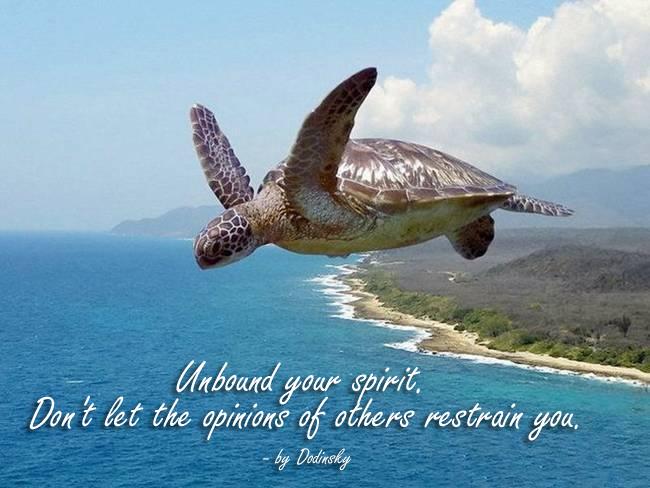
flying turtle

Read Full Post »

Innocence is one of the most exciting things in the world. (Eartha Kitt)

My old cell phone hasn’t had a battery for who-knows-how-long. However, five-year-old Ella picks it up and brings it to life with her imagination. She mimics the motions she has seen in adults, complete with subtle movements and voice tones. When her conversation has ended she closes the flip top slowly, deliberately. I’m the follower in this scenario, the fortunate observer. Ella understands but is not able to fully verbalize what she knows.

I guess the phone has rung again as she says, “hello,” hands the blackened screen to me, and adds, “It’s Dy,” short for Daddy.

She grins when I say that he is playing baseball and not at work. Daddy is working, but explaining an office setting to a five-year-old doesn’t create fun play.

“Should he stop at the store and get bananas on the way home?” I try for mock seriousness and hope she buys it.

“Yes,” she answers.

“What else?”

“A bike,” she adds.

I refrain from laughing. Nothing seems random in a child’s world. After we finish with several quick turns saying hi, bye, and what-are-you-doing-now, we enter a pretend playground where Dora, the Explorer; a tennis ball; and a plush ladybug all take turns going down a plastic slide. Reality is suspended for a while.

And I feel strangely free, privileged, invited to this spot on the floor surrounded by toys on an ordinary Thursday morning.

The folk who read my blog regularly know that my youngest granddaughter has Down syndrome; Down syndrome does not own my granddaughter. She continues to play as I get her ready to leave for the day. I have trouble getting her shoes on properly. They need to give her adequate ankle support. She seems to understand my frailties and doesn’t fuss. I thank her for her patience and wonder how much she intuits. This little blonde with the huge blue eyes is amazingly easy to love.

I envision her at Daycare after school some day as she plays with a toy phone. Does she ever say, “Hi, Mawmaw?” This isn’t the kind of thing I am likely to know. My hearing isn’t that good within the same room, with amplification, much less from one part of town to another. Nevertheless, I smile thinking about it.

She smiles back now. That’s more than good enough.

the world as it should be

Read Full Post »

 Expect trouble as an inevitable part of life, and when it comes, hold your head high, look it squarely in the eye and say, “I will be bigger than you. You cannot defeat me.” (Ann Landers)

Four more hours to wait at the Philadelphia airport. September 25, 2014. Our last flight landed around noon. Although the numbness settling through me makes time seem like an illusion. Jay and I sit in the restaurant area. I read, The Art of Racing in the Rain, by Garth Stein, and my husband loads our vacation photos onto our faulty laptop using Wi-Fi that fades in and out with the reliability of a light bulb with old, frayed wiring.

At least my book is riveting, a tale told from the point of view of a dog with twice the wisdom of a human being. Enzo approaches the end of his life and anticipates re-entry on the earth as a man. The notion does not come from his imagination. In Mongolia a dog is buried on top of a mountain so that no one can step on his grave. If the dog is ready, and worthy, he can return as a human being. Enzo is ready. He has learned and served well.

I would like a taste of Enzo’s understanding about the meaning of life as I stop to look at my watch, again, and then see how my mate is faring with our laptop. An attractive young woman pauses close to the table where I am sitting. She surveys the area.

“You can sit here,” I say gesturing to the chair across from me. “I’m just taking up space while reading. We’ll be here a while. Our flight has been delayed. Twice.”

“Mine has been canceled,” she answers.

“Don’t you just love it?” My question is both rhetorical and sarcastic. I don’t expect a response.

“No,” she answers. “I have an appointment at eight tomorrow morning.”

I mark my place and close my book. I learn that this young woman has an appointment to get into medical school at Yale. She asks how far it would be to drive to New Haven. Jay looks it up on the computer—it responds in almost reasonable time: a three-hour drive.

The young woman says she hasn’t eaten all day; it is now after 4:00PM. She chooses a salad and eats first before calling for a rental car. I hear her name as she calmly makes arrangements on her cell phone with the rental service, but I’m not relaying that information here; I don’t have her permission. However, I choose to remember it because I connect her with the unflinching control she exhibited during an untenable situation.

“Thanks for your help,” she says.

“You are welcome.”

“I guess my little drama puts a perspective on your wait.”

I smile, the toothless kind that holds back more feeling than I want to show. The wisdom I discover in “Racing in the Rain” stands before me in a young woman with both determination and perspective.

“During your interview you can tell them you have resilience,” Jay says.

I nod, wishing resilience were as contagious as a virus. I should be the one thanking you, I think as she disappears down the long, echoing hallways of the airport…

dancing in the rain PIQ


Read Full Post »

Art is partly communication, but only partly. The rest is discovery. (William Golding, novelist, playwright, poet, Nobelist, 1911-1993)

If this airplane were a roller coaster I would be clutching the sides of my seat and gritting my teeth until they were ground to the gum line. I would not be screaming because it multiplies my terror instead of dissipating it. The edges of cliffs or even a mezzanine with a low railing are not my friends. However, as I buckle-up inside an airplane I’m exhilarated, not intimidated. As the plane rises, surreal beauty appears outside the window. Reality takes on a different form when seen from above the clouds. Neat. Manageable. Set into squares that mimic a child’s crossword puzzle—with interchangeable pieces.

The outline of streets, trees, buildings, livestock and lives melt away. I take a picture from the window shortly after we take off from the Dayton airport, the beginning of an adventure, also called a family wedding and vacation.

The scientist could explain the view below in exact, predictable, discernible, terms. I value learning about how the universe works. However, my natural perception tends toward the artistic and spiritual—I am viewing the metaphorical.

I look at the vague blocks and circles of green or brown below. They remind me of rigid opinions. Whenever people are lumped together behind a false label, faces disappear: all poor people are lazy, sloppy, and ignorant; the individual born with a disability couldn’t possibly have talents. All Republicans are money-hungry; all Democrats are fanatical leftists. But, I don’t want to stay with the negativity of false images, even if the metaphor feels valid.

So, I look into the circles and blocks of color below and discover unity despite chaos. Destruction, construction, gardens, landfills, saplings, boulders, sewers, fresh water, predators, and saints join to form uniform patterns. I consider the value of relaxing and letting go. I can never be a pseudo grand-puppeteer. I believe a Higher Power exists; I suspect I’m not suited for the job.

The flight attendant begins the standard safety instructions. Our journey through the sky continues. In a few hours the action below will reveal itself again. I pray to step into the confusion of the next airport with a sense of confidence, with a knowledge that all can be well in its own way. I am a part of the universe; the universe is a part of me.

air shot


Read Full Post »

Do what you can, where you are, with what you have. (Teddy Roosevelt)                      

I am in the process of returning the smaller items to their place in our house after our floors were refinished: the good dishes, books, our beloved wooden bird collection, and family photos. Our second floor storage area is temporarily in danger of mimicking scenes from Keepsake, by Kristina Riggle. Trish, the main character, is threatened with the possibility of losing custody of her son, injured by boxes stacked to the ceiling—although she will not admit that she is a hoarder. She doesn’t have time to organize. She tells her son, “Mommy isn’t perfect.” Her son accepts their life as normal.

No one, fictional or shouting into a microphone over public media, has arrived at a be-all, know-all state. My husband and I could have hurried less when we shuffled our possessions out of the way of the going-to-be-there-tomorrow work crew. However, we were also packing for a trip to the west coast as well as babysitting for our youngest granddaughter. Now I look at the boxes, stored by what I could name the Helter-Skelter-Give-It-To-Us-And-We’ll-Lose-It Storage Company­­­­­­­­­­­­­­­­­­­­­­­­­­. Where should I start? One step at a time seems the only way to go. If I attempt to embrace the whole I could give up before beginning. I have decided to simplify, choose only a few items for the windowsills, breakfront, and coffee table. But which items?

To discover what matters and what doesn’t—this is my current focus. As I read Riggle’s story I see layers unveiled: dirty corners inside rooms and hurt corners inside lives. I can view a situation and think I know what is there, yet be unaware of how the essence of it works. Deciding what goes where is relatively simple; why people do what they do may or may not be.

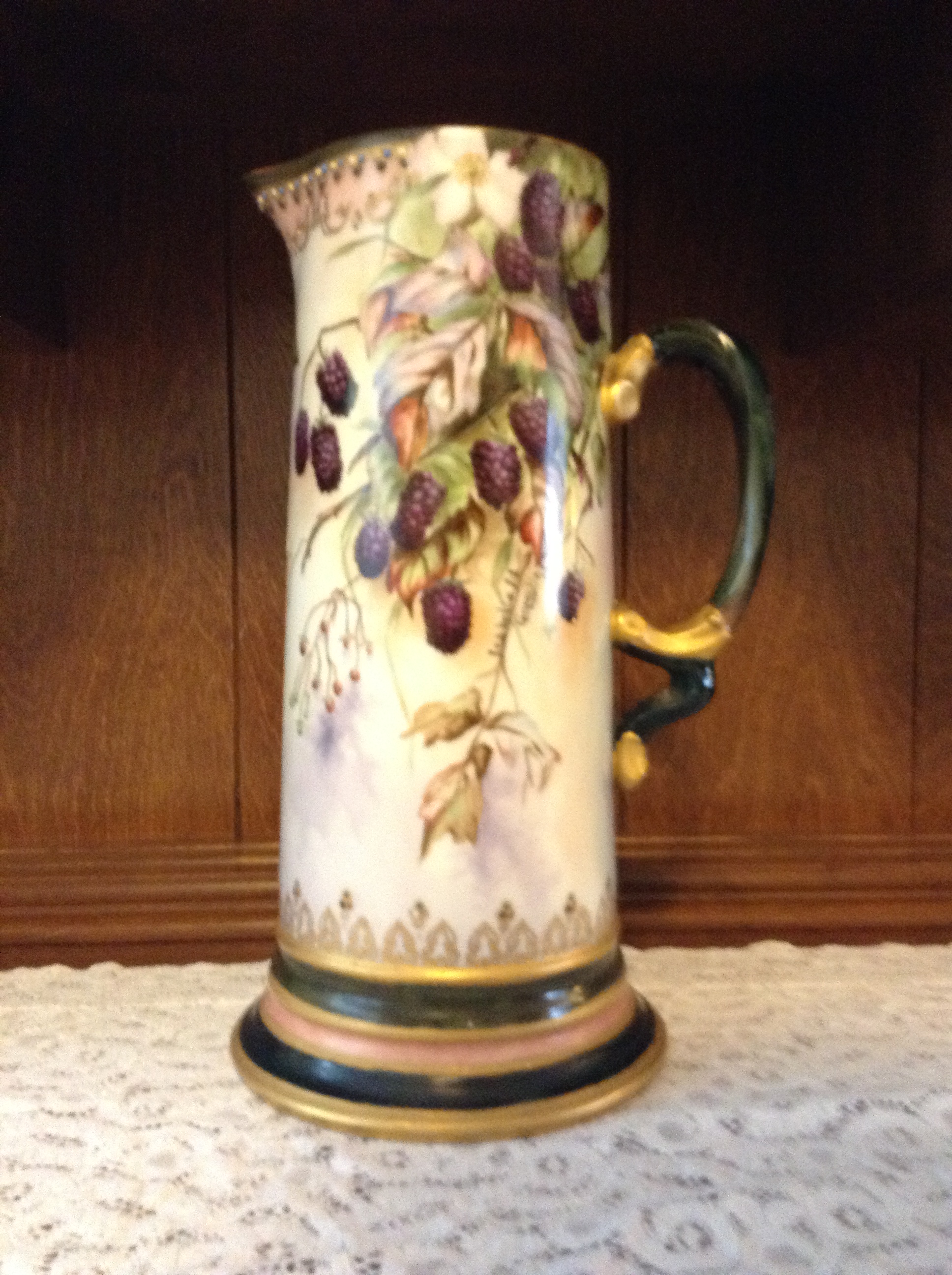
I decide not to rush. The need is no longer present. The floors are finished and gleaming. On the haphazard second floor I am mining for gold; there is treasure in this pile of stuff. In a corner I find a pitcher painted by my husband’s grandmother. I never met her. She died long before I dated my husband. Her work is exquisite. She stopped painting after she married. As an individual with a creative nature I am saddened that she saw it as an interference in her role as wife and mother.

There is no point in investigating what cannot be changed, except perhaps through a wildly disguised fictional story. Her beautiful pitcher hid on top of our breakfront for years before we had our floors refinished. I decide to give her work prominent placement, closer to the bright floor, to where we live—a metaphor for cleaning-up the basics first, choosing the best and starting from there.

As I position the art on the open surface I pray that I live each day well enough that I leave something good in a corner that repels the dust and shines out.  Distant tomorrows are not my business. Using this moment well, is.


Isabelle's pitcher


Read Full Post »

« Newer Posts - Older Posts »