September 29, 2015 by terrypetersen
Life isn’t about getting and having, it’s about giving and being. (Kevin Kruse)
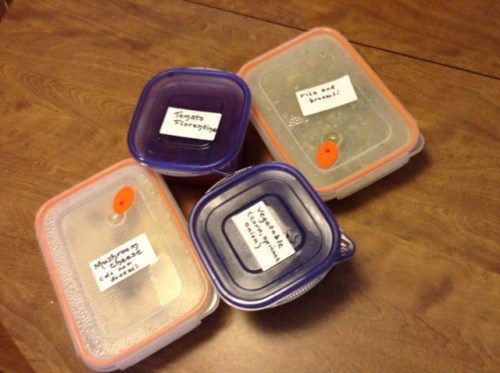
Our friend, Tom, likes homemade soup. So I am making several varieties for his birthday gift. Unusual? Maybe. But I went to college with Tom’s wife, Linda. The four of us have grown through both joy and trials. We now have grandchildren; an off-the-shelf purchase doesn’t seem adequate. So, I’m sending him healthy food, a tangible wish for long life and tomorrows filled with celebrations.
My husband and I did buy a one-hundred-percent-practical item, an insulated Tervis cup. He will be happy with it because he is a grateful person. But soup takes time to create flavor. It sends out a wholesome scent throughout the house.
Homemade soup is symbolic of the time a friendship takes to build, to develop into something unique. Linda and I were part of a larger group in college. My mother told me that another relationship I had would eventually fizzle out. We didn’t have a lot in common. But that Linda and I would be friends forever. Mom and I were not close, but she recognized quality when she saw it. And Linda’s capacity to give seemed to have enormous potential. Mom was right-on.
When Linda met Tom I knew the mix was right. My husband Jay liked Tom, too. Friendship soup was about to brew.
Usually when I make homemade soup I use our small crock-pot. Then I go to exercise class, shop, clean, or write, and let a low electrical setting do the work. Today I fill the largest pot I have with meat and seasonings and simmer the mix on a back burner. I watch the pot to make sure the boil is steady and that the mixture doesn’t burn or overflow.
Since utopia is fantasy everyone’s life sticks to the bottom or boils over. Eventually. I had a pulmonary embolism. Tom and Linda have experienced crises in their lives as well. Our strengths have survived.
Tom is the consummate teacher. He retired and then returned at the same high school under the public school system—not because he needed to do it—because he loves to teach. He earns less yet works as much if not more than he did before.
Tom’s love of teaching does not appear in his classroom as soft and fluffy. In fact the students see him as a hard-liner. He prepares them for real life. Although they may not have the maturity to recognize it. Yet. To a kid, homework seems pointless. Good teachers know the outside-the-classroom exercise gives the instructors even more to do. The work is for the student’s benefit. The world is not necessarily forgiving. Even in the wild, the animal that decides to skip a day of hunting will go hungry that night.
To continue to persevere despite an atmosphere of apathy shows integrity. I applaud Tom for it.
The soup takes hours to boil, cool, and then boil again into tomato, cheese, vegetable, or rice varieties. But I enjoy every minute of the process.
Giving and being, that kind of success is possible for almost anyone.
Posted in positive thinking | Tagged acceptance, appreciation, choice, determination, encouragement, friendship, homemade soup, homework, inspiration, intangible gifts, Kevin Cruse quote, perspective, positive attitudes, teaching, Tervis cup | 4 Comments »
September 22, 2015 by terrypetersen
You build on failure. You use it as a stepping stone. Close the door on the past. You don’t try to forget the mistakes, but you don’t dwell on them. You don’t let them have any of your energy, or any of your time, or any of your space. (Johnny Cash)
Somewhere around two in the morning I waken with a throbbing right hand. Did I roll over onto it? Did my sleeping body drift into the past and forget that arthritis rules my right thumb. Inflammation tells each movement what it can do and what it can’t. And it is a strict taskmaster.
Of course I rebel. I have writing projects to complete, and the cooking, cleaning, and laundry don’t do themselves. Fantasy appears only in story form. Even on the written page reality intervenes. Sure, I can invent a character, a girl who floats into the air at will. However, if she levitates at the local Seven-Eleven havoc will appear, unless, of course that is part of the plot.
A cold compress helps my hand. It tells it to stop complaining for a few minutes anyway. Somewhat. So does calming thought. But sleep does not return. I get up at four and begin to write, trying to embrace the silence as a gift. I add a page to my next novel, then another. This does not mean they won’t be backspaced later. A story has progressed. The missed sleep will demand to be repaid later. For now I take advantage of the moment.
The ache reminds me that I am alive. Fully. In this moment. I’m told this is the most common form of arthritis. Osteoarthritis. As my parents, aunts, and uncles told me: “It won’t kill you. You’ll just die with it.”
Finding someone with more serious problems is easier than I would like. I’ve been praying for a young friend who is expected to be in intensive care for longer than the two weeks originally expected. She, too, is a writer. And a reader. Her security is a book resting on her chest along with the ambiance of IVs, monitors, and an existence where pain owns the building. She has had two surgeries. Complications continue. So far her miracle begins with survival.
A child close to me has a friend who died of a rare inherited disorder; her sister has the same disease. My little friend is reluctant to talk about her grief. So I cannot reveal her identity. Life and joy do not circumvent difficulties. They travel through them.
The sun peeks through the window of my office, also a toy room, the place where my grandchildren and I play. The rays will find family pictures, disorder, my half-empty coffee cup, and possibilities I don’t see yet.
Sure, I would like to take the brace off my hand post-miracle. But I’m not going to count on it. However, I haven’t typed the ending to my story yet. That choice isn’t mine anyway.
seeing the inside brightness

Posted in positive thinking | Tagged acceptance, appreciation, childhood innocence, choice, determination, encouragement, expecting miracles, grandchildren, gratitude, inspiration, Johnny Cash quote, patience, perspective, positive attitudes, serious illness, wisdom from unexpected places, writing | Leave a Comment »
September 15, 2015 by terrypetersen
The voyage of discovery is not in seeking new landscapes but in having new eyes. (Marcel Proust)
Ella is scarcely buckled into her car seat after kindergarten when she dumps out her backpack. “See,” she says opening a black binder. “My homework.”
“This is mine,” she adds showing me a page with squiggled lines of crayon. “I color.” Papers fly all over the back seat. I grab them. My juggling skills need practice. Jay is driving. I am sitting in the back seat with Ella—not to spoil my granddaughter, but to spoil me.
She turns to an earlier page. The paper clip sealing those completed pages flies off. I have no idea where the clip belongs, even if I could locate it on the dark floor. Chances are her mommy will know what to do. For now I gather the loose items into Ella’s backpack and ask our granddaughter to pretend to be the teacher. I will be the student.
She points to numbers one through ten and identifies them in a clear, I-know-this voice. If I ask her to repeat the lesson she will refuse. Either I catch it the first time or lose. Ella will not perform. She has been reading phonetically for over a year. On her own terms.
See-what-I-know is not in her repertoire.
Eventually, perhaps, she will learn how to play the going-to-real-life-school-game. For now I try to discover what she understands from what I can discern. Not from what I assume.
I kiss her on top of her white-blond head. “Want to go to the park?”
“Playground,” she answers.
I smile at an even-better-than-yes answer. She has chosen a synonym.
“You’ve got it!”
Our little girl may carry an extra chromosome, but she sure isn’t a syndrome. Yes, it may be easier to say Down syndrome child—but it isn’t accurate. She doesn’t fit into a category, a label. She has blue eyes, a winning personality, straight blond hair, the flexibility of a wet sponge, and Trisomy-21. She has the syndrome, but it is only one small part of who she is.
And I wouldn’t want her to be anyone but Ella. She reminds me of life’s priorities. They live in her spirit. Because of her I have the opportunity to become a better person. A little bit at a time.
We learn together, taking turns as teacher and student. Student and teacher…Graduation isn’t on the agenda. We both continue to grow.

Posted in positive thinking | Tagged appreciation, childhood innocence, choice, determination, Down syndrome, encouragement, experience, family, grandchildren, gratitude, inspiration, Marcel Proust quote, perspective, positive attitudes, respect for all people | 2 Comments »
September 9, 2015 by terrypetersen
The art of life is a constant readjustment to our surroundings. (Kakuzo Okakaura)
“Are you hot in here?” Jay calls from the living room.
I’m not. But warm air rises and my body doesn’t reach that far off the ground. Besides, my short frame doesn’t want to leave the frame of a bed. I spent two hours in the deep end of the pool at the Y and then went out to dinner with some of Jay’s family. My idea of a great vacation day. Now I am ready to revitalize—from a horizontal position.
“Well, the thermostat reads eighty degrees,” Jay announces.
I’d like to say he needs new bifocals; his vision is A-OK.
This is not a good sign. My headache, the one that develops at four in the morning, doesn’t help. The heat inside my skull battles with the heat in the air. So far, no winner.
Hours later we discover our cooling system has a leak. So does the checkbook. Service calls on a holiday cost extra. I have grown so accustomed to comfort that I didn’t realize how old the system was. It will make it this year. Probably. Next year? Maybe.
I have an incredibly blessed life. Sure, I’ve experienced trials. I didn’t think I would make it through some of them. But, that was yesterday’s vision. I don’t live there. Nevertheless, remembering what it was like during the ugly times helps me empathize with people who walk through them now. Sometimes they barely breathe from one moment into the next. Walking isn’t necessarily an option.
So I guess trials have their purpose, too. Comfort from someone who has existed on cushioned silk is empty.
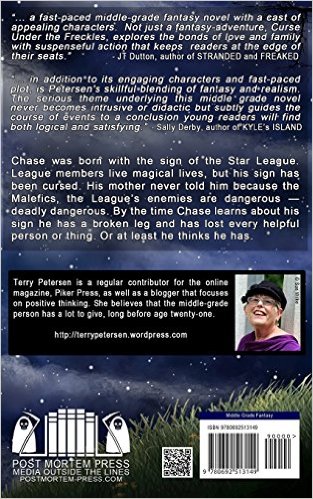
Cool air flows around me. It is a gift. I celebrate the luxury and at the same time wish I could spread it around, extend the temperature control into a troubled, ugly, world. I pray that I stop taking what I have for granted. Give more. Complain less. A constant readjustment. At least until I reach perfection. And that isn’t on my to-do list. Even into a fantasy world like the one I created in “The Curse Under the Freckles.”
Even in magical realms there are limits.
Readjust…readjust…readjust…

Posted in positive thinking | Tagged acceptance, appreciation, determination, encouragement, experience, gratitude, humor, inspiration, Josh Bullings quote, Kakuzo Okakaura quote, perspective, positive attitudes, The Curse Under the Freckles by Terry Petersen | 1 Comment »
September 2, 2015 by terrypetersen
When will you learn that there isn’t a word for everything? (Nicole Krauss)
Ella has had enough play for the evening. Daddy is playing in a softball tournament. His team won the first game and the second is in progress. She doesn’t even want my iPad, usually a sure thing. She eases into my lap as we sit in the concession area and asks for her friend Nona. I didn’t see the little girl during the first game.
Nona is years younger than Ella. But our granddaughter doesn’t limit her friendships to children her age. Nona has a sparkling personality. And she has inherited artistic skills. I suspect that she and Ella communicate on non-verbal levels, through action, color, play. Little people see more than adults realize.
artwork by Nona Adams-Jones

Ella puts her head on my chest. I straddle the hard bench and I’m amazed at the length of time my senior body remains still without stiffening into one four-foot-eleven-inch cramp. Something innately beautiful in Ella softens me.
Simultaneous loud conversations merge into a rumble. Ella’s arms are covered with dirt from the playground area. Her hair could use a brush. At the table across from me someone spills a beer into peanut shells on the concrete-slab floor. The noise and distraction don’t stop my granddaughter from falling asleep. I can’t take off her glasses without waking her.
This frozen-grandma scene would not appear to be pleasant. Nevertheless, I choose to remember it—every detail. I have no desire to join the laughter surrounding me. I would rather savor holding this blonde little girl, recognizing the trust she has in me, basking in her unconditional love. Another kind of artistic moment.
Soon she will awaken, sleepily, and see Daddy. He is her world. She is excited to give him her coloring page from daycare. I will give up this moment soon enough. For now there is no need for words. I remain still. Privileged. The grandmother of a girl with Down syndrome and up gifts.
Art comes in all forms. Sometimes words fail when they try to capture gifts that develop and change as this moment eases into the next.
shirts from past celebrated Buddy Walks
My husband and I wear these often as we watch our Ella grow.

Posted in positive thinking | Tagged acceptance, annual Buddy Walk Cincinnati Ohio, appreciation, childhood innocence, children's art, Down syndrome, encouragement, experience, family, grandchildren, gratitude, imagination, inspiration, Nicole Krauss quote, patience, perspective, positive attitudes, wisdom in unexpected places | 3 Comments »
August 28, 2015 by terrypetersen
Life is like a prism. What you see depends on how you turn the glass. (Jonathan Kellerman)
The four-syllables in mortality sound less harsh than the one-syllable, no-coming-back word, death. I roll both terms through my brain. I may be a senior citizen, but at age 69 I play on the floor with my grandchildren. And I get up again without complaints from my knees. I can tread water for well over an hour before my bladder says it is time for a break.
In many ways my success in life has just begun. “The Curse Under the Freckles” is available online. I just found out that it is also available at Barnes and Noble. As soon as I receive copies I will schedule local signings.
But the finality notion arises because my husband and I sit in a cemetery office—as we make our own funeral arrangements. We are choosing the greenest options, as well as the cheapest-possible. Something like trying to find a bargain at a high-scale store without gasping at the sticker price. Green burial may be our choice, but green cash is disappearing from our savings.
However, we do not want our sons to add hassle to their lives. It comes to everyone and more is unnecessary. I’m amazed at how comfortable I feel. Maybe it’s the outgoing personality of our planner. Maybe I’ve learned to savor life now.
I’ve never organized a party where I knew I would not be invited—well, except this last one where I will wait on the sidelines for incineration. (Hopefully only the earth version, as if I had the slightest vision of the surprises on the other side. Although I choose not to anticipate bizarre visions.)
This moment is not morbid. In fact, I send a message to my sister to tell her she needs to keep her gorgeous voice intact. When she is in her late eighties and I am about one-hundred and something I expect her to sing at my memorial service. I leave the message with a vague reference saying that I will keep in touch. About what? The funeral or my next grandchild story? She catches the humor.
The sun shines and a gentle breeze has pushed the August heat out of the way for a while. Our lives are not perfect; no one’s is. But the grounds at Spring Grove are beautiful. I savor the lines in my skin the way I celebrate bright flowers contrasting gray rock.
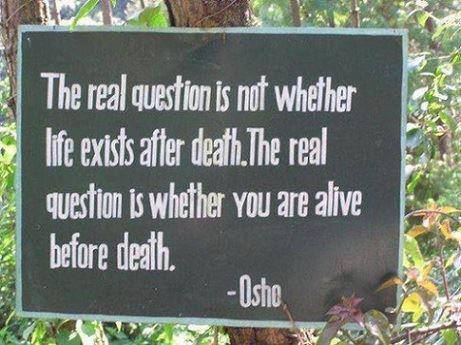
I’m not sure I could honor beauty if I had never seen its opposite.
Peace upon all wherever this moment leads you. I pray that it leads you into a more powerful life.
Posted in positive thinking, Uncategorized | Tagged acceptance, appreciation, choice, experience, funeral planning, gratitude, humor, inspiration, intangible gifts, Jonathan Kellerman quote, Osho quote, perspective, positive attitudes, Spring Grove Cemetery, The Curse Under the Freckles by Terry Petersen | 2 Comments »
August 22, 2015 by terrypetersen
“What makes the desert beautiful,” said the little prince, “is that somewhere it hides a well…” Antoine de Saint-Exupéry
As I study Philip R. Rogers’ powerful rendering of my main character in “The Curse Under the Freckles” I recall the bottomless well when the story began, and the empty buckets that came to the surface. “The Curse Under the Freckles” can also be found at Joseph Beth online.
When Chapter One appeared in my first draft the tale had a different title as well as an older audience. I wanted to take a third-grader’s vocabulary and write a book for seventh graders. Although my granddaughter with Down syndrome was already showing an interest in every word in her story books, she opened my eyes to the larger world of kids with special needs.
Older children with limited reading abilities do not want to pick up a story about bunnies and kitties. Yet, the adventures prepared for teens and preteens contain too many words, too many syllables.
As I put together scenes, however, I felt as if I were trying to build a believable fantasy with stale super-sweet mini-marshmallow bricks. The plot reflected it, as predictable as an alphabetical listing and twice as boring. No subplots, insufficient conflict.
Bottom line—I wasn’t ready to serve. Many people believe that writing for children is easy. It isn’t. The editor and publisher’s expectations are higher for the author of children’s material.
Stories need to be fresh and entertaining yet stay within the realms of a young person’s understanding as well as the limits of respectability.
I don’t remember when I knew that giving up on my original goal was no longer an option. But I do know that is when the story took off—with plenty of hurdles of course.
Chase Powers, my hero, lost a few years. He became eleven instead of fourteen. He developed a sense of humor. His foes grew mightier. Some of my critique partners began comments with, “I don’t get this at all. But then I don’t even like fantasy…”
Oh well! Oh, very deep, what-the-heck-is-down-that-imagination-of-yours well?
One of my magical characters says, “It takes no courage to climb a steep mountain when you have been lifted to the top.” Sometimes this writer needs to listen to her own creations.
In the future I hope to help kids who have difficulty reading by writing in a style that is super-easy to read. This book travels through a 560-660 Lexile measure, fifth to sixth-grade reading level.
Perhaps, if I work hard enough I can tell a story with small words that touch and capture the wise. I know it can be done. My grandchildren have shown me that route. Often.
I’m not there yet. In the meantime I plan to have a signing at our local YMCA, and give a portion of my earnings to their autism program. These young persons have a lot to give; the program helps them to find those gifts. I have no idea how much water I can bring to the desert. But those extra drops aren’t noticed in the ocean.
One drop, one word, one action at a time…

Posted in positive thinking | Tagged Antoine de Saint-Exupery quote, appreciation, autism, childhood innocence, choice, determination, Down syndrome, encouragement, experience, gratitude, imagination, J.T. Dutton quote, Lexile, middle-grade fantasy, perspective, Philip R. Rogers, positive attitudes, Post Mortem Press, reading difficulties, Sally Derby quote, The Curse Under the Freckles by Terry Petersen, writing for children | 4 Comments »
August 18, 2015 by terrypetersen
You must have chaos within you to give birth to a dancing star. (Friedrich Nietzsche)
Perhaps I have too much chaos within me because I feel crowded in water aerobics class—actually there are only about twelve participants. Not exactly a mob. But the instructor directs us to continuously travel back and forth. The possibility of bumping into someone seems high to me.
My energy feels almost electric. I’m more than busy at the moment with babysitting duties and preparing for a newly published book to appear. In the water that electricity seems dangerous even if it is only a metaphor. So I swim into the deeper water and tread through the moves. I love the feel of suspending. And I see another benefit: a tall friend is here today. She buoys me with her spirit.
She and I look as different as a mountain and a valley. I need to stand on a step stool to get sufficient pressure at the locker’s swimsuit spinner. At six-foot tall she is at the deeper end of the indoor pool, but doesn’t need to kick to stay afloat. I look up to her physically—and as a person.
This lady talks about her dedication to family with the same offhandedness a person would use when counting loads of laundry. She gives because the need is there. She is not aware of her own beauty.
As we talk I sense similar teen experiences. When adolescence hit I would have pronounced angst with an accent on every letter if sharing feelings had been permitted in my home. Since they were not, the not-good-enough notion imploded and almost destroyed my spirit. Changing that attitude has taken time and effort. But I don’t regret the past. Because of it I am less likely to judge someone else. I also have a storehouse of great fictional characters, all based on a confused, normal young girl—me.
My friend shares a current difficulty she is facing. It sounds familiar. She has a family member in hospice. Cookie-cutter supportive care doesn’t work for everyone. Sure, it would be great if so-and-so would play the let’s-have-fun-while-we-can game. But, sometimes the individual wouldn’t have played when he or she was twenty-three.
Later, I see my giving friend helping someone else. Her gift delays her departure when I know she has other tasks to perform, a long agenda for the day. I would like to give more details about that moment, but don’t want to break this woman’s anonymity.
Instead, I simply shout-out thanks into the electronic universe and hope treading water with her has brought some positive energy into me. I am thinking about her now with the hope that my words serve as a mirror reflecting the goodness I see.
It is contagious, in a positive way.

Posted in positive thinking, Uncategorized | Tagged acceptance, appreciation, Buddha quote, childhood innocence, choice, determination, encouragement, family, Friedrich Nietsche quote, friendship, gratitude, hospice, inspiration, intangible gifts, learning at any age, patience, perspective, positive attitudes, wisdom in unexpected places | 4 Comments »
August 11, 2015 by terrypetersen
An ability to simplify means to eliminate the unnecessary so that the necessary may speak. (Hans Hofmann)
A warning on the side of the pool reads: eleven feet three inches deep. Even if I were tall enough to function in my kitchen without a handy-dandy step stool, I would need to tread. And that is okay with me. Making peace with something larger than I am seems to be the right move. Actually, making peace with me may be the next goal.
In a recent blog I wrote about the week when I battled daily headaches. A beautiful, psychic, and talented massage-therapist friend brought me unexpected answers. Sure the weather and stress were valid factors in my discomfort. But she discovered clues hidden inside my muscle memory. And she helped me to diffuse those interruptions into the universe. Then I could begin again. And accept both my gifts and need-improvement areas. Amazingly I was having more difficulty accepting success than frailties.
As I was growing up girls were not encouraged to do more than scrub floors and find a husband. In my life compliments came from outside my family every other blue moon, if I was lucky. I wouldn’t have considered repeating encouraging words at home. My mother would have shot them down. Her aim had bulls-eye accuracy.
However, I gained other-side-of-the-coin benefits from my experience: encouragement matters. The facade a person presents is not necessarily who he or she is inside. I have met saints as well as people who are more than a little rough around the edges. I have never met anyone who wasn’t human. Usually superiority claims fail somewhere—so do inferiority assertions.
The pool doesn’t care who enters. It makes room for a timid-toe or an entire body, whether it belly flops or swan dives. Not many people have come to the Y pool today. The sky is gray, overcast. Rain is expected at any moment. But a woman somewhat younger than I am joins me and my husband. Something about her radiates common interest, although I have no idea what that could be. I ask her name and make a mental note of it. We are both interested in the arts.
Before long we share who we are. In more than a superficial I-like-chocolate-and-movies kind of way. I feel honored by her sincerity. She hasn’t had an easy life. Yet, she gives to her family and doesn’t complain about it.
She inspires me and I doubt she realizes how much. Her sharing verifies what I am learning. Body and spirit work together. Opportunities to grow abound. Even the fact that a gloomy day has kept the crowds down feels like a gift. We would not have had the freedom to express ourselves during an every-whisper-is-heard moment.
“I hope I see you later,” I tell her as my husband and I leave.
I mean it. But even if this time is meant only for the few minutes we shared it is worthwhile.
As I hang my wet towel on the back porch I look out into the yard and speak to my recent comrade, even though she is probably busy tending to matters more difficult than anything I will need to handle tonight:
You reminded me that beauty is not sterile…
A statue is chiseled, not daintily pecked…
Worthwhile takes a while…
And when the necessary speaks, love needs to be the final word.
Thanks.
Posted in Uncategorized | Tagged acceptance, appreciation, choice, determination, diffusion therapy, encouragement, experience, family, gratitude, Hans Hofmann quote, Helen Keller quote, inspiration, massage, muscle memory, perspective, positive attitudes, self-awareness, wisdom in unexpected places | 3 Comments »
August 5, 2015 by terrypetersen
Start where you are. Use what you have. Do what you can. (Arthur Ashe)
I can tell by the expression on a young friend’s face her news isn’t good. “No change in the tumors,” she says.
She reports no noticeable response to her chemotherapy regimen. She needs a miracle. Now. Something so dramatic it belongs in science fiction. An event the media could exploit. I want a cure that turns a staunch atheist into a street preacher. But I stay with the reality and look her in the eye.
I thank her for continuing to stand upright, giving what she has—sometimes more. I tell her about her innate goodness and hope she is able to recognize it, too. She shares an upbeat moment she had when she volunteered at vacation bible school.
“You’re the one who helped me,” a little boy said with enthusiasm. She had taken time with him on a project he had found difficult. I have no idea how well she felt that day. Nevertheless, she saw the beauty in the everyday, the glue-sticky-fingered mundane. I pray for that innate beauty to shrink her tumors. Eventually. Somehow. No matter how impossible that seems to be.
She does what she can…
Loss, I want to avoid it. That wish doesn’t come true, even in less serious matters. Today is the last day for a favorite aerobics instructor. She has found a full time job in her field. My good-byes are one of many.
Then I ask a member of the class how she is doing. She seems quieter than usual. Her brother-in-law has recently died. She is concerned for her husband as well. He was his only sibling.
Fortunately she is a hugger. I use my arms as comfort. They are the only tools I have. The woman’s brother-in-law will not return. But her smile tells me my arms are enough. For now.
This moment leads into the next as it plants possibilities into a limited, yet amazingly full existence.
Posted in positive thinking | Tagged appreciation, choice, determination, encouragement, experience, inspiration, intangible gifts, Maya Angelou quote, perspective, positive attitudes, self-awareness, wisdom | 3 Comments »
« Newer Posts - Older Posts »







 terrypetersen