Feeds:
Posts
Comments

Posts Tagged ‘childhood innocence’

Children re-invent your world for you. (Susan Sarandon)

Ella and I play in the shallow end of the water park. We pretend to be in a world where blue, green, and red bears roam with white, brown, and black bears. With mock fear we run from all of them. Ella has told me blue bears eat grass and red bears eat cake, although it could be the other way around. She remembers. I don’t.

Her six-year-old imagination enlivens me.

But when another little girl enters the water with her grandmother I step out of the way and give the children a chance to meet. The other girl hugs toys to her small chest.

Ella notices. “Toys,” she says softly.

The other girl, obviously several years younger, sits in the water next to Ella. She hands her two of her treasures.

“Wow!” I say to the girl’s grandmother. “Unusual for such a young child to be so generous.”

“Well, she isn’t always like that.”

While the children play we grandmothers chat. I celebrate the moment and watch the kids’ stages of interaction, sometimes distant, sometimes close. Never expected.

The girl’s grandfather enters the water. The little girl goes to him and I carry Ella through the oval channel of the Lazy River. Ella points to the little girl and calls her, sister.

I feel blessed by my granddaughter’s simple love. Another woman in the channel comments on the beauty of Ella’s large blue eyes. They relay the honesty of her spirit. Down syndrome limits her body; it does not limit her being.

After Ella and I are dressed and ready to leave, the little girl’s family is in the lobby of the Y. The little girl wants Ella to come to her house. A precious, yet unrealistic request. Ella’s mommy will be picking her up in less than two hours.

I see again the gift of Ella when Mommy and Ella are seated on the floor in our living room. I wish I had a camera ready as our granddaughter leans into her. Ella lets her light shine. Our little girl reaches out to soothe and comfort Mommy, as if she knows she had a long work day.

My world gets complicated even if I don’t work an official eight-hour day. I plan more for one twenty-four-hour period than a planet-toting Atlas would. Then life comes along and adds more. I need to spend time with Ella, choose love first, and then realign my priorities.

No, Ella isn’t an angel. She is human and has her stubborn moments just like everyone else does. But, she doesn’t live in a funk, and she doesn’t hold grudges.

For her each moment is what it is, no more, no less. An incredible opportunity simply to be. I suspect that since I read too much into situations, I have more handicaps than she does.

Thanks for the fun day, Ella.

the world as it should be

Read Full Post »

We are flawed creatures, all of us. Some of us think that means we should fix our flaws. But get rid of my flaws and there would be no one left. (Sarah Vowell)

Sarah Vowell has written six nonfiction historical books, including Lafayette in the Somewhat United States and Unfamiliar Fishes. She is an actress. I’ve seen her interviewed and been mesmerized by her wit. Therefore, I read the last sentence—several times. “But get rid of my flaws and there would be no one left.” Should that read But get rid of flaws and there would be no one left? Or should it be, But get rid of my flaws and I would not be?

Then again, perhaps Ms. Vowell is onto something. Each individual is a part of the whole. We share flaws the way we share common emotional existence. No one has it all. Perhaps that is why we were designed to be social beings. I am part of the whole. The whole is part of me. Or, she could be saying that without flaws she is only a shell with no one inside. It’s a question for my grammar-freak friends.

Today gray clouds fill the sky, but an almost circular hole opens and lets the blue peek through. By the time I have driven to my destination the sun has won. For now. The TV news loves to forecast sensationalism and doom. Unusually warm winter temperatures should fight with cold air soon, giving birth to storms.

And I realize that storms inside me want to rise, too. They want to make a big fuss about recent mistakes, failures that feel larger and higher than the clouds. Yet, those mistakes don’t rise to more than my four-foot-eleven height off the ground.

Then four-year-old Dakota rushes into our house. His huge brown eyes let me know he is happy to be here. Little people don’t hide their feelings. He asks why at least a thousand times. “Why isn’t your hair long like my mommy’s?” “Why isn’t Jay back from the YMCA yet?” When he heard that I was going for physical therapy for my neck he wanted to know, “Are they going to take your neck off?”

Fortunately that answer was a simple no. I smile at his innocence. He doesn’t know how small he is yet, how much growing he needs to do before he is an adult. The statement, in an hour, has as much meaning to him as the unfathomable size of the universe has for me. I can’t grasp it. Nor will I ever comprehend more than theory.

Yet, none of the people I love are perfect. If they were I would have nothing in common with them. So, I thank Sarah Vowell for her honesty, and look at my flaws with a tad more reverence.

mistakes The Optiism Revolution

Read Full Post »

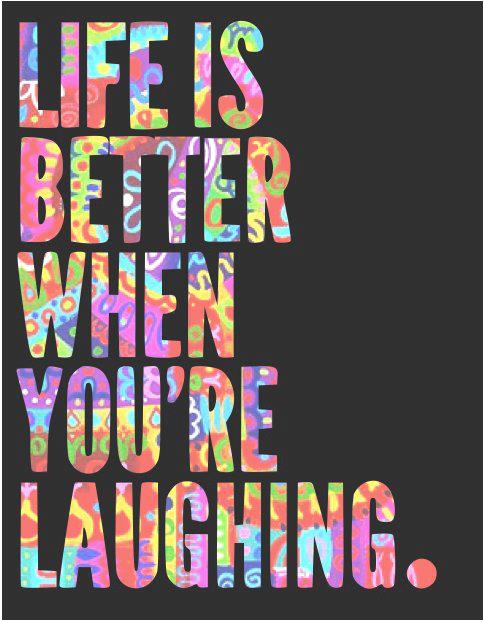
I had the epiphany that laughter was light, and light was laughter, and that this was the secret of the universe. (Donna Tartt )

Sure, Kate and I should use the food processor to crush the cookies to make the truffles. But rolling them between two sheets of waxed paper turns the task into a game. And that is the purpose of our day—to spend time doing something fun.

Besides all I have is a recipe held precariously in my head. A superb baker, who owns two ovens, told me how to make the delicacies. Last week. I’m counting on my fallible memory.

Kate and I laugh as some of the crumbs escape across the table top. At least the cookies came from the organic section of the grocery. The mess contains fewer unnatural ingredients.

The final results taste fantastic, but won’t make the cover of any food magazine. We don’t take the time to make each ball even. And we run out of melted chocolate.

“Are you going to blog about this?” Kate asks.

“Why not?” I answer. Some of life’s most beautiful moments happen during mundane, messy, silly, and this-isn’t-the-way-it’s-supposed-to-happen experiences. Cookies-smashed-into-cream-cheese-and-scraped-off-with-the-blunt-edge-of-a-knife fit into that category.

As we work I think about how privileged I was to take Kate with me to find last-minute holiday gifts. I tend to be a get-required-items-then-skedaddle shopper. Kate and I stopped to look, to see, to celebrate, to talk over hot chocolate while Grandpa and Kate’s little sister, Rebe, had the chance to swim at the YMCA.

Kate wanted to help Grandma catch up. I feel honored.

The sink looks like it has taken over for a commercial chain of restaurants. Kate and I also made pumpkin bread. The stainless steel appears to be bleeding, in orange.

Then when Rebe comes back with Grandpa she decides she wants to bake, too. She doesn’t want to be left out. I agree only if she takes some of the finished products home with her. More food would end up in the freezer than we could give. Contents would need to be stacked like mortared bricks. For the freezer’s system this would be something like trying to breathe inside a basement wall.

And my waist line doesn’t need to hold what the refrigerator can’t.

After all our creations are completed the girls make a tent with blankets and couch cushions. I play with my granddaughters and crawl inside their play environment, too. I grab a plush toy cow and tell them it gives chocolate milk. Kate readily accepts a pretend squirt. Rebe claps her hands over her mouth and says, “I’m lactose intolerant.” She isn’t. But she has definitely inherited her father’s quick wit.

My neck should hurt more than it does. But perhaps laughter heals in unexplained ways. My considerably-past-middle-age years will return, sooner than I want them to appear, long before I see in a mirror the ridges in my neck. Probably sometime during the clean-up. For now I have discovered a great secret of the universe. The light in my granddaughters’ laughter makes me feel whole.

Kate and Rebe, thanks. Just for being the wonderful girls you are.

May  everyone find peace, love, joy, and plenty of laughter during the holiday season.

laughter words to inspire the soul

Read Full Post »

Life is like a landscape. You live in the midst of it, but can describe it only from the vantage point of distance. (Charles A. Lindbergh)

Strange how memories hit when they are least expected. I’m looking into the mirror at my 69-year-old self. I remember seeing the same younger face at least 53 years earlier. The scene is in my parents’ bedroom at my mother’s vanity. And I’m trying to turn my thin, curl-resistant hair into the bouffant my peers wear. I know nothing about regularly scheduled haircuts. That could help. But the money for such frivolities isn’t in the family budget.

However, the expression I recall is not mine but my mother’s, reflected behind me. She’s exasperated with her superficial daughter, focused on appearance. I admit the color is fine, a bright strawberry blond, but the gold never reaches below the follicles, into my scalp, into my being. I believe what my classmates have told me since first grade. I am the outsider. The kid with names that come with a taunt.

Mom complains that she has taught me to be a larger-minded girl, a Ten-Commandments person. I cut my rant short, but a deeper less-than has set in. I put down both the comb and my own sense of self as well.

My mother did what she believed was right. I don’t blame her. On an intellectual level she had a point. However, perspective needs to be discovered through example and experience, not imposed.

Now I look into the mirror in my own bedroom. My hair is cut short to avoid a need to style. I no longer care about beauty. Don’t ask me about fashion; I don’t follow the trends. And I don’t apologize for my wrinkles. They carry experience. Some of that experience continues to be incredible. Some of it cracked me more than I want to admit. Some of what-I-carry-from-the-past involved others’ hurts. And I couldn’t always help.

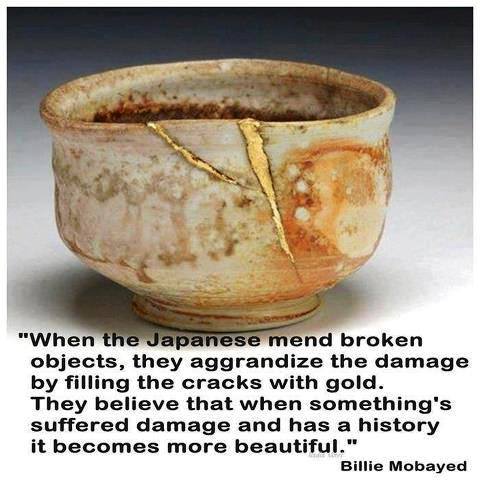
But the holes are what create the beauty in lace, the negative space in art, the places that force a person to recognize need. The cracks are where the light shines through. And I’m not sure I am sorry about the difficult times. They taught me to look into the eyes of another person and see more similarities than differences.

Moreover, I had good friends along the way. I meet with some of them every week—others less often. But I know I am not alone. Not an outcast. The notion is an illusion.

I have learned to rewrite the script and speak for a mother who didn’t know what to say, to ask questions to get to the real issues. “Yes, I know this is important to you now. However, this is the gift I see in this moment…”

Then, perhaps, any mirror could reflect more than an image that appears backwards, and permit possibilities. I can’t say I know where they will go. I don’t. Today’s landscape shows no more than a few clouds along the horizon, never within reach, always changing. Always, always changing.

beauty of the broken

Read Full Post »

Children don’t need much advice, but they really do need to be listened to and not just with half an ear. (Emma Thompson)

Eight-year-old Rebe and I have a girl-bonding day. We are mermaids at the YMCA Water Park. Young mermaids! I need a lot more imagination than she does to fill this role. She explains the scenario and I follow, adding as much absurdity as I can.

The pool is divided into sections. Upper-class kid mermaids swim in the larger, shallow, easy-to-manage section. The lower class lives in the slightly deeper territory. I tell her I can’t fathom wealth, so I will tread water. (I prefer this area anyway.)

Of course her game morphs and she spends most of the time in the freer kicking space. She can swim. I celebrate listening to her banter. She doesn’t want to leave as the time grows closer.

“One more minute.” She raises one finger. Then she smiles. “Five more minutes?”

Rush-hour traffic isn’t going to get any better one way or another. Dinner is semi-prepared. Daddy won’t be picking her up for two and one-half hours.

“Five more minutes,” I say.

She grins.

Then a tall, slender woman pushes a young man in a wheelchair into the water. The young man is paralyzed. Rebe watches as the woman, smiling, pulls him from the chair and works his arms and legs through the warmed water.

“Therapy?” Rebe asks in a soft voice.

“I think so.”

“Or fun?”

“Maybe that, too.”

A huge man with skin the color of milk chocolate enters the water. He helps. I think about what a good idea his presence is. His size and strength could be helpful getting the young man back into the chair. The thin, pale woman and the large man laugh and joke with the younger man. I see the paralyzed man bat his hand at them. A response, probably enormous judging by the cheer of his two helpers.

“Therapy,” Rebe repeats. “Or maybe they are family.”

I pause taking in the beauty of my granddaughter. The two assistants look nothing alike. Yet, Rebe and I both know families—more than one—with a father the color of dark honey, fresh graham crackers, or gourmet licorice, and a mother as pale as apple blossoms or an unpicked peach. Rebe looks inside to who an individual is. The outside is secondary. She goes to a school where color is superficial; I live in a neighborhood where skin colors match the picture below.

Probably not, I think. “Maybe,” I answer.

I tell Rebe it is time to go back to my house. Grandpa is waiting for us. But I am grateful for those five extra minutes. They brought a larger gift than 300 extra seconds in pool water.

skin colored crayons

Read Full Post »

I am incapable of conceiving infinity, and yet I do not accept finity. I want this adventure that is the context of my life to go on without end. (Simone de Beauvoir)

As autumn puts on the last of its show I remember the mini-vacation Jay and I took at Hocking Hills. I walked the trails and paid no attention to that silver band around my wrist with the tiny clock on it—I could have been wearing my watch upside down. It wouldn’t have mattered.

Perhaps that freedom gave me the illusion that utopia existed, at least somewhere; I felt healthy, young, my chi as vitalized as it had been when I said I-do in July of 1971, when I felt as if I would be age 25 forever, continuously renewed. In Hocking Hills nature and I seemed unified. Beauty appeared in every direction.

The real world has returned. Another YMCA friend faces chemo and then radiation. A fellow writer friend fights for her life in an out-of-state hospital. I discover that several people aren’t doing as well as I had hoped. My sister-in-law has been to hell and back again. Her attitude, however, glows. She encourages others. She lives the life-explanation Francis Weller explores in the October issue of Sun Magazine, The Geography of Sorrow. Pain and loss, joy and peace co-exist in order to create a complete existence.

In our American society we expect to begin and end with perfect emotional control. Weller analyzes our bias against public grief. I read the article so slowly it took me several days to absorb each word.

I think about this again as my two older grandchildren, my husband, and I watch Where Hope Grows. The girls have already seen the movie. Rebe and Kate are only eight and eleven years old. Yet, they get it. They suggested the movie. Not every reviewer agrees. The creators made the mistake of using the word, God. However, I recognize more showing than telling, more action than preaching.

Calvin Campbell has sought the answer to life through drink. His choices inevitably fail him and he goes to Produce, a young man with Down syndrome, for the secret to his happiness. An unexpected story unfolds.

My granddaughters know how tragedy looks and feels. Kate’s friend fell through a patch of ice when she was three-years-old; the friend is permanently disabled. I wrote about it in a poem I titled Chrysalis. It was originally published by Saad Ghosn in the annual anthology, “For a Better World 2012.” It will be reprinted in Piker Press on November 23. 

The girls also know how to love. When their young cousin Ella sees them she is ecstatic. She talks about them often. Ella, of course, like Produce in Where Hope Grows, knows the secret of happiness. She is satisfied to be herself. She accepts the moment, and lives it fully.

Perhaps full joy isn’t found in happily-ever-after dreams. It lives in the mundane, the muck, the malformed, and the miracles revealed through inside-out transformation. Into the whole.

strong people don't have easy pasts

Read Full Post »

The soul is healed by being with children. (Fyodor Doskoevsky)

Halloween. And I offer to stay at my son Steve’s house to wash dishes. But his girlfriend Cece says, “Let’s all go. I will wash the dishes when we get back. Then you relax and play with Ella.” Cece doesn’t want me to miss out on the fun.

And fun is only the beginning. “Candy. Look. More candy,” Ella exclaims after she has stopped at only a few houses. Her costume is inexpensive and hand-wash-only fragile, the kid-popular, Doc McStuffins. However, Ella’s sweet smile brings her extra treats at several stops.

At first she approaches each house with her bag behind her back. Then she eagerly opens it with an excited “trick-or-treat.” Her cautious move has become a run. The neighborhood knows how to celebrate. Groups gather outside with bonfires, cackling witches, lit pumpkins. Kids fill the streets. Two children are in wheel chairs. I pause to say Happy Halloween, but don’t linger for conversation. Tonight is the time for action.

“Look,” Ella says to passers-by. She opens her bag and displays her treasures with pride. No one chides her or mentions that she has special needs.

At one house an empty chair blocks the sidewalk, but the front door is open. Ella runs toward the golden-glow space inside the house. The empty chair signals my intuition. I decide to follow her. An elderly man answers.

“Oh dear,” he says. Apparently his wife, who should be holding down the fort, has left with the treats.

Instead of responding with disappointment or anger Ella reaches into her bag and pulls out a box of candy. The man doesn’t understand at first. Then he realizes that Ella is sharing from her bounty.

His wife arrives and gives Ella a few extra pieces. Our little girl grins. Wearing her gratitude on her face.

As Ella descends the stairs toward Daddy, Cece, and Grandpa I tell the couple that our granddaughter with Down syndrome has had two open heart surgeries. She is resilient. Her open heart touches anyone who will recognize her gift.

The man has tears in his eyes. He did not accept Ella’s candy. He did receive her touch of love. And all Ella needed to do was to be Ella.

And I am grateful to Cece, too. Sure, I would have been happy to stay back at Daddy’s house, wash dishes and hand out candy. Instead I have the privilege of watching beauty in action.

The plates and utensils wait until we came back. Ella does not fuss when Daddy does not allow her to have all of her bounty at once. She savors each bite. I hope to learn how to savor each moment, too.

learning from children morning coach


Read Full Post »

Any fool can be happy. It takes a man with real heart to make beauty out of the stuff that makes us weep.  Clive Barker

Ordinarily when Jay and I pick up Ella from school he drives and I sit in the back with our granddaughter. I monitor snacks, play games, or read books with her.

Today I am at the helm of my ’97 Toyota. Ella repeats, “Grandma’s car.” She wants to know where Grandpa is.

“He went to the doctor. He will be home later,” I tell her. But I can’t see her face in the rear-view mirror. My mindset is in sync with her older cousins. They think that a hypodermic needle is to be avoided at all costs. But since Grandpa is a grownup, he would be just fine. I assume Ella’s viewpoint to be similar.

“If Grandpa gets a shot we will give him a big hug!”

There is silence in the back seat, followed by, “Grandpa be okay. I be okay.” Ella’s sweet voice cuts through me as the chorus repeats.

“Yes, he will. Grandpa will be home soon.”

The drive from Ella’s school to our house is just over ten miles. I feel as if I am driving cross-country.

Text Grandpa as soon as you get in the door, Ter. Tell him to call so that Ella can hear his voice.

On the outside I would appear calm. The car remains on the road. I stay within the speed limit. Inside I chide myself for a stupid mistake. Ella has had two open-heart surgeries and one minor surgery on her wrist. The word doctor opens a Pandora’s Box. She does not want her grandfather to fall prey to its powers.

Fortunately Grandpa hears the beep on his phone. He is leaving the office. “Grandpa be okay” takes on a new tone as Ella hears his voice.

“Let’s hide,” she says, anticipating hide-and-seek when Grandpa returns. Our little girl has no sense of time. Jay will not be home for another twenty-five minutes. I hold her in my arms and look into her huge blue eyes, possible now since I am not behind the wheel of the car and she is not bound to her car seat.

Sure, I will play this mock-game with her. The hiding place she chooses is in plain sight. And so is our little girl’s incredible beauty. Her internal powers shine: the gifts to love unconditionally, to simply be without comparing herself to anyone, and to bounce back after every fall.

I suspect there are people who look at us as we go to a park or enter a restaurant and think, How sad! That little girl has Down syndrome. Or worse, they identify her as a tripled chromosome and call her a Down syndrome child, throw around an R-word or two, and dismiss her importance. I can’t change that notion on my own. But I can make a dent in that perception.

Organizations like the National Down Syndrome Society and our local group, The Down Syndrome Association of Greater Cincinnati, help to crush myths and show how valuable each individual is. Success for many more persons with Trisomy-21 is possible, even inevitable. Yes, the child born with the genius IQ someday may create formulas, ideas, new drugs, and inventions that change the world. But the child born with an extra chromosome has the knack for changing the heart. Now.

Ella may not be able to express Osho’s quote pictured below in words. However, she lives it. I am fortunate to be her student.

life is not logic Osho

Read Full Post »

I remind myself every morning: Nothing I say this day will teach me anything. So if I’m going to learn, I must do it by listening. (Larry King)

Rebe, my soon-to-be-eight-year-old granddaughter, loves to play any game that involves mommies, dolls, and the lives of families. My role changes at her whim. And I am okay with that. My pretending stays within the realm of fiction. Reality intervenes, even in fantasy. Plot, grammar, logic, and a reasonable timeline are required. Even an insane character requires motivation, albeit skewed.

Play doesn’t come naturally for me anymore. Unless it includes humor. Then it isn’t really pretend; it’s called drama. Too much time has passed since I wanted toys for Christmas. Sometimes I act the part of Rebe’s offbeat daughter.

“Mommy, can I drive your car to kindergarten? I won’t smash it into a tree this time.”

That makes her laugh. Or, she tells me I’m in fifth grade not kindergarten, and the event never happened. Another reason why following Rebe’s imagination is impossible to follow. For the most part however, I listen, and discover who my young descendant is.

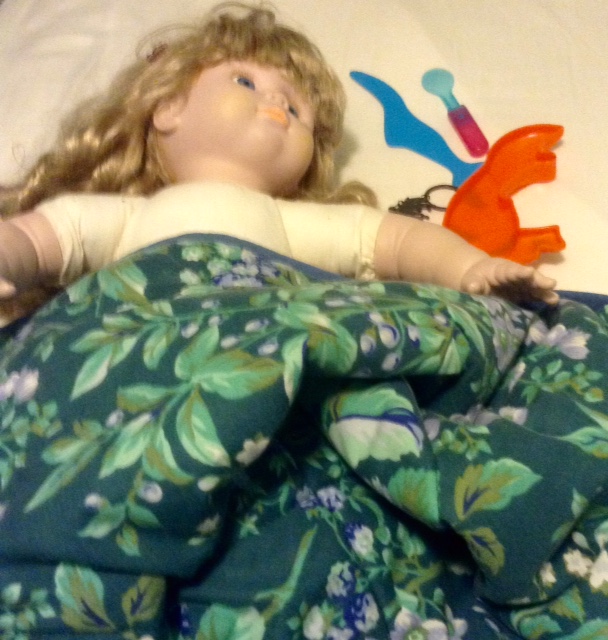
At first she is the mommy. Then she takes her baby with the soft tummy to the doctor. And she assumes the role of pediatrician. I’m not sure whether I am the sit-in for the mommy or an older child as she examines baby with makeshift instruments: a plastic spoon and knife, a key chain, a puzzle piece.

Her expression turns serious. “Most babies are normal,” she says. “And that is good.” Then she pauses after more pokes and probes and faces me. “But this baby has special needs. And that is good, too.”

She hands me the doll. My jokes have disappeared. I am in awe of a second-grade girl who speaks with wisdom. The softness of the toy and the softness of her words sink into me.

I have nothing to say.

doll

Read Full Post »

You build on failure. You use it as a stepping stone. Close the door on the past. You don’t try to forget the mistakes, but you don’t dwell on them. You don’t let them have any of your energy, or any of your time, or any of your space. (Johnny Cash)

Somewhere around two in the morning I waken with a throbbing right hand. Did I roll over onto it? Did my sleeping body drift into the past and forget that arthritis rules my right thumb. Inflammation tells each movement what it can do and what it can’t. And it is a strict taskmaster.

Of course I rebel. I have writing projects to complete, and the cooking, cleaning, and laundry don’t do themselves. Fantasy appears only in story form. Even on the written page reality intervenes. Sure, I can invent a character, a girl who floats into the air at will. However, if she levitates at the local Seven-Eleven havoc will appear, unless, of course that is part of the plot.

A cold compress helps my hand. It tells it to stop complaining for a few minutes anyway. Somewhat. So does calming thought. But sleep does not return. I get up at four and begin to write, trying to embrace the silence as a gift. I add a page to my next novel, then another. This does not mean they won’t be backspaced later. A story has progressed. The missed sleep will demand to be repaid later. For now I take advantage of the moment.

The ache reminds me that I am alive. Fully. In this moment. I’m told this is the most common form of arthritis. Osteoarthritis. As my parents, aunts, and uncles told me: “It won’t kill you. You’ll just die with it.”

Finding someone with more serious problems is easier than I would like. I’ve been praying for a young friend who is expected to be in intensive care for longer than the two weeks originally expected. She, too, is a writer. And a reader. Her security is a book resting on her chest along with the ambiance of IVs, monitors, and an existence where pain owns the building. She has had two surgeries. Complications continue. So far her miracle begins with survival.

A child close to me has a friend who died of a rare inherited disorder; her sister has the same disease. My little friend is reluctant to talk about her grief. So I cannot reveal her identity. Life and joy do not circumvent difficulties. They travel through them.

The sun peeks through the window of my office, also a toy room, the place where my grandchildren and I play. The rays will find family pictures, disorder, my half-empty coffee cup, and possibilities I don’t see yet.

Sure, I would like to take the brace off my hand post-miracle. But I’m not going to count on it. However, I haven’t typed the ending to my story yet. That choice isn’t mine anyway.


seeing the inside brightness

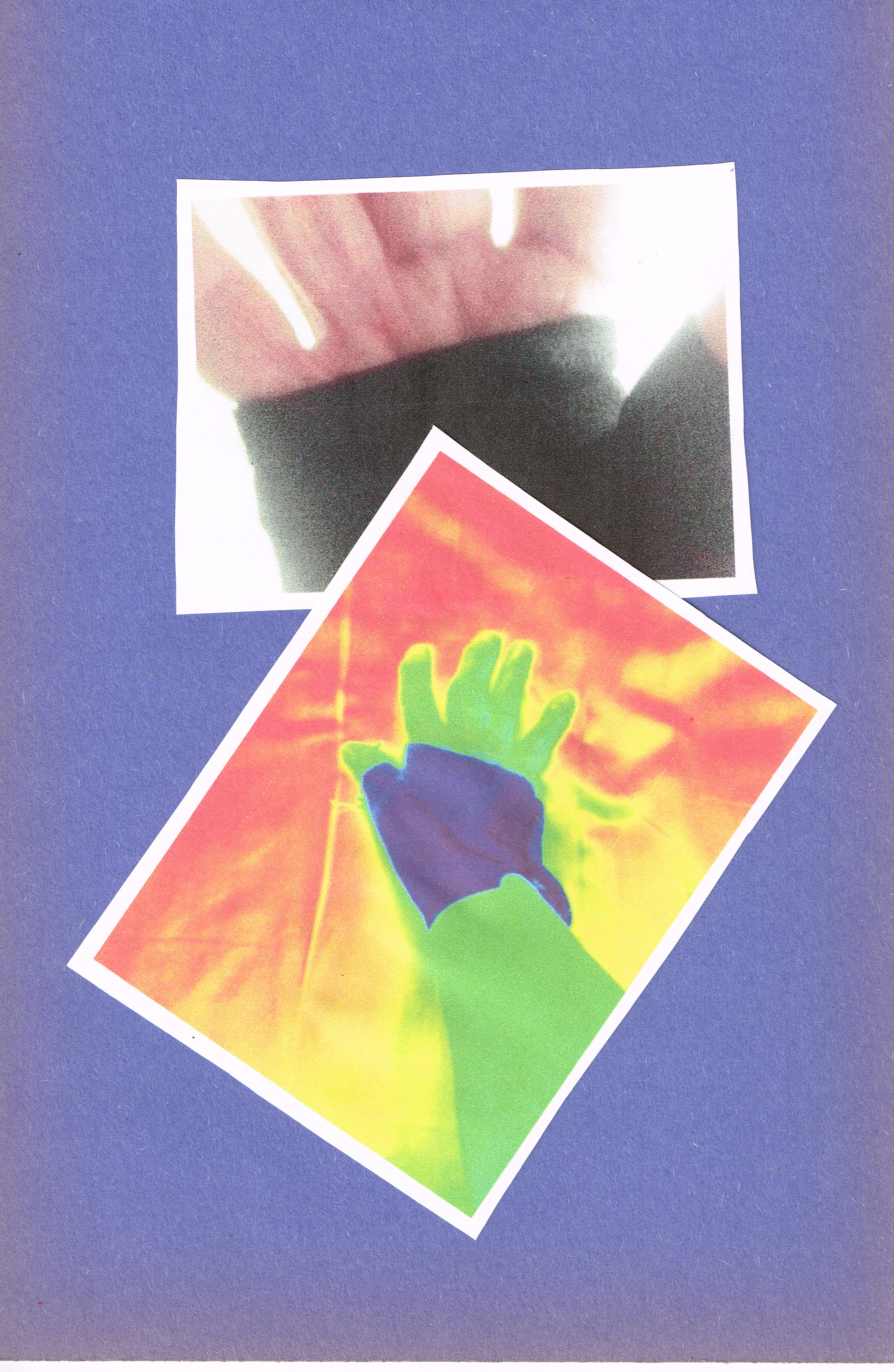
hand brace09212015_0000

Read Full Post »

« Newer Posts - Older Posts »