Technology was not part of the everyday world in the 1950s and 1960s. Our phone was attached to the wall. We had a party line. No celebration was involved. Several people shared the same line.
If you wanted to make a call, and someone else was busy discussing how terrible a neighbor looked with hair the color of an orange cat, you could interrupt or wait. Neither was a good choice.
When I needed to write a school paper, I went to the library and rummaged through the card catalogue. One row of drawers next to another. If the subject wasn’t boring, this task was!
The librarian found the research book I needed via the information on the card. Then I copied what I needed along with the reference onto my notebook.
Sometimes, the material was available in the World Book Encyclopedia. Our family bought a set from a door-to-door salesman. The series contained anything you wanted to know about aardvarks to zippers, provided you didn’t need in-depth information.
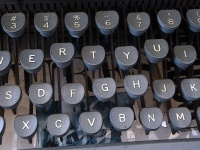
Typing the final result made Atlas’s job of carrying the Earth appear easy. I started with a manual typewriter. A sheet of carbon paper was placed between the original and the copy. Since the backspace didn’t provide an eraser, either the entire page needed to be retyped or the error needed to be covered with a white blob cover-up.
Erasable paper eventually came onto the scene. However, it smudged. And, of course, the biggest mistakes appeared at the bottom of the page. I didn’t keep track of the time needed to complete one five-page assignment. On my father’s Royal typewriter. In a basement corner.
It was a royal pain. The advantage? Only one I can see. I sure learned discipline. And gratitude.When the task was completed. Eventually.
When her baby was born, someone whisked her boy away and placed him in an incubator sterile, touch free.
And Mama brought her child home. They grew, separate and fat, looked similar yet knew of each other as strangers.
Mama stands now at a deli. She orders three pounds of ham and 24 ounces of cheese. Two women behind her snicker
at both her and the chubby child. A third woman mentions the shade of her worn blue coat. A weak compliment. Mama fakes a smile.
Then another customer says she recalls the date and hospital where the boy was born. She recognizes her son’s name. Mama gasps and the woman smiles.
I took care of your son in the nursery. For 47 days. She touches both Mama and her boy. And prays for a miracle. She knows Mama and son live hunger of a different kind.
Two Canada geese settle into an angled parking space in a Wal-Mart lot. They take turns sharing shreds of bun left in a torn red McDonald’s box. One goose eats. The other stands watch for danger.
A car honks, its sound louder than any a goose could create. The noise interrupts their feast. Harsh and threatening human voices follow. The geese flee.
From their aerial perspective the birds agree— Excellent volume. Lacks style.
Dear Ruby, I realize I should explain why I’m writing an old-fashioned letter instead of talking to you in person. I’m not sure what I want to say. There would be too much silence between words—not a thoughtful pause, but Ausable Chasm without its beauty.
Remember rock climbing at the chasm on our honeymoon? Was there ever anything typical about us?
Our wedding day, when for better or worse was a phrase that had as much significance as a television commercial for the terminally naive.
In black and white, that’s all we had in the 1950’s. Black or white cowboy hats determined whether a character was on the side of the law or not. You said that bullets killed both sides equally. I noticed only action and fantasy.
We were young. I wanted to get a job and protect you forever. As the mom, the cook at home.
“No way,” you answered, sweetness mixed with acid. You needed a career as well.You rerouted my chauvinism and triggered my admiration. However, my ignorance could only be channeled so far.
Our baby. A boy. Lived three hours.
“But, sweetheart, he didn’t have a chance anyway.” I tried to comfort you with facts instead of arms. “His brain and kidneys were not properly developed.” Perhaps I need to say goodbye to both George Henry Sr. and George Henry Jr.You mourned our baby. I lost you.”
Draft Two:
Dear Ruby, In my dream last night I bought a second engagement ring for you. But the ring disappeared when I tried to slip it on your finger. And you got angry as if I were trying some ill-mannered magic trick… No, I can’t admit that. It overflows with insecurity.
Attempt Three:
Dear Ruby, I worked late again the day we reconciled. It had been dark when I entered my brother’s house. His wife left food for me. She is kind, but sometimes feeling sorry for me leaks out of her and stains my ego. Thanks for taking me back. I have something important to tell you. I’m a changed man—odd timing, I’ll admit, but for the first time in my life, I see clearly you have always been the stronger half. Okay, minus the five months when we were separated. You got a break.
The little girl stands on her imaginary stage made of ordinary maroon carpet on an everyday Thursday afternoon. A popular song drifts into the living room from the kitchen where Mommy cooks, and scrubs the floor.
She complains about how quickly three kids get it dirty again. The girl listens to the music and mimics the trills, the rises and falls,
and emotions in the melody, her gentle vibrato promising a clear soprano voice one day. She would have added gestures
for her make-believe audience, but Mommy appears at the doorway wielding her wooden spoon. So-who-do-you-think-you-are?
Mommy turns away without striking. Yet, the girl hears the warning and retreats into the dark, silent spaces between the lace curtains and window.
The song will not disappear. She hears it inside her head and saves the sound for a safer moment
when she will lead her children to follow dreams, write, discover subtleties, laugh, cry, or simply be.
“I have lost friends, some by death—others through sheer inability to cross the street.” —Virginia Woolf
NO ORDINARY RECITAL
Jack:
Songs I recognized from at least twenty years ago rose from my daughter’s kitchen CD player. Amy seemed to prefer a beat to match her syncopated movements. So-much-to-do, although she never let anyone know what that so-much was, only some vague importance to taking out the garbage.
She stirred a pot to the rhythm of a rock band. She hummed as she turned up the oldies. However, when she turned to me, she reacted as if a snake-oil salesman had opened her back door, and then he had the audacity to sit at her kitchen table with a cup of her freshly brewed coffee.
My grandson had brought me the cup, as if it had been some kind of prize, before he left with my son-in-law for rehearsal. I’d visited because Mikey had invited me, the grandpa he wanted to know but didn’t. Yet.
Temporarily, I had moved in with Amy’s brother, at least until I could get back onto my own two feet. Amy saw the possibility of my walking a straight line as likely as a change in the Law of Gravity.
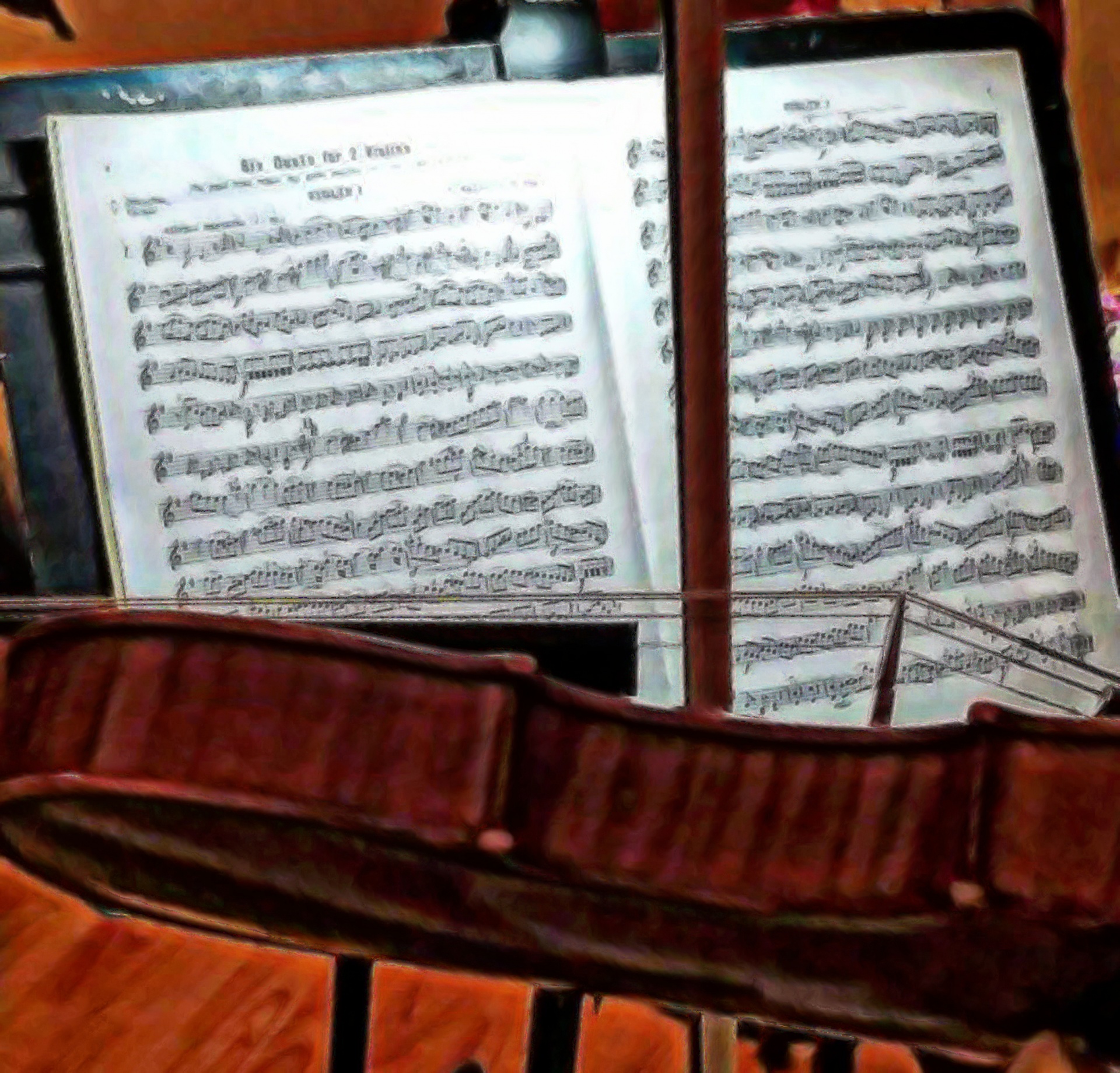
I had played keyboard, guitar, violin—you name it, lead guitar in a band, taught myself trumpet. I’d worked in an everyday office by day and ruled the stage at night. Before I lost just about everything. To king alcohol. A few months in jail.
The sweet jazz quartet calling from the player in a niche in the corner could have been the news reporting earthquakes downtown, or worse in my daughter’s backyard. Ten feet from the back door. Two feet from where I sat now. Then again, I felt an earthquake tremor begin in my chest and work its way to my stomach. My coffee grew cold. My daughter grew colder.
She stared at me with that look I recognized. Can’t-count-on-you-Dad didn’t need to come to her lips. Instead, the anger showed in her eyes, voice, the tight pull of her lips.
“So, you say you’ll be at Mikey’s recital Friday night. On time.”
“Yes.”
“And you will be sober.” She leaned over the table. “Not, but-I-only-had-two-drinks. Two quart-sized drinks?”
I had talked to Mikey. Before I’d set foot in the house. He’d run out to meet me. “Oh, Grandpa! My recital. It’s going to be great. You know what Daddy told me?”
I’d admitted I didn’t.
“Daddy said you played violin, too. You played really, really good. Could you play for me now? When we get inside.”
“How about some other day?” I’d answered. “Right now. I’m way too excited to hear you play.”
A partial truth. My heart wasn’t ready for music yet. It reminded me too much of what I’d thrown away.
I’d put my hand on his shoulder and Mikey didn’t pull away. He didn’t have the storehouse of empty promises in his memory his mom had. Her brother, too. He had taken me in—to a bed in his basement, next to the hot water heater. The upstairs door remained locked. I had to knock to get in. I’d stolen from both my children. I admit it. Giving back wasn’t easy.
“Did you used to live in Florida or California?” Mikey had asked. “Or was it another country?”
I’d bit my lip. I’d lived ten miles away before I passed out on the job. Mikey had no memory of me at all in his seven years of life.
Since then I’d managed to get a car, guaranteed only to be a car. I had my license back. I had a job, more of a pity offer with pittance pay.
Respect? That was going to take more time.
Amy: three days later
Mikey’s recital is about to begin. I know I should have told him about the call about his grandfather’s death. Jake, my chicken-husband won’t do it. The police swear the accident wasn’t Dad’s fault. He was stone sober and wearing his seatbelt. Probably wasn’t paying attention, however, as the semi crossed the middle lane.
Damn! I’d like to think something positive about my own father. And my insides feel just about as cold and empty. Maybe I didn’t give him much of a chance to apologize.
Mikey’s group is up last. Jake told him the best gets saved for the end, so nobody needs to follow it and feel less-than. Mikey thought that made sense. Of course, he believes in Santa Claus and the Easter Bunny.
“You’re awfully quiet,” Jake says. “Are you okay? Or at least as okay as anybody can be…under the circumstances.”
“We can’t just pretend Dad beamed up into a spaceship.” My voice doesn’t leak sarcasm. It explodes it.
“Mikey doesn’t have the same complicated memories you have. You can’t shield him from hurt. You can’t assign your feelings of guilt to Mikey either?” Jake’s voice is soft, but he doesn’t blink.
“What guilt?” I raise my voice and the lady in front of us turns around.
“Sorry,” I say to the woman, feeling heat rise to my cheeks. Guilt. Maybe. Dad tried to apologize. He said something about making amends. He could have been talking to an oncoming train.
Jake pats my hand. “I could have been kinder, too.”
I want to swat him but don’t. Not here. His words are like a fresh stab in a seeping wound.
I hear each musical presentation, the way I hear a passing train while waiting for safe passage. Yet I wonder if safe passage exists.
Mikey’s group appears. He doesn’t seem to see us right away. I don’t wave and make a point of the fact his newly discovered grandfather is missing. Then, Mikey begins his solo, an Irish song I recognize from forty years ago, when I was small. I asked Dad to play it all the time, and then danced across the floor.
My son’s technique and timing improved. He adds style I didn’t know he knew. Jake looks at me with his brows pulled together. He shrugs. Apparently, he wonders when Mikey transformed from a good violinist at age seven to a prodigy.
He is beaming as he leaves the stage. Several people grab and hug him before he gets to his dad and me, but his eyes seem to scan the back of the auditorium.
“Mom, Dad!” he calls. “Where did Grandpa go? He was here a minute ago. Why didn’t he tell me he was going to be part of the show?”
“He. Did. What?” I ask.
“With all those lights around him. In the back. You’d think everybody would be turning around to look at him! But I got it, the way he held his fingers on the strings and moved the bow—to make the song sound better. He didn’t seem so far away. He felt right next to me. I’m not sure how. For real. Not sure I could play the same way again without him.”
“You’re sure that was Grandpa?” I said, “because…” I choke on words that won’t fit together.
When we get to the car it is locked. However, Dad’s violin is lying across the back seat.
“A gift,” I whisper,” from Grandpa. “That was his. I’d recognize it anywhere. I knew Mikey would hear the story of his grandfather’s death in a different way now, a way he would be able to accept long before his dad and I could. Mikey believed in miracles.
Now I needed to believe in forgiveness.
originally published in Piker Press on May 8, 2017


 terrypetersen