Feeds:
Posts
Comments

Posts Tagged ‘respect for all people’

Vision is the art of seeing what is invisible to others. (Jonathan Swift)

“How nice to see you, Terry,” A. says. “But she recognizes my voice as I talk to another Y member, not my short stature and senior version of what was once strawberry-blond hair. A. is blind.

I have met her several times. Each time I get to know her a tad better.

I call her later because I finally figured out the right date for a senior social event. Jay and I will be bringing her home. She expresses concern for the pain in my back.

When she says she will pray for me I believe her, and ask her to add someone else to her list, a young friend who lives out of state. S. will be having surgery at the end of September. I don’t give A. full details, only an overview of a nightmare that began with a bout of pancreatitis.

And I realize the larger story is stuck in the back of my throat, in a huge wad of emotion that won’t be swallowed. A. seems to understand. But I don’t know why this woman I barely know has brought this out in me. Through some intangible connection. Beyond the visual.

“Your husband refuses payment for the ride home,” she says.

“And so do I.”

“Maybe you can come to my house for dinner sometime.”

I pause before suggesting she come to my house instead, after I’ve finished physical therapy. And that will happen by the time of the social event. “I should be just fine by then. Besides, I love to cook.”

But, I think about how A. sees with her hearing and memory—and how I don’t. I have no clue how many steps there are from the table to the bathroom. There is a narrow space between the couch and the television. Jay and I leave our shoes in the middle of the floor. Sure, on that day we would be wearing them, but I take sight for granted.

“You can bring a friend,” I say, more for me than for her. Someone who already knows what she can maneuver on her own. And what she can’t.

She isn’t sure whether she can arrange an escort or not. She hasn’t read my mind. And that is probably a good thing. I will take the leap. Learn. Make a new friend, who will become more than an acquaintance with a keen sense of voice recognition.  Then perhaps, I shall see gifts, once invisible, yet present all along.

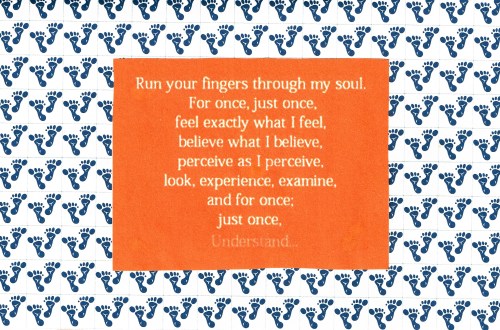
just once understand


Read Full Post »

It takes a thousand voices to tell a single story. (Native American proverb)

Last week I saw a woman I usually avoid. She’s one of those people who exudes know-it-all with every move. Advice spills out of her leaky-bag style. She is the extrovert and I am the introvert, the way fire is hot and ice is cold. But, she turned to me with a tight-lipped smile that leaked a hint of pain.

Within minutes of a hello we were honestly sharing. And I realized my first, second, and even third impressions aren’t always as accurate as I think they are. Sure, I try to accept each person as an individual. But I don’t have X-ray vision into the heart, mind, and spirit. This woman isn’t as high and mighty as I thought she was.

Two of my friends have husbands facing mental decline. I also know about a young man who was released from jail yesterday. He was convicted for a minor offense—the incident occurred at least a year ago. The young man was not permitted a cup for water. He dipped his curved hands under the faucet and caught what he could. The water dripped down his arms and tempted his thirst, but didn’t quench it. Prisoners needed to buy cups. But the young man had been brought inside the jail, shackled. All possessions forbidden. Someone had to mail money to him. He had a family who was permitted to send him what he needed—weeks later.

How does it feel to be on the inside of people in life-shattering or extremely difficult situations? On the inside of their minds and bodies. Day and night. Human beings need dignity to survive.

During the Midwest Writers Conference at Ball State University at the end of July, Kelsey Timmerman, best-selling author, offered an empathetic message. That message stayed with me the duration of the weekend. It stays with me now. He spoke about the Facing Project.

The program initiates people into the world of folk who live challenge. And then it allows volunteers to interview individuals and write about difficult experiences as if the volunteers had walked through homelessness, addiction, poverty, autism, trauma, unemployment. The list continues, and is available on the website.

These writers do not need to be published authors, journalism majors, or even freshman English students. They can be truck drivers, store clerks, or retired plumbers.

If I had actually met the young prisoner, perhaps I could assume his voice. For now, I repeat what I heard from his family. I would rather approach persons than issues. Issues are rarely one-size-fits-all.

I met Kelsey at a writers’ workshop when he wrote as a travel journalist. Then he took a major risk. He visited the countries where our clothes are made. But, he had no intention of penning an isn’t-this-a-beautiful-landscape travelogue.

He lived with the workers, earned their trust, and relayed their stories—no whitewash. And Where Am I Wearing was born. Kelsey did not end his quest with that success. He left the comforts of a loving family and went on the trail again. He met cocoa workers who worked as slaves. He talked to them, one on one. Kelsey even attempted to save a worker. He could not. The slave owner had too much power.

Where Am I Eating was born into the publishing world.

Kelsey extended his fervor for world change into the States. In 2015 he joined with J.R. Jamison to create the Facing Project.

I asked Kelsey Timmerman to explain the project. This is his answer: “Our goal is to get communities to think bigger about social justice issues—not only globally but also locally. The real question to ask should be about one: Do I know one person in my community facing poverty or hunger or a disability? And better yet, do I understand their story? The Facing Project provides the opportunity to create connections between community members, students, and organizations. It allows citizens to carry the weight of their neighbor’s story and stand with them, side-by-side, to create community change.”

The Facing Project takes desperation and morphs it into hope. The e-mail sign up is easy to find. May face-to-face efforts expand until understanding eventually becomes commonplace.

I think that notion is called world peace.

Picture: Co-founders J.R. Jamison and Kelsey Timmerman welcomed Jay Moorman, Ontario Systems’ Vice President of Client Services (chair), Stephanie Fisher, content manager SpinWeb Internet Media (vice chair), and James Mitchell, associate director of the career center at Ball State University (secretary and treasurer). Ro Selvey, Junior High Math Teacher at Southside Middle School (K-12 Outreach), came later as a founding board member.

Facing-Project-Board

Read Full Post »

The soul is healed by being with children. (Fyodor Doskoevsky)

Halloween. And I offer to stay at my son Steve’s house to wash dishes. But his girlfriend Cece says, “Let’s all go. I will wash the dishes when we get back. Then you relax and play with Ella.” Cece doesn’t want me to miss out on the fun.

And fun is only the beginning. “Candy. Look. More candy,” Ella exclaims after she has stopped at only a few houses. Her costume is inexpensive and hand-wash-only fragile, the kid-popular, Doc McStuffins. However, Ella’s sweet smile brings her extra treats at several stops.

At first she approaches each house with her bag behind her back. Then she eagerly opens it with an excited “trick-or-treat.” Her cautious move has become a run. The neighborhood knows how to celebrate. Groups gather outside with bonfires, cackling witches, lit pumpkins. Kids fill the streets. Two children are in wheel chairs. I pause to say Happy Halloween, but don’t linger for conversation. Tonight is the time for action.

“Look,” Ella says to passers-by. She opens her bag and displays her treasures with pride. No one chides her or mentions that she has special needs.

At one house an empty chair blocks the sidewalk, but the front door is open. Ella runs toward the golden-glow space inside the house. The empty chair signals my intuition. I decide to follow her. An elderly man answers.

“Oh dear,” he says. Apparently his wife, who should be holding down the fort, has left with the treats.

Instead of responding with disappointment or anger Ella reaches into her bag and pulls out a box of candy. The man doesn’t understand at first. Then he realizes that Ella is sharing from her bounty.

His wife arrives and gives Ella a few extra pieces. Our little girl grins. Wearing her gratitude on her face.

As Ella descends the stairs toward Daddy, Cece, and Grandpa I tell the couple that our granddaughter with Down syndrome has had two open heart surgeries. She is resilient. Her open heart touches anyone who will recognize her gift.

The man has tears in his eyes. He did not accept Ella’s candy. He did receive her touch of love. And all Ella needed to do was to be Ella.

And I am grateful to Cece, too. Sure, I would have been happy to stay back at Daddy’s house, wash dishes and hand out candy. Instead I have the privilege of watching beauty in action.

The plates and utensils wait until we came back. Ella does not fuss when Daddy does not allow her to have all of her bounty at once. She savors each bite. I hope to learn how to savor each moment, too.

learning from children morning coach


Read Full Post »

Any fool can be happy. It takes a man with real heart to make beauty out of the stuff that makes us weep.  Clive Barker

Ordinarily when Jay and I pick up Ella from school he drives and I sit in the back with our granddaughter. I monitor snacks, play games, or read books with her.

Today I am at the helm of my ’97 Toyota. Ella repeats, “Grandma’s car.” She wants to know where Grandpa is.

“He went to the doctor. He will be home later,” I tell her. But I can’t see her face in the rear-view mirror. My mindset is in sync with her older cousins. They think that a hypodermic needle is to be avoided at all costs. But since Grandpa is a grownup, he would be just fine. I assume Ella’s viewpoint to be similar.

“If Grandpa gets a shot we will give him a big hug!”

There is silence in the back seat, followed by, “Grandpa be okay. I be okay.” Ella’s sweet voice cuts through me as the chorus repeats.

“Yes, he will. Grandpa will be home soon.”

The drive from Ella’s school to our house is just over ten miles. I feel as if I am driving cross-country.

Text Grandpa as soon as you get in the door, Ter. Tell him to call so that Ella can hear his voice.

On the outside I would appear calm. The car remains on the road. I stay within the speed limit. Inside I chide myself for a stupid mistake. Ella has had two open-heart surgeries and one minor surgery on her wrist. The word doctor opens a Pandora’s Box. She does not want her grandfather to fall prey to its powers.

Fortunately Grandpa hears the beep on his phone. He is leaving the office. “Grandpa be okay” takes on a new tone as Ella hears his voice.

“Let’s hide,” she says, anticipating hide-and-seek when Grandpa returns. Our little girl has no sense of time. Jay will not be home for another twenty-five minutes. I hold her in my arms and look into her huge blue eyes, possible now since I am not behind the wheel of the car and she is not bound to her car seat.

Sure, I will play this mock-game with her. The hiding place she chooses is in plain sight. And so is our little girl’s incredible beauty. Her internal powers shine: the gifts to love unconditionally, to simply be without comparing herself to anyone, and to bounce back after every fall.

I suspect there are people who look at us as we go to a park or enter a restaurant and think, How sad! That little girl has Down syndrome. Or worse, they identify her as a tripled chromosome and call her a Down syndrome child, throw around an R-word or two, and dismiss her importance. I can’t change that notion on my own. But I can make a dent in that perception.

Organizations like the National Down Syndrome Society and our local group, The Down Syndrome Association of Greater Cincinnati, help to crush myths and show how valuable each individual is. Success for many more persons with Trisomy-21 is possible, even inevitable. Yes, the child born with the genius IQ someday may create formulas, ideas, new drugs, and inventions that change the world. But the child born with an extra chromosome has the knack for changing the heart. Now.

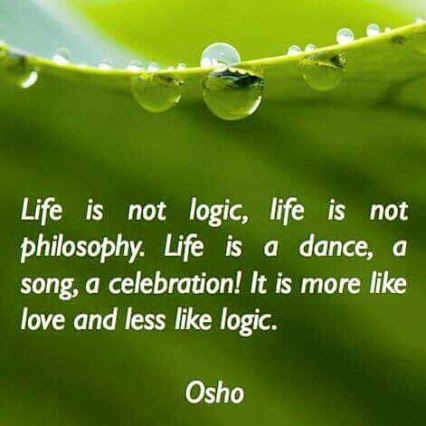
Ella may not be able to express Osho’s quote pictured below in words. However, she lives it. I am fortunate to be her student.

life is not logic Osho

Read Full Post »

There is no real ending. It’s just the place where you stop the story. (Frank Herbert)

From my grandchildren’s point of view my published book is something like an honorary mention trophy. Nice on a shelf. When I gave my eight-year-old a copy of “The Curse Under the Freckles,” she wanted to know where the pictures were. The girls are more impressed by ice cream—chocolate chips blended in sweet raspberry flavoring. Or a day of pretend with Grandma. Touch a child’s life directly; that is what matters. The words will hit later.

My older son, Gregory Petersen, is also a writer. His book, Open Mike, was published through Martin Sisters several years ago. He is working through an agent with his next book. Greg is capable of writing thousands of words a day even though he has a full-time position that includes a leash phone; he takes his job as daddy seriously. I am more proud of him for his excellent relationship with his daughters than I am for his incredible ability with words. And his gift for expression is exquisite.

All life can be presented as a story. I often have difficulty turning that perception off because imagination doesn’t always fit the moment. For example: in the middle of the night. Oh sure, I’m told to write ideas down, whenever they come. But that doesn’t seem to be realistic when the notion isn’t a one-liner. The rolling avalanche of a plot and the inevitability of sleep deprivation are counter-productive in the long run.

Sometimes relaxation comes from reading—letting the thoughts of others feed me, especially when those thoughts lead to the profound. My sister Claire shared a book she had already read, Same Kind of Different as Me. It fits into the grab-the-soul category. Thanks, Sis.

Authors Ron Hall and Denver Moore tell a true story. Ron is an international art dealer. Denver is a modern-day slave, a sharecropper, who runs away into a life as a homeless person and decides it is better than being unofficially owned. The love of Ron’s wife, Deborah, leads toward an unlikely friendship.

Denver Moore says, “I found out everybody’s different—the same kind of different as me.” What and how he discovered that similarity, the human center-core spirit, is where the beauty of the story lives—sometimes clothed in miracles, or incredible pain, or deep sadness.

Stories never really end. The characters in my own tales develop a kind of reality. But in fiction, at least before publication, entire chapters can be erased and rewritten and then changed again. The past, present, and future are as pliable as soft clay.

In Hall and Moore’s story the facts of their lives remain solid because “The Same Kind of Different as Me” is non-fiction. At the end of the narration at almost seventy, Denver admits he has a lot to learn. The last page is not the last page.

In April Paramount plans to release a movie starring Greg Kinnear, Renee Zellweger, and Djimon Hounsou based on Ron and Denver’s New York Times best seller’s impossible journey. I did not know this until I checked the Internet for more information about the original publication.

Impossible, hidden, a forgotten acorn that becomes an oak…who knows? The story continues…Any story can continue…

same kind of different as me

Read Full Post »

Successful people keep their eye on the goal. If they encounter obstacles, instead of focusing on the obstacle, they find a way around it by keeping their goal in mind. It is a mindset of courage which makes it easier to pursue success. (Dr. Anil Kumar Sinha)

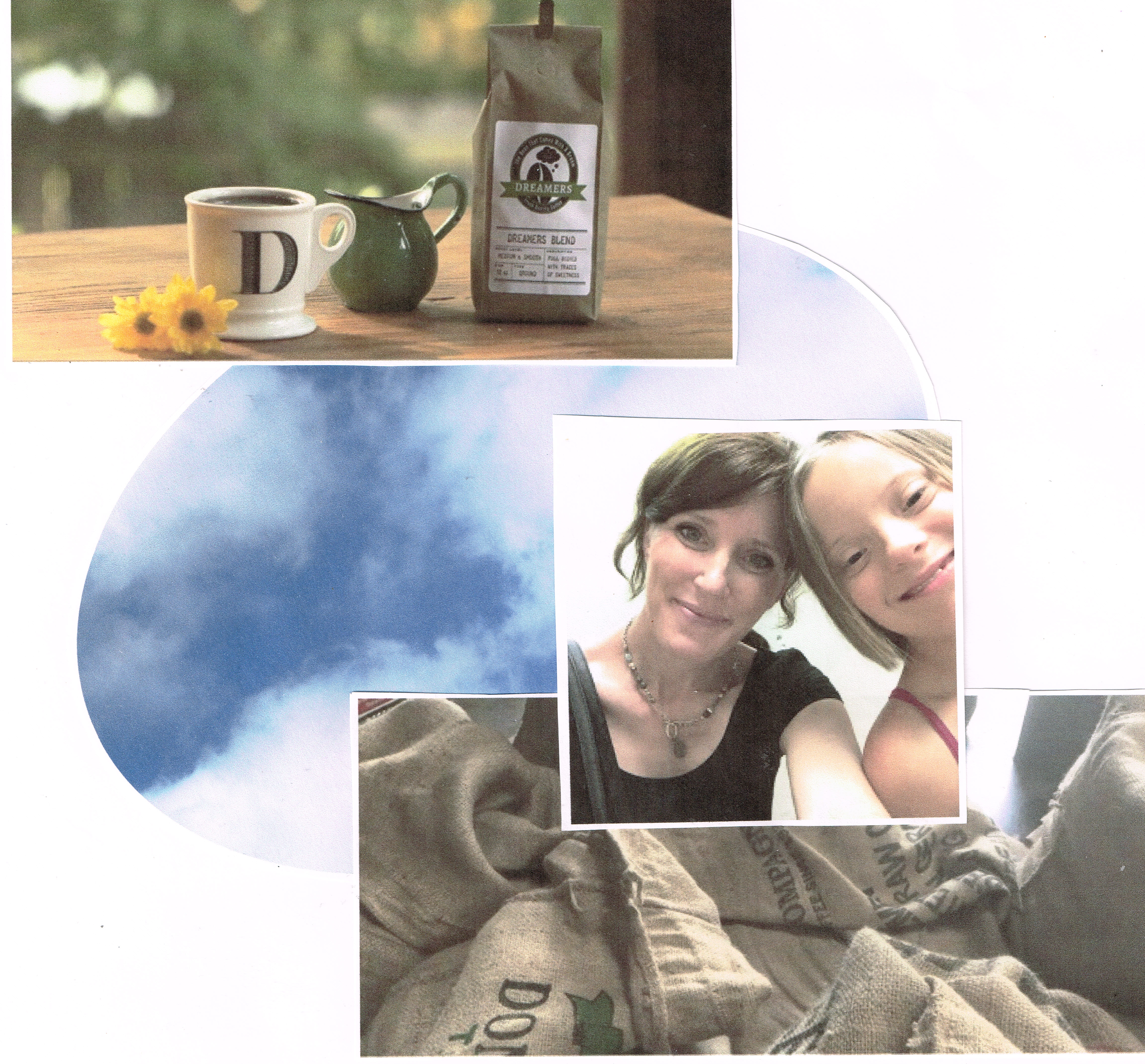
Meet Diane Grover, mother of five, a beautiful person inside and out. Diane founded the International Down Syndrome Coalition. She also started the Grand Strand Down Syndrome Society. Now she has created Dreamers Merchants.

This is no ordinary business.

Most employers look at appearances when hiring, even if that bias is subconscious. Somewhere between 17% and 20% of people with disabilities are employed. Diane’s mission is to change that statistic. She does more than hire—she gives these individuals a living wage and recognizes their dignity. In Diane’s blog, Cheerful Persistence, September 2015, she celebrates the definition of dignity.

I applaud people who realize that dignity is innate. It is not the exclusive property of the genius, the wealthy, the gifted, the privileged… In fact, sometimes the educated individual teaches biased info. My friend, Bethany Brianne Hall, helped to clarify some of that misinformation with one of her college professors.

“Genetics and Statistics show that all people with Down syndrome will not attend college. It is nearly impossible for them,” he stated in the context of his lecture.

Bethany did not sit still and fume. She responded with statistics. After class. Bethany was fortunate. Her prof heard her out.

“Do you know who Angela Bachiller is?” she asked. Knowing the question was rhetorical, Bethany continued. “She was the world’s first person with Down syndrome to hold public office. She lives in Spain. Tim Harris owns his own restaurant. And Sujeet Desai, a musician, went to college. He earned a 4.3 average. These are only a few examples.” Bethany suggested that he update his statistics. Perhaps if she had appeared confrontational in front of the other students he may have been defensive. It is hard to say in hindsight.

Then she shared her experience on Facebook. I smiled the width of my face. Perhaps wider. The links in the previous paragraph lead to these persons’ stories. Desai mesmerizes an audience with his music. Tim dances his way to his restaurant. Angela Bachiller’s photo shows a woman either patronized or ignored in public settings. Wrong! She is a public leader and servant.

I smile again now. Diane Grove is destroying the myth that the handicapped are poor workers and less-than individuals.

Di’s youngest daughter, Mary Ellen, has Down syndrome. She calls herself ME. Me! The same pronoun we all use to refer to our inner selves. And that self is incredibly beautiful—no matter how many chromosomes it carries.

Seven of Diane’s Dreamers Merchants stores opened on October 5. There are now eight stores. Freshly ground coffee can be ordered online. A great gift.

“Maybe, just maybe,” Diane says, “the world is hearing us.”

dreamers coffee10072015_0000

Read Full Post »

I remind myself every morning: Nothing I say this day will teach me anything. So if I’m going to learn, I must do it by listening. (Larry King)

Rebe, my soon-to-be-eight-year-old granddaughter, loves to play any game that involves mommies, dolls, and the lives of families. My role changes at her whim. And I am okay with that. My pretending stays within the realm of fiction. Reality intervenes, even in fantasy. Plot, grammar, logic, and a reasonable timeline are required. Even an insane character requires motivation, albeit skewed.

Play doesn’t come naturally for me anymore. Unless it includes humor. Then it isn’t really pretend; it’s called drama. Too much time has passed since I wanted toys for Christmas. Sometimes I act the part of Rebe’s offbeat daughter.

“Mommy, can I drive your car to kindergarten? I won’t smash it into a tree this time.”

That makes her laugh. Or, she tells me I’m in fifth grade not kindergarten, and the event never happened. Another reason why following Rebe’s imagination is impossible to follow. For the most part however, I listen, and discover who my young descendant is.

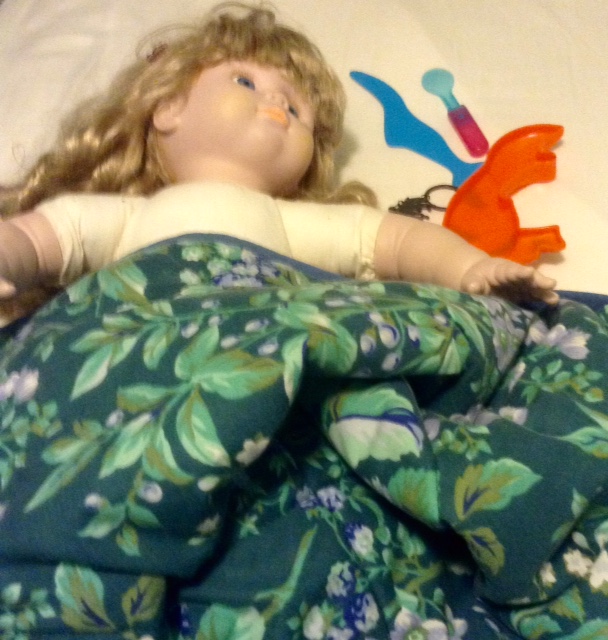
At first she is the mommy. Then she takes her baby with the soft tummy to the doctor. And she assumes the role of pediatrician. I’m not sure whether I am the sit-in for the mommy or an older child as she examines baby with makeshift instruments: a plastic spoon and knife, a key chain, a puzzle piece.

Her expression turns serious. “Most babies are normal,” she says. “And that is good.” Then she pauses after more pokes and probes and faces me. “But this baby has special needs. And that is good, too.”

She hands me the doll. My jokes have disappeared. I am in awe of a second-grade girl who speaks with wisdom. The softness of the toy and the softness of her words sink into me.

I have nothing to say.

doll

Read Full Post »

The voyage of discovery is not in seeking new landscapes but in having new eyes. (Marcel Proust

Ella is scarcely buckled into her car seat after kindergarten when she dumps out her backpack. “See,” she says opening a black binder. “My homework.”

“This is mine,” she adds showing me a page with squiggled lines of crayon. “I color.” Papers fly all over the back seat. I grab them. My juggling skills need practice. Jay is driving. I am sitting in the back seat with Ella—not to spoil my granddaughter, but to spoil me.

She turns to an earlier page. The paper clip sealing those completed pages flies off. I have no idea where the clip belongs, even if I could locate it on the dark floor. Chances are her mommy will know what to do. For now I gather the loose items into Ella’s backpack and ask our granddaughter to pretend to be the teacher. I will be the student.

She points to numbers one through ten and identifies them in a clear, I-know-this voice. If I ask her to repeat the lesson she will refuse. Either I catch it the first time or lose. Ella will not perform. She has been reading phonetically for over a year. On her own terms.

See-what-I-know is not in her repertoire.

Eventually, perhaps, she will learn how to play the going-to-real-life-school-game. For now I try to discover what she understands from what I can discern. Not from what I assume.

I kiss her on top of her white-blond head. “Want to go to the park?”

“Playground,” she answers.

I smile at an even-better-than-yes answer. She has chosen a synonym.

“You’ve got it!”

Our little girl may carry an extra chromosome, but she sure isn’t a syndrome. Yes, it may be easier to say Down syndrome child—but it isn’t accurate. She doesn’t fit into a category, a label. She has blue eyes, a winning personality, straight blond hair, the flexibility of a wet sponge, and Trisomy-21. She has the syndrome, but it is only one small part of who she is.

And I wouldn’t want her to be anyone but Ella. She reminds me of life’s priorities. They live in her spirit. Because of her I have the opportunity to become a better person. A little bit at a time.

We learn together, taking turns as teacher and student. Student and teacher…Graduation isn’t on the agenda. We both continue to grow.

at West Fork park September 14, 2015

Read Full Post »

Life isn’t about getting and having, it’s about giving and being. (Kevin Kruse)

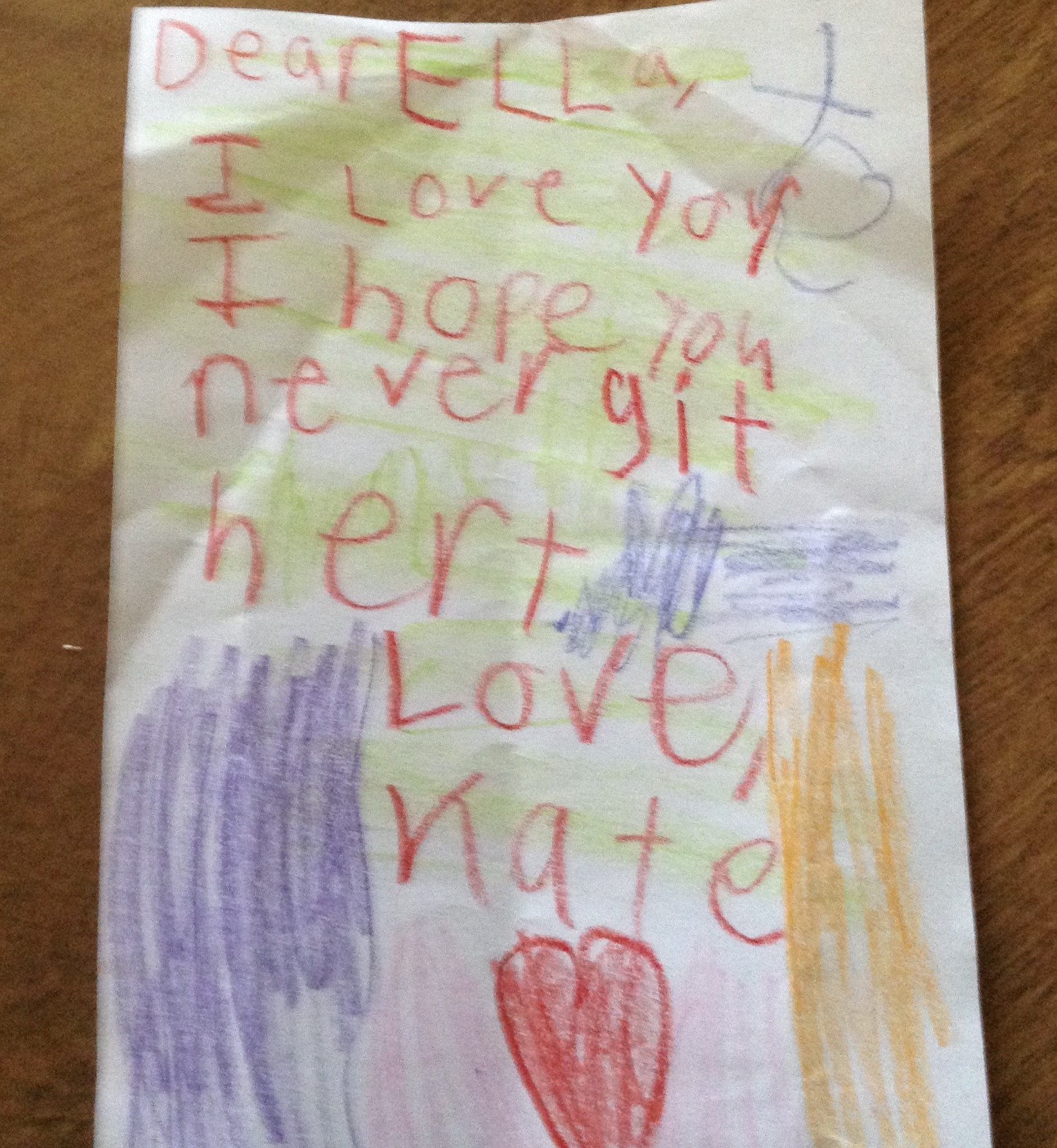
 As I’m dusting the windowsill I see the note Kate wrote to Ella, probably several years ago. I saved it because it reflects who Kate is. Ordinarily I choose to publish only quotes and pictures that include correct spelling and grammar. However, there are times when perfection can ruin the beauty of the moment. The sincerity of my eldest granddaughter’s wish blasts out from her innocence. She wants the best for her young cousin. I can’t fault that.

However, no one experiences a perfect life. Our Ella probably understands that better than many people do. She approaches a quarantine time. Her open heart surgery has been postponed twice. Now, so that she can move forward, we must keep her away from crowds and lots of germs. Of course she has no fear of infection. Saturday she dropped a vending machine M&M on a restaurant floor and then picked up the candy and chomped on it. Fear of another sick day does not govern her life.

I would like to delete fear from my own life. I would also like to send a message like Kate’s to a few other folk I know, to wish safety, health, and simple joys.

There is a young woman at a place I visit frequently who has recently had a recurrence of cancer. She is frightened, as anyone would be. She says she does not expect to recover this time.

She shows me the site from her biopsy, just below her throat. We share a few tears. I hug her. This is all I have to give. She says six words that scream a lifetime of experience: “I have always been the oddball.”

We are standing in front of a public bathroom mirror. I want to turn her toward the glass and point out what I see—a beauty that isn’t superficial. Tenacity and willingness to serve don’t appear in a flat reflection. Yet, I can’t find an opening in her spirit to explain that different is not a synonym for inferior. She is devastated, too broken for words to seep in yet.

I recall how I was the taunted kid through twelve grades of school. And I never understood why, except for the innate inferiority theory. After all, my parents never told me that I had gifts of any value.

This young woman has struggled through developmental handicaps. She has gone through chemotherapy. She volunteers. Daily. With a smile. She is in too much pain to understand more than a hug. Moreover, my recent accomplishments can obscure the realities of the past. She doesn’t see a future. Now is not the time for me to talk, but to listen.

Then I see her again this morning. She wears a pink fighting-breast-cancer scarf. She readily accepts my embrace and tells me she is taking her driving test on Tuesday. I grin. She talks about her nervousness. I think about facing tons of steel on the road. I envision this young lady approaching a 32-wheeler on the expressway and crushing cancer in the passing lane.

Perhaps enough people have listened to this volunteer. Maybe she is beginning to see her own worth, prayer answered before it was barely begun…

May that power continue to grow.


Dear Ella


Read Full Post »

This is what you must be like. Grow wherever life puts you down. (Ben Okri)

Scot wears a shirt that says: It doesn’t take much to make me happy. Perhaps that is because he doesn’t see the optimist’s glass as half-full; he sees it as close to overflowing. He doesn’t need a thrill ride at an amusement park. Trying on hats at Walmart can make his day.

When Scot was born fifty-one years ago, his tripled twenty-first chromosome dubbed him a mongoloid, an anomaly. Few people in those days saw beyond the almond-shaped eyes, small ears, and lowered muscle tone.

However, on February 4, 51 years ago the obstetrician told Scot’s dad that his newborn son had Down syndrome. He advised Dad not to tell Scot’s mother. The pediatrician would do it. His reason was not to protect Mom for just a little longer—it was to allow her to bond with Scot, to hold and to fall in love with him. Then when the pediatrician told her what to expect, he could also advise her to treat Scot as she would any other child. In this way his parents could face challenges, not impossible roadblocks.

Scot’s gift is hugging. He does not make judgments based on appearance. He chooses the person he will embrace next for his own reasons; he never explains why. Possibly that individual needs his positive energy—that over-sized woman at the mall whose eyes say life has dealt her more blows than she can handle, or the elderly man who hasn’t been touched in years.

This is Scot’s approach. He stands before someone, extends his arms and then watches for a response. If the person is responsive he offers his love, no strings attached. He has the kind of simplicity that is the essence of genuine love. Most people without the burden of an extra chromosome bear the weight of ego—viewing who-they-are as superior or inferior. Scot doesn’t get caught up in drama. He is who he is.

In fact, one of his favorite possessions is a stuffed toy rat. Somehow since Scot is someone who doesn’t judge, that doesn’t surprise me.

Many people may look at folk like Scot, or my Ella, and see the characteristics that suggest slower learning, perhaps a thickened tongue causing slowed speech. They turn away or make snide remarks. I’ve had people tell me they were sorry when I have told them my granddaughter had Down syndrome.

My response has been that I am not sorry at all. My Ella is only five-years-old and I can’t imagine life without her. Scot has been on this planet ten times longer. He has blessed people without knowing he is doing it, the purest form of giving. Is he perfect? Of course not. No one is.

But someday I hope to see the beauty in a rat, the homeliest person in the mall, and every gray ordinary day—just like Scot can. In the meantime, I will simply let as many people as possible know that Down syndrome does not mean down-anything-or-anyone. And when you see a man, woman, or child like Scot in the picture below, know that you are witnessing possibilities…

Scott04072015_0000

Read Full Post »

« Newer Posts - Older Posts »