I chose large print with the hope that these words will stay in my memory longer. I sit by the heart monitor that lets hospital staff know my heart bypass is operating A-okay. However, I feel best when I’m not thinking about it. My mind is young. Young!
Since I was born with reddish hair, I see only a few gray streaks in the mirror. At the age of 79. And a few wrinkles that age developed in my smile.
My five-year-old granddaughter calls me her young grandmother. I believe that is because I play with her. And refrain from laughing when she puts a stuffed animal under my shirt and says I am going to have my sister.
It’s winter. The grass waits under the snow. It knows warmth will reappear. So do I. The difference is that I wonder how much longer that will be. Someone I knew for many years died a few days ago. I am grateful that my last words to him were kind, before his illness appeared.
Kindness. Strange. Snow embraces bare trees and does no harm. When snow embraces skin, it is dangerous. Words of correction spoken with kindness are not the same when expressed with a critical tone.
Peace. I am beginning again. To write. One breath, one word at a time…
ICED WINDOWS, FROSTED VISION, revisited

To appreciate the beauty of a snowflake, it is necessary to stand out in the cold.
Aristotle

White sky and ground
blend into a seamless horizon of gray
where snow-encased branches rise
as part of both threat and beauty.
Darkness and slick roads threaten travelers.
Glistening ponds and crystal trees
tempt artists and treat the spirit.

I kick off my boots,
let them dry inside a warm house,
and allow my toes to find feeling again.
Then I embrace bitter and sweet
for as long as each experience lasts, in order to live
inside the fullness of each moment.
This is a reblog, from 2018. I discovered it accidentally and decided to share it again. The original appeared on January 1. This is my first sharing of the New Year. Perhaps a plunge into the past is forgivable. Once.
Unconditional love is hard to compete with. (Abbi Glines)
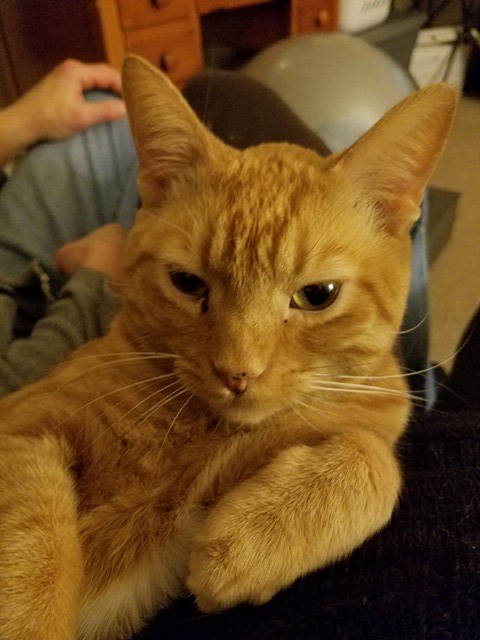
Greetings! My name is Hahvey, (Hah-VAY) official household greeter, master purr machine, and symbol of unconditional love.
Okay, I may slip in your way as you walk up the stairs. However, certain hazards occur when cats lead. Relax and love me back. I’m leading the way to your room for the night. Extra warmth is provided as needed by orange fur. Your sister, my wonderful keeper-of-the-can-opener? Well, you already know how devoted she is.
You left your purse at the annual party, the fest with all the beautiful songs. The purse contained prized possessions, like your phone, and your sister turned around and drove through the ice and snow. A good four inches of it. Temperatures my beautiful fur won’t touch. Not when I could freeze my nose, tail, or valuable parts in between.
You appear puzzled. Unfortunately, feline and human languages don’t align perfectly. I have inflections in my meow; my body language is easy to read. You need words from a dictionary thicker than my litter box to communicate. You are busy with many things. Recognize the line?
Unwind. Spend some quality time with your only sister. Okay? My feline buddy, Oui, and I will keep you entertained. You know we can do it. You’ve seen pictures of our antics.
By the way, you already know Oui means yes in French. He’s a positive addition to our group of living, loving creatures here. Did you know Hahvey is a diminutive form of a Hebrew word, Ahavah? Ahavah means love. No surprise, huh?
Oh, by the way, one more scratch. Behind the left ear this time. Yeah, you caught my drift.
“There are only two ways to live your life. One is as though nothing is a miracle. The other is as though everything is a miracle.” ― Albert Einstein
Kim’s Secret
“Aren’t you tired of ho-ho-ho songs by now?” Dana said, nodding toward the radio on the back counter.
Kim shrugged. Sure “Frosty the Snowman” earned freezer burn by December 23, but Phil’s “Silent Night” could calm a hurricane. She wanted to picture him playing guitar before his first round of chemo. She saw him in his red plaid flannel shirt and khaki pants that didn’t match, his leg muscles strong from jogging, and his dark hair three weeks late for a trim. When Phil plucked a string it answered with a celestial ring, even on his nephew’s student guitar. Phil’s upbeat attitude never fell out of rhythm, no matter how he felt.
What a family he has, Kim thought. And they accepted her the first time she met them, with all her quirks, something Kim never understood. Her mother died when she was two. And the only memory she had of her father came with a belt buckle flung across her back. However, she never saw the belt or her father again after the ambulance came and got her. Just the inside of three foster homes, the last an okay shelter, a good place only because Phil lived two doors away.
Tess, Phil’s mother, always said, “Look for the miracle, Kim.” Even through the worst of Phil’s illnesses.”
“How can you still believe in such things?” Kim would ask.
“You’re here, aren’t you?” Tess answered.
The IV room printer made demands that slowed Dana’s whining and took the edge off Kim’s worry about Phil’s cancer surgery, scheduled at ten, after five years of remission. She sighed. The doctor said the tumor was larger than the first or the second recurrences. She had told no one. In fact, she told no one about anything in her private life, even insignificant details. Fortunately, Phil was in another hospital. She regretted insisting that no one call her at work. Ever. She wondered if even hermits needed to take a breath out of their caves now and then. Her heart beat over time.
“Hey, who was that hunk I saw you with in the cafeteria last week?” Dana asked.
Kim gasped. Hunk? Phil weighed less than she did after all his chemo. His baseball cap fit as if he were a child wearing his father’s hat.
“A friend.” My fiancé someday, maybe. Tess may believe in divine intervention, but … She drilled an unblinking stare into Dana’s eyes. “Is there some reason you need to know?’
“Well, I …”
“Well, we’re running low on 5ml syringes. Should I get anything else before I scrub again?”
“No, but you don’t need to get so testy. I only asked.”
Kim kept her head down as she pushed a cart through the pharmacy’s IV supply aisle.
Dana said little the rest of the day, but the sweet Christmas songs lost their flavor.
Kim had known Phil for ten years, since seventh grade when they played basketball in his driveway. She beat him. Before his growth spurt. Tess gave her a basketball for Christmas. Phil wrapped it with leftover Christmas wrap in haphazard, clumsy patches. Then he presented it with a mock flourish as if it were a work of art. Even Phil’s dad, usually serious, couldn’t stifle a laugh.
Kim knew she had found a home, even if it wasn’t official.
As she got into her car at the end of her shift, she called Tess to get Phil’s room number.
“Oh, Kim, I wish you had let me call you at work.” Tess cried. “I almost did anyway.”
But the connection was so poor in the employee parking garage that Kim couldn’t catch her tone.
“What room is he in? I can barely hear you,” Kim shouted until she discovered at least that much. “Tell me the rest when I get there.”
When she arrived, Kim walked behind two men headed for the elevator.
“I know I’m only on first-year rotation, but I was in the OR. I saw everything,” one man said.
“But I saw the tumor on the scan, less than a week ago, not the first one he’s had either. Things don’t happen this way. You checked his labs?”
“Double-checked.”
“And they just closed him back up again?”
“Yes.”
Kim paled. No, it couldn’t be. But the second man said something about the first tumor appearing when the patient turned thirteen. This could not be some peculiar coincidence. They were talking about Phil.
When she got to his closed door, Tess opened it the instant Kim knocked.
“I should have called you anyway, whether you wanted me to or not.”
Kim hurried to Phil’s bed. He opened his eyes for a moment, then closed them again. “Sorry, sweetie, too many drugs, but the miracle lady’s got news for you,” he whispered.
Tess made a mock swing toward Phil, then laughed. “I understand the confusion in the OR was unprecedented. When they cut Phil open, the tumor wasn’t there. As in disappeared. Gone. Ended up sewing him back up again. He may be released tomorrow.”
“But, how?” Kim asked.
“Doesn’t matter,” Phil said, his voice weak, but clear.
“I’m confused.”
“What matters is that neither one of us gives up. What do you think? Big bash or small chapel wedding?”
Kim hesitated. Carolers began singing at the other end of the hallway. As they passed Phil’s door their harmony reached a crescendo, then settled into a gentle sweetness that faded into the opposite wing.
“Simple ceremony and celebration, lots of family,” she answered. “All I ask is that you be there.”
She caught Tess’s smile and grinned back. What more could she want than Christmas in a family made of miracles?
Forgiveness is the fragrance that the violet sheds on the heel that has crushed it. (Mark Twain)
Joy to the World” rose dulcimer sweet and holiday warm from my car radio as I pulled into the church parking lot last December 23. The song’s bright spirit irritated me. It reminded me of the heat in my ‘85 Buick—hell-fire hot on high or dead cold on any other setting. Turning off the ignition eliminated the carol, but it didn’t solve my problem.
So why was I going to a Christmas program, advertised as experiential, in a grumpy mood? A place where joyous carols were inevitable? I could convince myself that I was here because some random sign recommended the evening: Be in St. Patrick’s lot at seven. A bus will take you to the program from there. Location will not be announced. This is a definite don’t-miss! But my reason was less noble. I had refused to go with Jack and Tara to the airport to pick up my mother. My mother’s plane arrived at seven—I wanted to be almost anywhere else. This sign was the first thing I saw on my escape route.
Tara had brought a white poinsettia for Grandma Paisley. With her own money. I don’t know where my fifth-grade daughter found such fondness for the old witch. It’s not like Grandma gave her any more than an obligatory birthday gift now and then, usually the wrong color and the wrong size—from the double-mark-down, non-returnable rack.
Tara hadn’t even seen her grandma in two years. Mother moved to Florida in November on a whim. She didn’t even say goodbye. She just packed a suitcase and moved into an old friend’s apartment in case she decided to move back. She stayed for six months but didn’t pay rent—the friend evicted her. So much for Mother’s friends. I’m not certain where she went after that.
I couldn’t understand Jack’s enthusiasm for Mother’s visit either. He had been so supportive of me when I went into counseling, so depressed I grew dehydrated by crying. Not literally, but it felt that way.
The counselor was only minimally helpful, too confrontational. She had the audacity to suggest that I intentionally put on weight to hide my obvious resemblance to my mother. Yes, we both have eyes the color of weak coffee, slender noses, and square chins.
However, I’ve never been drunk in my life. And you can be certain Tara didn’t learn profanity from me. Any resemblance is skin-deep. That monotone-professional-doc-distance that the therapist used made me even more angry.
“Anna,” Jack said sighing. “Paisley has been sober for five weeks now.”
“So, you say. She also told you she’s vegetarian,” I said, shuddering because Jack said my name with disdain, yet referred to his mother-in-law by her first name. “She’ll take one look at our Christmas turkey and call us a bunch of carnivores. Then she’ll spread wheat germ into my cookie dough as if she were disinfecting it.”
“But nothing like that has happened yet.”
“Right. The key word is yet. Have you ever heard Mother say one kind word to me? And has she asked to say one word to me?”
“Compliments aren’t her way,” he answered.
***
I locked my old Buick and zipped the keys in my purse, I felt betrayed. Tara was barely ten years old. She didn’t know any better. But where had Jack’s support gone? I knew—to the airport to bring home a woman destined to destroy the happiest season of the year.
I was the last person in line to get on the bus.
“Not much of a turn-out for a production that’s supposed to be so incredible,” I mumbled.
“Oh, people are busy and over-committed this time of year,” the young, pregnant girl in front of me said. She had thin, stringy hair, washed, yet hastily combed, so it dried in haphazard clumps. She wore a faded wool coat that was the same shade of sweet potato orange as her hair. Two oversized buttons connected with their buttonholes at her neck and across her chest. Successive buttons and buttonholes grew farther and farther apart, exposing bib overalls over a belly ripe for birth.
I decided she couldn’t possibly be married. “Too bad you couldn’t bring your husband with you tonight,” I said, with only the barest tinge of regret.
“Oh, but he is here,” she said revealing a mouthful of crooked teeth. “He’s driving the bus.”
Two green, bulging trash bags lay on the seat behind the driver. She dropped them next to her husband, in the space between the driver’s seat and the window. He turned around and grinned. I guessed him to be part Mexican, a good ten years older than the girl. He had long, straight, dark hair that looked even straighter jutting out from a tight, brown knit hat. I wasn’t impressed with him either.
The girl motioned for me to get into the seat first.
“My name’s Marilyn. What’s yours?” she asked.
“Anna Barnes,” I answered. I didn’t really want to tell her, but “none of your business” contains three more syllables. I looked out at the pale flurries swirling in the darkness as if I really cared about them.
“We have an Ann in our famil…,” she said.
“That’s nice,” I said as free of affect as I could.
“I’m sorry you need to be so angry,” she said.
“What makes you think I’m angry?” I turned to face her.
“It’s thick around you, dipped-in-concrete thick.”
“If I were angry, could it be any business of yours?”
“Oh, we’ve had to forgive lots of folks who don’t understand the birth of this child. Haven’t we, José?”
José nodded and I felt emotionally naked and stupid in front of these bizarre strangers, despite the fact that my views were probably identical to the views of the forgiven.
“Nice lofty thought,” I said. “But some people deserve to be kept at a distance.”
“Maybe,” she said. “But keeping them off saps my energy. Besides, this baby is due any day now! He’s my first and I have no idea how long my labor is going to be.”
By now we were thirty miles east of the city, cornfield country. José turned down a narrow, unpaved road. The loose rocks made it difficult to drive with any speed. About one-half mile down, he stopped the bus at a farmhouse. One light shone from what was probably the living room. Silently he got out of the bus, walked to the door, and knocked. No one answered, he knocked again. The light in the house went out. José climbed back on the bus.
“We’ll try farther up the road,” he said to Marilyn.
He started the bus again and drove ten more minutes until we came to another house. He got out again and knocked. A man came to the door. Gesturing and pointing, he said something to José we couldn’t hear. José smiled as he re-entered the bus.
“Maybe not what we’re looking for, but this is it,” he said to Marilyn. Then he took the green trash bags to the back of the bus. Most of the people in the bus looked puzzled as the men and women in the last three rows reached into the first bag. Inside were angel costumes, white robes with gossamer wings attached. The angels sang as they pulled the robes over flannel shirts and faded blue jeans, “Silent night, holy night. All is calm. All is bright…”
Their voices blended a Capella—bass, alto, and tenor—with simple, unpretentious strength. A man opened the second bag and brought out shepherd costumes. He passed them out to anyone who would take one, then stood carrying a lantern. Outside the bus he lit the lantern while the angels continued to sing, “Oh, holy night. The stars are brightly shining…”
José took Marilyn’s arm and led her behind the house to a barn.
The people inside the bus followed.
The man with the lantern opened the door of the barn as Marilyn and José went inside. “In those days a decree went out from Caesar Augustus,” he began, loud and clear without help from a microphone.
There were no chairs, but I didn’t feel like sitting anyway.
The singers directed us to join them in “The First Noel.” I don’t have much of a voice, but even I couldn’t disobey angels.
Marilyn looked at me and smiled. Somehow, from center stage she didn’t look like an ignorant young girl to me anymore. She was smiling into my soul as if she could see all the concrete-angry ugliness I cherished. Yet she chose to care for me anyway. I wasn’t ready to accept or give that kind of love yet. But I was willing to learn—difficult visitor at my house this Christmas or not.
Merry Christmas
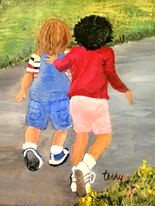
The illustration was made from a public domain image, color paper, and a piece of an old Christmas card.
Thanksgiving Day. It was yesterday in the United States. Its history is not something I choose to pursue because love does not echo from the core of the story. Instead, let love and gratitude for the possibility of peace take over. Begin today.
Recipes for peace are not easy. This recipe is. If you know someone who doesn’t have access to an oven or the following simple ingredients, perhaps that family would appreciate your gift of something warm and baked.
Mama’s Easy No Yeast Dinner Rolls:
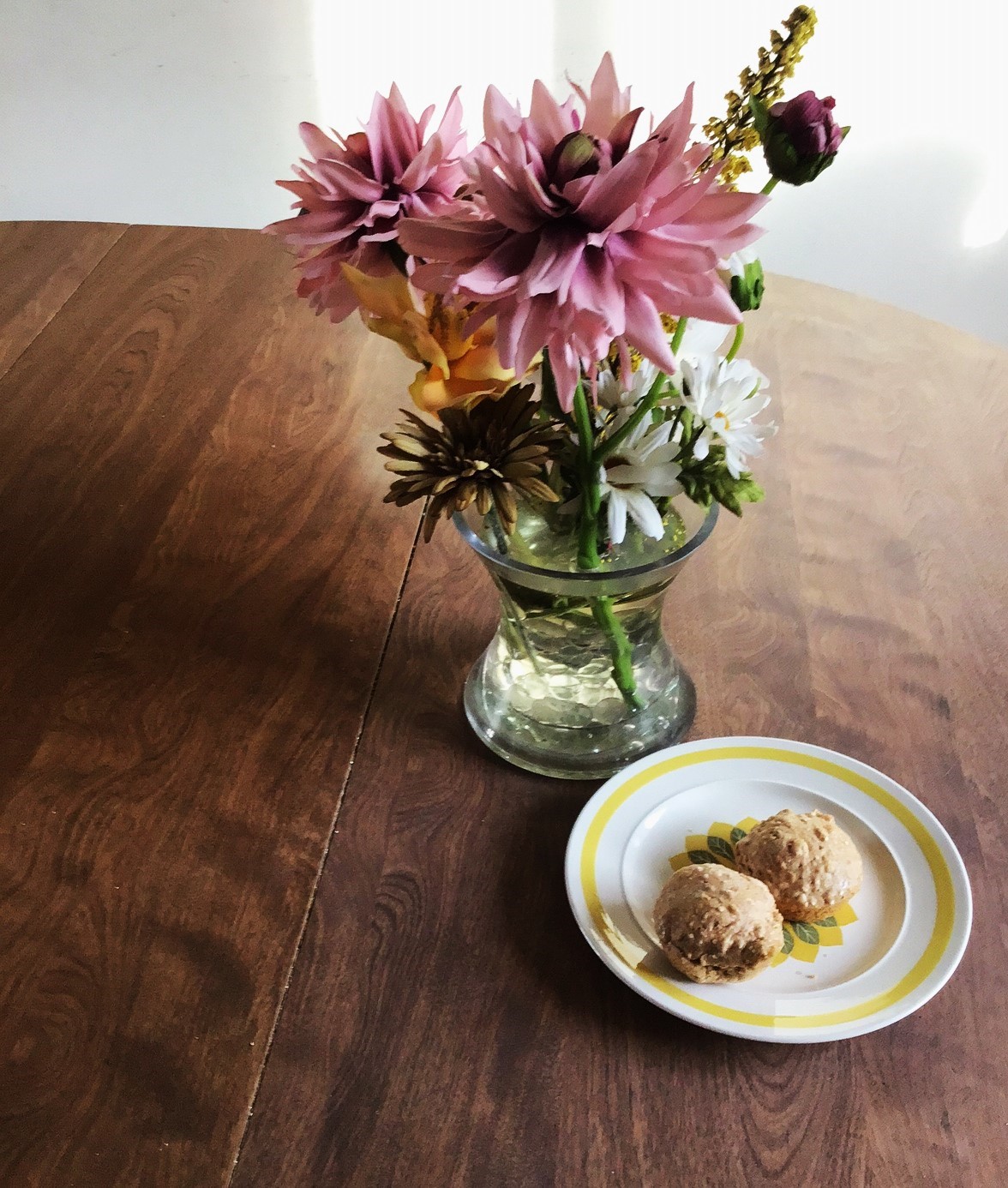
1 Cup Flour 1 tsp Baking Powder 1 tsp of salt 1/2 Cup milk 2 Tablespoons Mayonnaise
Combine all ingredients and spoon into a greased muffin pan. It makes approximately (5) rolls. Bake in a preheated 350-degree oven for 15 minutes or until golden brown and a fork inserted into the center of any muffin comes out clean.
(In the picture I used whole wheat flour blended with steel oats and quinoa. Hey, experiment. Why not?)
“When someone loves you, the way they talk about you is different. You feel safe and comfortable.”
― Jess C. Scott, The Intern

Future Life Dancer

Two little girls dance
on an empty open stage.
They twirl exploring dizziness
and laugh as song rhythms repeat.

A man comes and pulls
the older child away while
the smaller one continues
to explore her own feet,

to pat her toes in syncopated
rhythms on the wooden floor
as if she notices her shoes
and their sounds for the first time.

My brow lowers as the
scene continues and I wonder
if I am making judgments based
on fact. To bless all possibilities

I slip by the father and his two
small girls. “You have beautiful
children,” I say, then grin at the
older child. My words are for her.

illustration made from public domain image






 terrypetersen