Dear Broken Concrete

“Some people think that if they don’t know their faults, they don’t have any.”
― Frank Sonnenberg, Listen to Your Conscience: That's Why You Have One

I don’t know why I get stuck staring at you
when the rest of the path is clear enough
to get where I need to go.
One moment or word blasts a past human break
covered by years, opened unexpectedly now and then.
Perhaps it doesn’t matter that the imperfection appears.
Only that blue sky lives above it.
Look up, see, I finally say, then listen
to a child’s laughter in a neighboring yard.
A cardinal chirping its unique song.
Then I can go to the next turn in the road
and sing a fresh verse on solid ground.
I was ashamed of myself when I realized life was a costume party and I attended with my real face. (Franz Kafka)


WE CALL IT VISION

Sometimes the honest heart speaks within a limited space.
The first poem, a haiku, carries 5, 7, 5 syllables.
The next five lines, a tanka, delivers truth in 5, 7, 5, 7, 5 syllables.


DURING A BLACK-AND-WHITE TV SCENE

” I don’t see color,”
says a white man to lynchings
as he leaves the room.


COMMUNITY

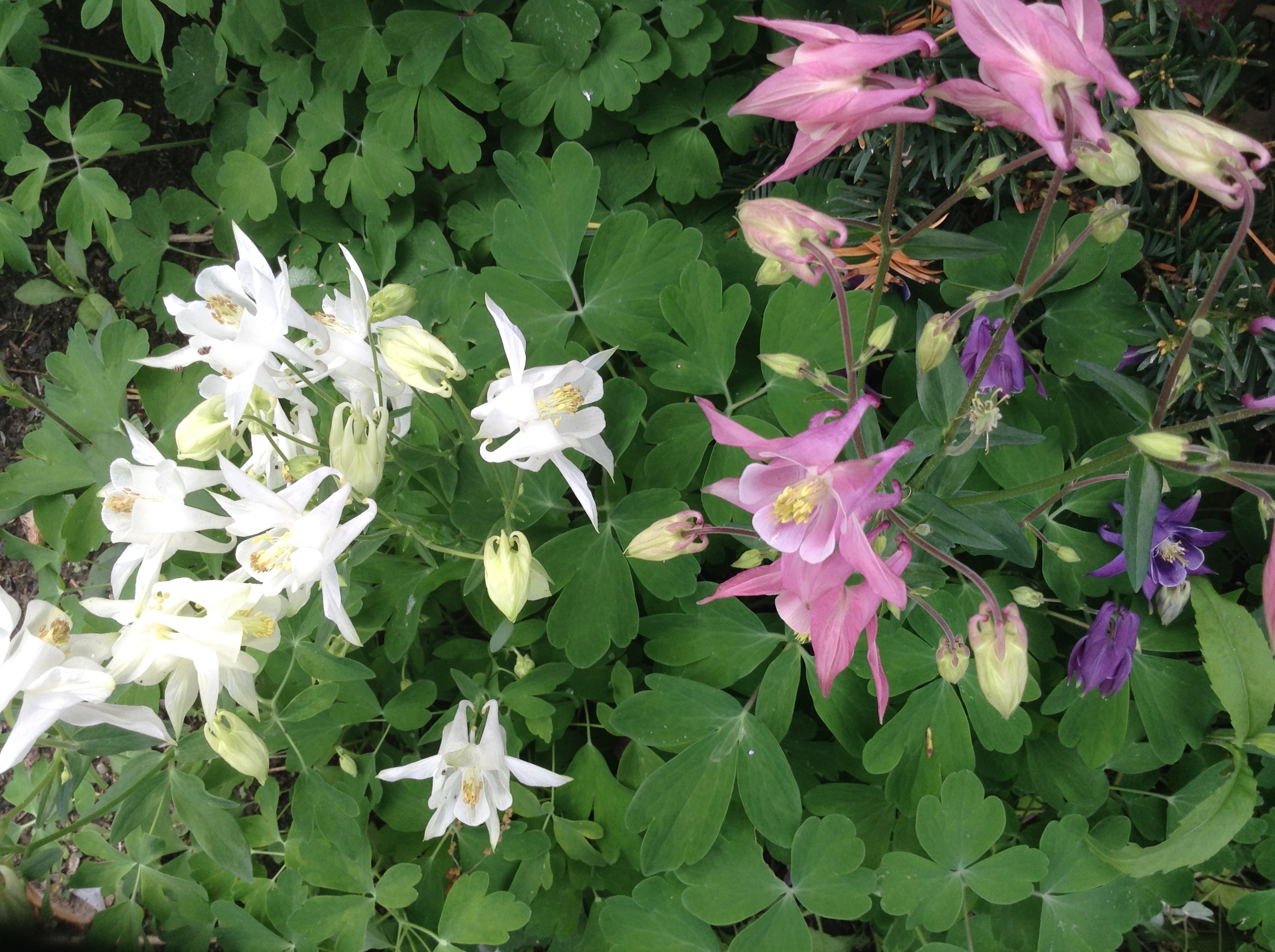
The flower sees bees
coming and opens petals.
Possibilities.
Plant and insect share alike.
Even as the stem stands still.
“When we establish human connections within the context of shared
experience we create community wherever we go.”
― Gina Greenlee, Postcards and Pearls: Life Lessons from Solo Moments on the Road


On Route

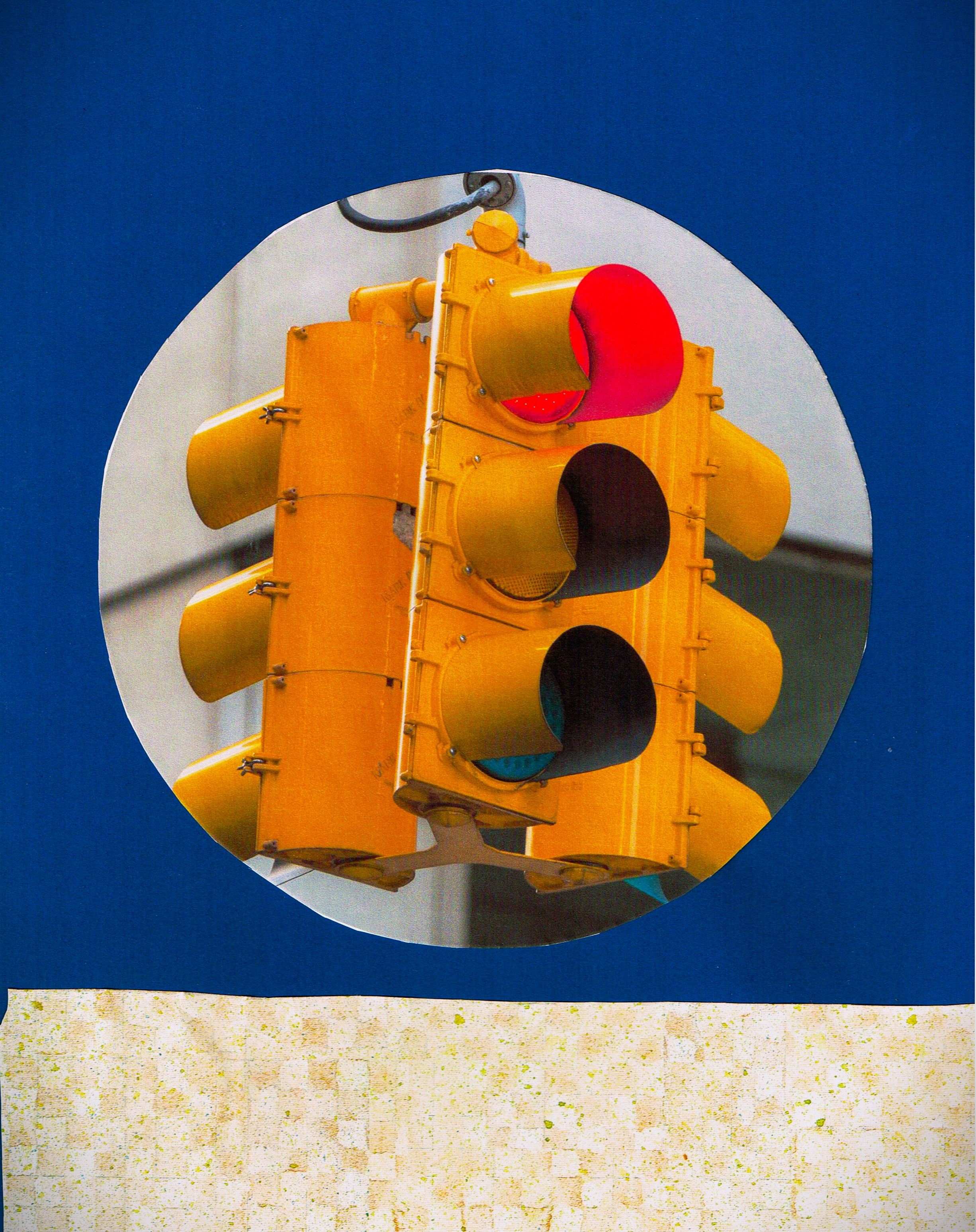
Another traffic light turns red.
As I wait, I notice a man
at a bus stop. He leans
on a white cane
and faces the direction
the bus will take him.
His ears know the unique
sound of a bus.
.

On the other side of the street
a young couple take turns
holding a baby too young to lift
an almost bald head.


A teenager guides an older woman
across the street.
The elderly woman stares ahead
toward the curb,
while the younger person
watches her companion’s feet.


The light turns green.
I know the lane patterns ahead.
This is familiar territory.
Yet, the space feels different,
made of intangible pieces,
concrete connected to spirit.


illustration made from public domain image and cut paper
Life is too short to be wasted in finding answers. Enjoy the questions. Paulo CoelhoOne square block of sidewalk.
Sometimes it appears sufficient,
a part of a whole.
On other days the pocked places rise.
And the darker pebbles act
as if they are meant to rule
my spirit. As if the promise
of lighter squares on the path ahead
couldn’t exist. I’m stuck.
One more step, then one more
until the walk becomes a journey again.
“Life becomes easier when you learn to accept an apology you never got.” — Robert Brault
FINAL APOLOGY
Dear Helen,
I’m sorry. Three syllables, like tiny drops of water offering to renew a desert. I’ll whisper them to Lyle during his funeral. Tomorrow. Even if it is too late.
Remember how Lyle always was a tad different? Borrowed Mom’s lipstick when he was five and painted his lips instead of the wall. Mom didn’t understand. She couldn’t understand anyone. Her actions mimicked the uneven beige wallpaper flowers in our attic storage room. Not only bland. Disconnected. Didn’t matter what anybody did. When Lyle’s report cards dropped from A’s to failing in middle school, she reacted the same way. Numbed on antipsychotics. Better than when she wasn’t.
Then Dad left and took Lyle with him. Good move. At least he graduated. Got a commercial art degree and a good job until his boss found out. You know. About how he was different. Downhill developed into an avalanche after that.
You managed the falls, like always. You were there for him.
Lyle called you from Michigan. Often. You told the latest Mom-sitting-on-the-porch-naked stories and sent him exotic pears. Shared hair dye secrets.
No surprise when Mom died in the expensive facility. Just before her sixtieth birthday. And the cash ran out.
You got busier. And busier. Took on more work than anyone else on the sales team.
When Lyle called and said he needed to talk, you were working on contracts. Two at the same time. You told him you’d call him later. He swallowed so hard you heard it. In the noisy office with rock music in the background. In desperate memory now.
Then came the call from Dad. The note. The details…
I can’t write any more now. Later. Maybe. Can’t sign a letter written to me. When I’m ready to step past the fact that Helen could have stopped her brother’s suicide and didn’t.
And forgive her—forgive me…forgive me… Tell me about how I held up the mountain before it fell. One more time.
“It is important for people to realize that we can make progress against world hunger, that world hunger is not hopeless. The worst enemy is apathy.” – Reverend David Beckmann, president of Alliance to End Hunger.
“Our deepest human need is not material at all. Our deepest need is to be seen.” – Eckhart Tolle
TWO FIFTY-DOLLAR BILLS
Cora rubbed the back of her head as she stepped onto the curb. Ooh, that really hurts! Damn, the stress has got me. She turned around and watched the traffic move at least twenty miles over the speed limit. Stress, right. Now that’s something like calling the ocean a tad damp. I’m 67, look 80, and feel 105.
A colorful sign caught her eye on the lawn of a charming three-story red brick house: Housekeeper wanted, great pay, inquire within. She hadn’t recalled seeing it before. The house didn’t appear familiar either. But survival had taken all her focus when she got on and off the bus Monday through Friday—when she’d had a job. She’d gone back today to try to get it back.
“I’m sorry,” her old boss had told her. “The company now requires all employees to have a high school education. You should have chosen retirement last year. Why run around like a dog chasing his own tail?”
I washed stuff and took out the trash for a company that made parts for something, ain’t sure what. You don’t need no education for that. Besides, this old brain ain’t got the energy for homework and exams no more.
“Hey,” she said to the sign. “What the heck. If the homeowner tells me to go to hell at least I can just turn around and say howdy to Satan. Eviction’s tomorrow. Wonder what I should wear for my first day on the streets.”
She walked to the door with her back as straight as possible. A junior high gym teacher had told her that good posture is confidence. Not much else brought it.
“Wish I had a purse,” she murmured. “Could use an ibuprofen. Not sure what hit me, but it had an attitude.”
Uncertain, she knocked so softly only a hound dog could have heard her, but a short, round woman with hair the color of silver tinsel answered. “Come in. Come in.”
“Saw your sign…”
“Yes. Yes, of course. And do you mind cleaning a house of this size? I have twelve rooms, and none of them are small.”
“Huh? No.”
“Do you mind being paid in cash?”
“That’s, that’s fine.” Cora tried not to stare at the woman, at least half a foot shorter than she was. She would have pinched herself to see if she was dreaming if she thought the woman wouldn’t notice. However, this lady seemed to catch every breath and eye flutter.
The house looked fantastic! The polished oak floor gleamed. The blue leather furniture appeared to be new and easy to maintain. Sunshine streamed through the windows and found no dust. How much would she need to clean? And any question she asked in protest would show how inadequate she really was. She could think of only one.
“I’m sorry, ma’am. I don’t know your name.”
“Angela.”
“And yours?” Angela cocked her head to one side.
“Cora.”
“Now is $200 a day enough?”
Cora gasped. This woman hadn’t even asked for her last name.
“Then follow me. I will show you your room. Then I will remove the sign from the yard.”
“That’s it? I’m hired?”
“You will clean whatever you see that needs to be done.”
“There’s gotta be a hitch to this,” Cora said, sorry she’d opened her mouth.
“Not a hitch exactly,” Angela answered. “But it isn’t what you might expect. I will pay you half in advance.” She reached into the pocket of her old-fashioned flowered apron and pulled out two fifty-dollar bills. “Perhaps you can confront what is in your way as you work here. And by the way, I suspect your headache has lightened.”
“How did you know…?”
“Your forehead had bulldog wrinkles when you came in. And your eyes were scrunched together so tight you almost had one eyebrow. Easy-to-interpret signs. By the way, I read people extremely well.”
“Oh.” That made sense. Sort of. Cora scratched the back of her neck, a nervous gesture.
“When can you begin?”
Afraid the money could be taken from her as easily as she had received it, Cora stuffed the fifties into her pocket. She glanced around until she saw a broom propped in a corner.
Angela seemed to notice. “Now that is the kind of attitude I like. We will talk later.” She pointed out the door to the room where Cora needed to start, waved, and went outside.
Cora expected her to return with the sign tucked under her arm, but when she peeked outside she didn’t see the silver-haired lady or the help-wanted sign. And she didn’t see anything that needed sweeping either.
She sighed. Clean what needs cleaning? Yeah, sure. This place is sterile enough for open-heart surgery. Then she opened the door. And gasped. Dust filled the air. She opened a window and then ran to find bug spray in a hall closet. Spider webs filled the corners of the windows. Clothes lay on the floor.
When she picked up one of the T-shirts, she recognized it. Her husband’s favorite: tie-dyed with IT’S NEVER TOO LATE TO HAVE A HAPPY CHILDHOOD printed across the front. The brash colors irritated her. He had worn it the day he left to pick up their daughter from kindergarten. He’d been home with a headache, like the one she had now, but she was gosh-darned sure he was faking it. He’d had an argument with his fix-it shop partner. Cora figured this was Jake’s way of getting even. The business hadn’t been doing well. So, she insisted he pick up Millie from kindergarten that afternoon. Then she could finish the laundry.
He’d had a heart attack on the way home and crashed into a tree. In those days children were allowed to sit in the front seat. Both Jake and Millie died.
And Cora thrived on bitterness. Friends ran away. So did the money.
She grabbed the shirt, uncertain whether she wanted to tear it apart or cry into it. She screamed, “How can there possibly be two shirts like this one?”
No one answered. Angela had not yet returned. Cora felt the fifties in her pocket. She remembered what the silver-haired woman had said. “We will talk later.” Cora considered running, but she had no place to go. “We will talk about what?”
The only thing she knew to do was clean, get rid of garbage, scrub. She held her breath as she opened the closet. She suspected the unpleasant surprises had not ended. Yet. She saw a cardboard box of toys and knew the next horror had arrived—on top of the stack lay a naked doll with over-combed blond hair. She remembered how she had lectured her daughter Millie about taking off her doll’s clothes and leaving them scattered all over the house—hours before she would never see her again. And this doll was an exact clone.
Cora dropped the doll. Maybe it was better to live on the streets than to face that day again. She sobbed until she didn’t think she had any energy left.
She had not heard Angela re-enter the house and come into the room. “You can let go now,” she said.
“Let go of what?”
“You are doing a spectacular cleaning job,” Angela said. “I trust you destroyed the cobwebs of your past and said goodbye to the guilt you created in here.”
“I didn’t clean nothing.”
“Well, actually I took your experience and gave it shape in here.”
“Who are you and what is going on?” Cora’s eyes widened. She wanted to run but stood frozen.
“You don’t remember how you got that headache, do you? But don’t worry. This memory lapse happens often after a ruptured brain aneurysm. It was fatal.”
“I may be dull as a rubber knife, but I know what fatal means,” Cora said.
“And you are absolutely right. This may not be as terrible as you think it is. Perhaps you need to know you are forgiven. With absolute certainty. Come. You have visitors. They want to take you home.”
The front door swung open, and a five-year-old girl ran inside. “Mommy, Mommy, I have been waiting and waiting for you. Daddy is outside. He said to hurry.”
Cora looked down at her arms and saw young, untroubled taut skin. She reached into her pocket, pulled out the two fifty-dollar bills, and handed them to Angela. “I don’t need these anymore.”
She ran out to meet her family as Angela placed the same sign in the front yard: housekeeper wanted, great pay, inquire within.
“Not the one who does not have an umbrella, but the one who does not like the rain, gets wet most under the rain!” (Mehmet Murat ildan)
PEACE ROSE
Jess stepped into the empty house. She owned it now. Or maybe it owned her. She didn’t know yet. Too many payments ahead. The moving truck carrying the bulk of what was left of her life had not yet arrived. She complained out loud about how she had ended up in this run-down neighborhood.
Sure, she had been living alone for years in a so-so two-family house on a mediocre side street, but her landlord had sold the building and the new owner wanted both floors. Jess wondered if this unmarried son who needed it was on drugs and would drop that second floor and his family into despair. She didn’t know and would never find out because she would now live across the street from a tattoo parlor and a thrift shop with uneven white misspelled lettering in the window: “uzed items, will close soon, cheaper than cheap.” Cheap was all she could afford.
At least her so-called new house had indoor plumbing. The front yard could have fit inside a child’s sandbox. The once-white siding sat on a smog-dirtied, heavily traveled state route. “I deserve better,” she muttered. The floorboards squeaked as she moved into the hallway; they mocked her.
The previous owners hadn’t left one curtain or blind on a window. At least a huge oak tree in the center of the yard saved her from an open view into the living room.
Her realtor had grown less friendly by the time the bank had closed on the buy. “The previous owners have re-glazed the tub, re-finished the floors, and done every inspection you requested. You got a fantastic price. There is no need or time for further changes.”
Jess had suggested that someone remove the jungle from the backyard. She didn’t know plants but thought poison ivy vines could easily hide in the tangled mass that climbed the back wall.
The moving van pulled up outside. On-time. Jess had the feeling that even after her furniture and rugs were settled, she could still expect some form of emptiness. Jess would sleep on the couch until her new bed arrived. A double, occupied by a single person—possibly indefinitely.
Even her eighteen-year-old daughter, Maura, had chosen to live with dear old Dad—a year after the divorce. Jess rarely saw Maura after that. Conversations with her daughter tended to be clipped and superficial.
“Refrigerator is here, ” a man, with a belly that mimicked the fifth month of pregnancy, announced.
“Around the corner,” Jess answered in the same curt tone. He smelled as if he hadn’t bathed in weeks. She was certain her mother would comment later. Her mother had met the movers at Jess’s second-floor flat. Jess wanted to be ready at her new place before the truck arrived. She tried to sigh out memories of her original home: a family with a mommy, daddy, and a girl who grew up to be a senior in high school…without her.
The sight of the man’s belly triggered another memory. She wouldn’t let it rise to consciousness. Besides, the thought seemed out of context, bizarre. Why should I remember that now?
The man’s partner arrived. Slender, but smelling just as nasty. “Where do you want the rug?”
“Front room. Where else?”
“Suit yourself. By the way, some guy just dropped off a girl, said she was your daughter. She’s standing outside.”
As if Les couldn’t come inside before he left. I doubt his legs are broken.
She stuck her head out the door. “In here, Maura!”
“Be right there.” But Maura waved with enthusiasm in another direction, toward the yard next door. She had the kind of personality that made friends with a pit bull trained to fight. However, Jess couldn’t see where Maura’s wave was aimed, and she certainly couldn’t hear a bark.
Before Jess could go to the door to check out what was going on, the slender man said, “We got a couch, chairs, and a slew of boxes. So where do you want them?”
Jess thought she knew exactly how everything should be positioned, but the furniture didn’t fit. After they were rearranged, Maura sauntered into the house.
“So, who were you talking to?” Jess asked.
“The girl next door. Cousin of a friend.”
“Small world.” Jess’s tone could just as easily have said, pass the potatoes. Her voice was flatter than the wallboard.
“So, what do you want me to do first, Mom?”
“You can help me unload the boxes I have in the car.”
“As long as I don’t have to unpack your undies,” she whispered toward her mother’s ear. “By the way, Dad gave me some money to take you out for lunch. Later.”
“How kind of him,” Jess said allowing the sarcasm to rise as if it were water boiling in a too-small pan.
“Well, he’s trying.”
“Trying as a verb or adjective?”
“Mom, let’s just get you settled. I can’t make things right between you and Dad.”
“There’s more to it than you know.”
Maura leaned a box against the car and dropped her head against it. “Uh, too much information.”
“I would never talk about that!”
The moving men finished sooner than Jess expected. Efficient? Maybe, but she hated to think about how much this was costing her. She let out a long sigh. At least she could be glad the stink was out of her house.
“Dad said he could pick me up at six…or I could stay longer, if…”
“If what?”
Maura turned away as she opened a box marked kitchen items. “Mom, this gets weird. Do you know that? I hate feeling like everything I say could start an argument. That’s why I decided to live with Dad. A long time ago. But I’ve been thinking a lot lately. Remembering.”
Jess pulled a plastic silverware divider from the box. “Good stuff or bad? Or should I ask?”
“Great stuff. I had chicken pox the day our class was going to the science center. I’d been looking forward to that day for weeks. And you sat with me. All day. Played games. Read my favorite books. Then you traded off a day of work and just the two of us went. Your feet hurt by the time we got home from the center.
“Another time this kid in the neighborhood was going to give me a turtle, the biggest thing I had ever seen in my life. I thought it was part dinosaur. He told me to feed it some lettuce with my bare hands. You had just come out to work in the garden and heard him. Boy, did you ever give him the what-for. You got the broom, stood a distance away, and then took it and gently directed the handle toward the turtle’s mouth. It went for that broom as if that handle were course one at a turtle banquet.”
“The snapping turtle. Yeah. That kid was a mean hot wire. But that was a long time ago. How old were you anyway?”
“I don’t know. Before fourth grade anyway. Then something happened—you weren’t my best friend anymore.”
“Sometimes life throws you a wrench.” Jess opened another box. “But I’m sorry it turned out that way. Really.”
“Sorry. That’s not something you say often.”
“And don’t expect to hear it too many more times.”
The doorbell rang. It sounded like clapping seals. “Now there is something I didn’t think about checking before I bought this house,” Jess said.
“Maybe you can get a bell that plays ‘I hear you knocking, but…’”
“Who the heck could be at the door?” Jess asked.
“I’ve got an idea, so I’ll get it.”
Maura opened the door. A young girl of about thirteen and a tall man with dark hair stood outside. “Yup, I was right!” Maura said.
The man carried a box. “I noticed you didn’t have any curtains. These will work temporarily. At least they are clean. And my daughter and I brought you a housewarming gift. It’s on the front porch. I’d be glad to plant it for you, just show me where you would like it to go.”
“A gift?” Jess stood confused.
The girl opened her mouth, but the sound wasn’t clear. She and Maura spoke to one another using sign language.
“Come on out to the porch, Mom, let’s look.”
“Oh my, a rose bush. Yellow, moving toward a dark pink around the edges. Lovely. Please thank your wife for me, too.”
“My wife died two years ago.”
“I’m sorry,” Jess said. Sorry, twice on the same day. She looked at the back of her hands as if they suddenly interested her. She realized she really was sorry. The sudden turn toward softness took her off guard, a guard she had maintained for a very long time.
“If you would like I could clear out those weeds in the back. They’ve been there so long I’d bet the roots are oak tree deep.”
The girl signed to Maura again. “She’s saying these are Peace roses. I’m thinking we could use their vibes.”
“Well, I’ve got to go to a meeting,” the man said. “But here’s my card with my phone number. Call if you need anything. I understand my daughter and yours already know one another.”
“Yes, yes. Thank you,” Jess said.
“I’m not really sure what happened there,” she told Maura after they left. “Since when did you learn sign language?”
“I took it as my foreign language choice. I volunteer at a camp for kids with special needs, too. I liked it so much that I’ve decided I’m going into special ed. Eventually anyway.”
Jess touched one of the flowers with the tip of her finger. She’d missed her daughter’s life. Because she had chosen to live with her dad? Or was there more to it than that? “Hope I can keep this thing blooming. The thing is…” She sank onto the front step.
“Mom, what’s wrong?”
“I’ve been trying so hard to forget. But then one of the movers had this out-front belly. Then you say you want to go into special ed.”
“Forget what?”
“You know I lost a baby when you were ten, a little boy. But you don’t know the rest of the story. I never told you. The doctor told me I was lucky because the baby’s intestines were outside his body. His esophagus didn’t connect to his stomach. And he had problems inside his brain. The hospital staff tried to console me by saying life would have been horrible.”
“He had Trisomy-18?”
“You know what that is?”
“Yeah. I did a report on it for a science class last semester.”
“But I didn’t care. He would have been my baby boy. Dad agreed with the doctor. He said I was overreacting. We should start over. But then, within months, he decided one child was enough. So, I stopped talking about it. I stopped a lot of things. And everything around me turned ugly.”
Maura sat next to her mother but said nothing for a few minutes. “I’m spending the night. Got a toothbrush in my purse. All I need is a floor and a pillow. Maybe we can plant the Peace Rose tomorrow. Then again, we could ask a mighty tall-dark-and-handsome neighbor to do it for us. I mean, I know you can’t un-plant ugly memories overnight, but I could deal with a stepfather who likes rose bushes and makes my mama happy… Someday anyway.”
Jess swung and intentionally missed her daughter. She smiled for the first time in a very long while.
“When infants aren’t held, they can become sick, even die. It’s universally accepted that children need love, but at what age are people supposed to stop needing it? We never do. We need love in order to live happily, as much as we need oxygen in order to live at all.”  Marianne Williamso


A toddler wanders wherever his curiosity leads
while Mommy and older siblings caution him.
Greens, blues, and moving objects call
to his curiosity. Come.

This moment is alive
even if he doesn’t know language
or time. Grandma’s wrinkles intrigue him.
He sees intricate gold on her wrist,

not the hours held inside her memory.
To Grandma this moment seems
as limited as the space Mommy
permits her son to roam.

Toddler snuggles against
Grandma’s cheek. She knows
that all moments face limits.
Yet love endures.
Any fool can know. The point is to understand. –Albert Einstein

Strawberry Pie Quatern
Your handwriting in purple ink
resurrects you ten years after
your death when a recipe card
falls from a forgotten cookbook.

Tart, sweet, secrets sneak through curves of
your handwriting. In purple ink,
with bold color, you claim knowledge,
if only how to bake a pie.

Mom, you were taught to stay hidden
in the background of a man’s world.
Your handwriting in purple ink
trembles to be more than pie dough.

I apologize years later
for asking so little of you.
I long to see your soul shared through
your handwriting in purple ink.







 terrypetersen