“It`s not how old you are, it`s how you are old.”
― Jules Renard

Old People

Old People,
Look at the present and savor it because each
Day may not be
Perfect, but if it’s not
Enveloped in pain, it’s okay.
Old folk, celebrate the
Persons in your lives who
Love because it alone makes
Existence worthwhile.  Love back~
Look deep into nature, and then you will understand everything better. –Albert Einstein
The Sun Rose Again Today
The sun rose again today. In its light I watch as birds arrive and share our feeder. Three sparrows and a blue jay. Later, a cardinal settles on the right. He takes a bite then brings his color to other streets and zones. There is enough seed and light for all.
A goldfinch, his spring color hidden in February, appears. More birds land as the week continues. They join the blended beauty of my integrated neighborhood.
The sun rose again today. May the earth it touches warm hearts and open sleepy eyes to see the ways of the earth. May there be light, color, and seed for all nature’s humans as well.
When we are children we welcome thinking of the future. This innocence leaves us free to enjoy ourselves as few adults can. The day we fret about the future is the day we leave our childhood behind. Patrick Rothfuss
Nope, No Wedding Yet
The rocky ground at the bottom of the street of my grade school home became my mini-mountain, perfect for climbing. It was hidden behind enough trees to be its own paradise, a place for a kid to climb and become king of the world. When I was nine years old I saw nothing peculiar about a strawberry-blond girl king.
The great play arena eventually disappeared as developers plowed through. But in the mid 1950’s Joe and I claimed the world. He was my self-proclaimed boyfriend. In fourth grade I hadn’t graduated from paper dolls and mud pies, so the notion of a white veil followed by a life in the kitchen sounded as appealing as living with a perpetual mop. I was allergic to homework, much less life responsibilities. Imagination was more appealing.
Joe wasn’t like the other guys in my class. We played as equals. I knew his family wasn’t tidy. I didn’t care. Joe didn’t need the meaner boys around him to be okay. He wasn’t the tallest and certainly not the most popular kid. Mom had never met him. That alone was good enough for me. Outside, Joe and I could always be free. From homework or chores. From real life. We challenged an open space where the air moved freely around our imaginations. And the blue sky was on our side.
“Hey,” he said one day. I saw a kind of shy smile in his brown eyes that didn’t match the same dirty blue jeans he wore all the time, and he planted a kiss right smack on my lips.
I thought, oh yuck, but didn’t want to hurt his feelings. Joe wore a kindness that transcended grime. You had to face foreign lands on a fun rock to see past the classroom to understand Joe. We never talked about school stuff. Only the next jaunt into places we created.
“I’ve got a special surprise for you since your birthday is coming up,” he said. “Come to my house.”
We cut through two yards and landed on his street in something like three eyeblinks.
“Hey, Mom!” he called. “Where’s the engagement ring I found? I am going to give it to Mary Therese.”
Mary Therese! My at-school name. I groaned. Oh no. Formal talk. Sounded like a nun. Not me. I’d never hit anyone with a ruler in my life. And I would be off balance with a rosary that big at my waist. A wedding would spoil that lifestyle but neither wife nor sisterhood sounded appealing. And call me Terry, my at-home name.
How could I say something about how I thought girls had to at least have boobs before marriage without sounding personal? Joe’s mom wasn’t mine. The question would need to wait.
“Oh Joe, I’m sorry,” his mother said, not sounding sorry at all. “That ring got accidentally flushed down the toilet.”
Joe groaned. Now that I didn’t need to worry about a commitment, gratitude filled every cell of my tiny being. Who needs a ten-year engagement? Or worse, a lost recess for a wedding ceremony? Yet somehow Joe quickly recovered.
Our relationship ended long before puberty. As time passed, I hoped Joe found someone. Later. Much later. Long after the septic system absorbed my first engagement ring. I always wondered whether it had been born in a box of Cracker Jacks or found on a west-side sidewalk.
At least now if someone asks if I ever broke someone’s heart I can say, “No. The ordinary toilet took care of that for me.”
Anne Frank’s words: “I don’t think of all the misery, but of all the beauty that still remains.” Her voice was forever silenced. Yet, her heart rings true in this oh-so-similar era.
Hope. Insight. Peace. They grow inside seeds that don’t recognize their worth when planted. Small, invisible in a world where power and greed rule. May buds of integrity bloom, then refuse to die.
Forgiveness is the fragrance that the violet sheds on the heel that has crushed it. (Mark Twain)
Joy to the World” rose dulcimer sweet and holiday warm from my car radio as I pulled into the church parking lot last December 23. The song’s bright spirit irritated me. It reminded me of the heat in my ‘85 Buick—hell-fire hot on high or dead cold on any other setting. Turning off the ignition eliminated the carol, but it didn’t solve my problem.
So why was I going to a Christmas program, advertised as experiential, in a grumpy mood? A place where joyous carols were inevitable? I could convince myself that I was here because some random sign recommended the evening: Be in St. Patrick’s lot at seven. A bus will take you to the program from there. Location will not be announced. This is a definite don’t-miss! But my reason was less noble. I had refused to go with Jack and Tara to the airport to pick up my mother. My mother’s plane arrived at seven—I wanted to be almost anywhere else. This sign was the first thing I saw on my escape route.
Tara had brought a white poinsettia for Grandma Paisley. With her own money. I don’t know where my fifth-grade daughter found such fondness for the old witch. It’s not like Grandma gave her any more than an obligatory birthday gift now and then, usually the wrong color and the wrong size—from the double-mark-down, non-returnable rack.
Tara hadn’t even seen her grandma in two years. Mother moved to Florida in November on a whim. She didn’t even say goodbye. She just packed a suitcase and moved into an old friend’s apartment in case she decided to move back. She stayed for six months but didn’t pay rent—the friend evicted her. So much for Mother’s friends. I’m not certain where she went after that.
I couldn’t understand Jack’s enthusiasm for Mother’s visit either. He had been so supportive of me when I went into counseling, so depressed I grew dehydrated by crying. Not literally, but it felt that way.
The counselor was only minimally helpful, too confrontational. She had the audacity to suggest that I intentionally put on weight to hide my obvious resemblance to my mother. Yes, we both have eyes the color of weak coffee, slender noses, and square chins.
However, I’ve never been drunk in my life. And you can be certain Tara didn’t learn profanity from me. Any resemblance is skin-deep. That monotone-professional-doc-distance that the therapist used made me even more angry.
“Anna,” Jack said sighing. “Paisley has been sober for five weeks now.”
“So, you say. She also told you she’s vegetarian,” I said, shuddering because Jack said my name with disdain, yet referred to his mother-in-law by her first name. “She’ll take one look at our Christmas turkey and call us a bunch of carnivores. Then she’ll spread wheat germ into my cookie dough as if she were disinfecting it.”
“But nothing like that has happened yet.”
“Right. The key word is yet. Have you ever heard Mother say one kind word to me? And has she asked to say one word to me?”
“Compliments aren’t her way,” he answered.
***
I locked my old Buick and zipped the keys in my purse, I felt betrayed. Tara was barely ten years old. She didn’t know any better. But where had Jack’s support gone? I knew—to the airport to bring home a woman destined to destroy the happiest season of the year.
I was the last person in line to get on the bus.
“Not much of a turn-out for a production that’s supposed to be so incredible,” I mumbled.
“Oh, people are busy and over-committed this time of year,” the young, pregnant girl in front of me said. She had thin, stringy hair, washed, yet hastily combed, so it dried in haphazard clumps. She wore a faded wool coat that was the same shade of sweet potato orange as her hair. Two oversized buttons connected with their buttonholes at her neck and across her chest. Successive buttons and buttonholes grew farther and farther apart, exposing bib overalls over a belly ripe for birth.
I decided she couldn’t possibly be married. “Too bad you couldn’t bring your husband with you tonight,” I said, with only the barest tinge of regret.
“Oh, but he is here,” she said revealing a mouthful of crooked teeth. “He’s driving the bus.”
Two green, bulging trash bags lay on the seat behind the driver. She dropped them next to her husband, in the space between the driver’s seat and the window. He turned around and grinned. I guessed him to be part Mexican, a good ten years older than the girl. He had long, straight, dark hair that looked even straighter jutting out from a tight, brown knit hat. I wasn’t impressed with him either.
The girl motioned for me to get into the seat first.
“My name’s Marilyn. What’s yours?” she asked.
“Anna Barnes,” I answered. I didn’t really want to tell her, but “none of your business” contains three more syllables. I looked out at the pale flurries swirling in the darkness as if I really cared about them.
“We have an Ann in our famil…,” she said.
“That’s nice,” I said as free of affect as I could.
“I’m sorry you need to be so angry,” she said.
“What makes you think I’m angry?” I turned to face her.
“It’s thick around you, dipped-in-concrete thick.”
“If I were angry, could it be any business of yours?”
“Oh, we’ve had to forgive lots of folks who don’t understand the birth of this child. Haven’t we, José?”
José nodded and I felt emotionally naked and stupid in front of these bizarre strangers, despite the fact that my views were probably identical to the views of the forgiven.
“Nice lofty thought,” I said. “But some people deserve to be kept at a distance.”
“Maybe,” she said. “But keeping them off saps my energy. Besides, this baby is due any day now! He’s my first and I have no idea how long my labor is going to be.”
By now we were thirty miles east of the city, cornfield country. José turned down a narrow, unpaved road. The loose rocks made it difficult to drive with any speed. About one-half mile down, he stopped the bus at a farmhouse. One light shone from what was probably the living room. Silently he got out of the bus, walked to the door, and knocked. No one answered, he knocked again. The light in the house went out. José climbed back on the bus.
“We’ll try farther up the road,” he said to Marilyn.
He started the bus again and drove ten more minutes until we came to another house. He got out again and knocked. A man came to the door. Gesturing and pointing, he said something to José we couldn’t hear. José smiled as he re-entered the bus.
“Maybe not what we’re looking for, but this is it,” he said to Marilyn. Then he took the green trash bags to the back of the bus. Most of the people in the bus looked puzzled as the men and women in the last three rows reached into the first bag. Inside were angel costumes, white robes with gossamer wings attached. The angels sang as they pulled the robes over flannel shirts and faded blue jeans, “Silent night, holy night. All is calm. All is bright…”
Their voices blended a Capella—bass, alto, and tenor—with simple, unpretentious strength. A man opened the second bag and brought out shepherd costumes. He passed them out to anyone who would take one, then stood carrying a lantern. Outside the bus he lit the lantern while the angels continued to sing, “Oh, holy night. The stars are brightly shining…”
José took Marilyn’s arm and led her behind the house to a barn.
The people inside the bus followed.
The man with the lantern opened the door of the barn as Marilyn and José went inside. “In those days a decree went out from Caesar Augustus,” he began, loud and clear without help from a microphone.
There were no chairs, but I didn’t feel like sitting anyway.
The singers directed us to join them in “The First Noel.” I don’t have much of a voice, but even I couldn’t disobey angels.
Marilyn looked at me and smiled. Somehow, from center stage she didn’t look like an ignorant young girl to me anymore. She was smiling into my soul as if she could see all the concrete-angry ugliness I cherished. Yet she chose to care for me anyway. I wasn’t ready to accept or give that kind of love yet. But I was willing to learn—difficult visitor at my house this Christmas or not.
Merry Christmas
The illustration was made from a public domain image, color paper, and a piece of an old Christmas card.
Thanksgiving Day. It was yesterday in the United States. Its history is not something I choose to pursue because love does not echo from the core of the story. Instead, let love and gratitude for the possibility of peace take over. Begin today.
Recipes for peace are not easy. This recipe is. If you know someone who doesn’t have access to an oven or the following simple ingredients, perhaps that family would appreciate your gift of something warm and baked.
Mama’s Easy No Yeast Dinner Rolls:
1 Cup Flour 1 tsp Baking Powder 1 tsp of salt 1/2 Cup milk 2 Tablespoons Mayonnaise
Combine all ingredients and spoon into a greased muffin pan. It makes approximately (5) rolls. Bake in a preheated 350-degree oven for 15 minutes or until golden brown and a fork inserted into the center of any muffin comes out clean.
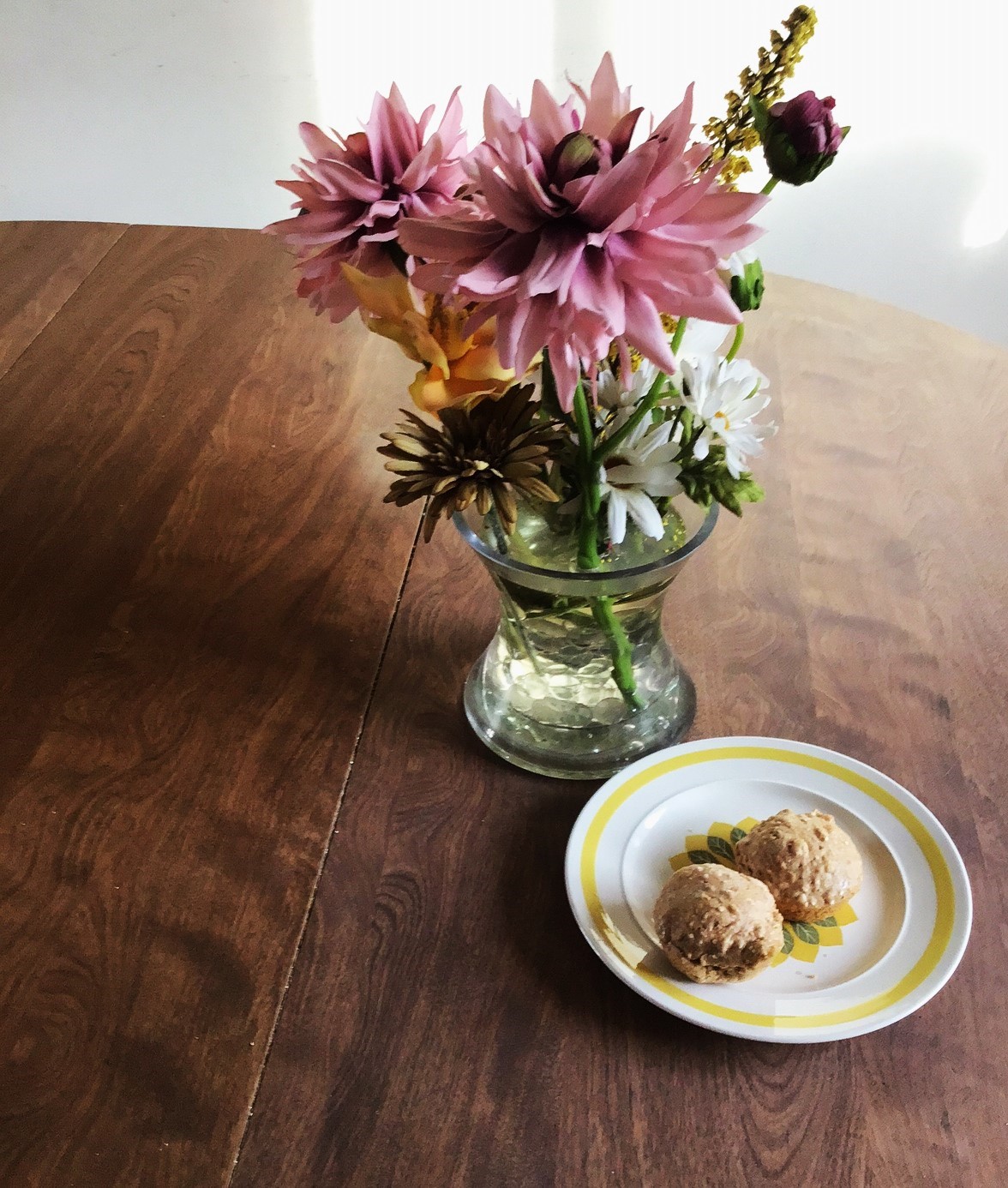
(In the picture I used whole wheat flour blended with steel oats and quinoa. Hey, experiment. Why not?)
Confidence is ignorance. If you’re feeling cocky, it’s because there’s something you don’t know.Eoin Colfer
DOING RIGHT BY MAMA AND THE LORD
In Lime Creek, Kentucky we had rocks for farmland, a truck garden with more weeds than tomatoes, and a cabin set up on stones with copperheads underneath. But the snakes didn’t call us hillbillies like the folk in Ohio did, and me and my brothers and sisters didn’t have a stepmama who’d sooner kick us than share a loaf of five-cent bread.
We had Mama then. She got sick and couldn’t do nothing no more. Didn’t change her being Mama. Not to us. All of us kids took over chores. At four years old I held the metal pan for her to puke in. The blood scared me, but I never dropped the pan.
Then Mama got so skinny she hardly had enough skin to cover her bones. She asked all us kids to gather around her one day before the sun woke up. She told us an angel had come. She was going to heaven. That morning. She said she loved us. We didn’t want to hear it. Mama didn’t talk about loving—she done it. That was enough. We wanted her to stay right there in the cabin with us. Even if TB had stole all her breath and she couldn’t get out of bed no more.
Then Papa, my brothers and sisters, and me moved to Cincinnati in the summer of 1930. I had turned seven by then.
My big sister, Cloda, talked about heaven, where Mama lived, all the time. She talked about hell, too. Though I can’t say how she knew about either one. Neither Papa nor Mama ever brought us to any kind of church. And Cloda took care of Mama while she was ailing. Cloda never had time for schooling.
Cloda got this notion that she had to take me, my bigger sister Violet, and younger sister Elva to church to learn about God. Soon as we had proper clothes. So, when some folk from school dropped off a box of used stuff on our doorstep, she decided the time had come, a sign from God and a sign from Mama.
“Toy,” Cloda told me as us four girls settled down on our mattress one night, “I don’t want to hear no fussing from you about this. We’re going to honor the Lord and we’re starting this Sunday.”
My sister, Violet, groaned so I guessed Cloda had already told her about it. She leaned on her elbow and stared at us. “When you get your head on something, it sure stays stuck there. A tick don’t hold on the way you do.”
Cloda acted like she didn’t hear her, though in our tiny house, it wasn’t likely words could hide. Our room and mattress fit almost to the walls. Our bed didn’t have a sheet. We had one dingy window that opened to the morning sun, and a wood floor so worn that cleaning it was like trying to wipe the dirt off the top of an old sponge.
“Good night.” Cloda’s voice gave the notion everything would be okay. Just by setting in something called a pew and listening to a preacher talk.
I doubted it. Even as the dullest and oldest kid in third grade, I knew God took Mama away and didn’t bring her back. I couldn’t get excited about something I didn’t know nothing about. Besides, cracks around the window leaked cold air, and Violet smacked me when I leaned into her.
***
“So, what church we going to?” I asked Cloda that next Sunday as we walked what seemed a awful long way down Amity Road.
“Church of Eternal Holiness.”
“The Methodist church on Beech is a lot closer,” Violet said. She was smart and always acted like she had a bee buzzing around her that needed swatting.
“We can walk. It’ll be good for us. Besides, I like the name, with holiness in it and all.”
“What kind of church is the one we’re going to?” my little sister, Elva, asked.
“Don’t know, but a girl I work with at the trunk factory likes it.”
The church looked more like a old store than a church, no cross on it or nothing. We set down in the back, on this long bench. The room looked plain as a barn. Up front, right in the middle, stood a small, slanted table with one leg holding it up. A man, probably the preacher, leaned into it. He talked soft and down-home at first. I liked the sound of the a’s and o’s I remembered from Kentucky, more like music than in-a-hurry Ohio talk.
“Praise the Lord,” the preacher says. His voice sounded a little high for a man, something like our old neighbor, Homer’s, one of Papa’s drinking buddies.
“Praise the Lord,” the people answered, some loud, some mumbling.
“Because he tests our faith and finds us worthy.”
“Amen.”
“Oh, Lord, test our faith and heal our many sins.” Then he started hollering.
Elva scooted closer to me. “For the sins of flesh, the sins of pride and envy will condemn you into the eternal flames of hell. Sin against the word of God and forever after your death.” He stopped to look around at folks. “Your arms and legs, your head, body, and entrails will suffer the burning pain that never ends. And your soul!” He said soul like it was a bullet aimed into my chest. “Your soul will suffer forever.
I looked at Violet. She sat stiffer than the bench.
Would God send Mama down to hell?
I tried to think about something else: spending the day with friends, taming trees and eating chunk chocolate. But I couldn’t shut out the screams of the high-talking preacher up front. Folks started moving around, hopping sideways. The “Praise the Lords” and “Amens” around us kept getting louder, like a train coming closer and closer, then jumping the tracks and running us all down. Some folks hollered stuff that wasn’t words I ever heard. Kinda like gargling or baby babble, but a lot scarier.
“But we will prepare ourselves. Yes, believers, we will prepare ourselves,” the preacher said. “Fast and pray. Pray and fast. Put your faith in God. Next Sunday we will handle serpents without fear. Their poison cannot harm us because our faith is strong.” The preacher raised his arms up like he was making a Y or reaching for the ceiling.
What? I tried to sit as still as I could since I couldn’t disappear. All this yelling was bad enough. Copperheads or rattlers? My heinie wasn’t showing up for that.
As soon as the service was over, I ran out the door, Violet and Elva not far behind. Cloda stopped to shake hands with the preacher.
When we were halfway home Violet said, “Try the Methodist Church next time you get a hankering for religion, Cloda. But I’ll get a book from the library and read next week.”
“Get one for me too,” Elva said. “One about animals maybe, but nothing about anything that hisses.”
“I ain’t gonna take part in no snake handling,” Cloda said. “But it might not be a bad idea to come again a time or two and see about maybe settling in.”
“That girl from the trunk factory, the one who told you about Church of Eternal Holiness?” Violet said. “I hate to say this, Cloda, but she’s as crazy as a chicken visiting a fox den.”
I didn’t say it out loud, but I kind of wondered about my big sister too.“Tell you what,” I said. “If you try the Methodist Church on Beech Street, I’ll go with you. Besides, I heard they got some pretty good cake bakers over there. And the preacher’s sweet as fresh peaches.”
“Well, guess I could think on that, Toy.” Cloda stopped walking and looked at me like I brought up a whole new idea.
Violet rolled her eyes.
I didn’t know nothing about the church on Beech. I made it all up. And I didn’t sit still that good in school, so an extra hour in church didn’t sound like such a great idea. But you just got to help your family sometimes.
“Toy, are you out of your mind?” Elva asked kicking a pebble back into the gravel road.
“Probably.”
“Okay. Okay. I’ll read my book after we get back,” Elva said.
“You aren’t leaving me at home with wicked stepmother,” Violet shrieked.
Cloda smiled like she’d just won a blue ribbon.
We didn’t follow through as good as we could have. After the first time or two, we couldn’t be counted on to listen to a preacher who didn’t have no Kentucky sweetness in his voice. But, Violet, Elva, and me remember that day we saved our big sister from seeing Mama way too soon because she wandered into a rattlesnake pit.
We reckon Mama would be proud of us. Though Mama was proud of us, even when we didn’t do nothing special at all.
originally published in Pine Mountain Sand & Gravel No. 17, Theme: Tricksters, Truthtellers, and Lost Souls
"Why do we have this desire to tease the innocent? Is it envy?"
Donna Tartt


Hate Mail

I see the twelve-year-old girl in my memory
as her mother holds a note left in their mailbox.
You are a baby and we hate you.
Two giggling girls, their mission accomplished,
run down the street. “They are jealous,”
the mother of the twelve-year-old girl
 says in a tone unfamiliar to her daughter,
one that sounds protective, a sound that
doesn’t center on Ten-Commandment
stoicism.  Did her mother suggest
that maybe the taunting the preteen hears
could be separated from social disaster?
Since the family lives inside concepts, not hugs,
the girl stares, uncertain, into the narrow dead-end street.
She doesn’t know a possibility has been planted. She
will thank her mother fifty years later.
The other side of the bus door would become a faraway adventure to another state. Faraway, a vague notion that showed up only in Lucy’s story books. The little-kid kind. The ones she could read. She told her boss at the thrift shop where she had worked that she wanted to wait for the bus alone. She would be okay. The new place wanted her, and that made her happy. She could be the strong middle-aged woman her body said she was.
She felt the stare of a small boy who could be five, standing next to her. She knew what he saw. An awning-sized forehead, small green-pea-sized eyes, and a jaw as square and pocked as a sidewalk block. Didn’t matter. Bigger people stared, too. Maybe grown folk weren’t as blunt about it as kids. They were all rude.
Lucy’s mother had a troubled pregnancy and delayed birth. Lucy’s brain didn’t get sufficient oxygen. She understood why that made her learning slow, kind of. But she couldn’t see why she had to be ugly, too.
She turned toward the boy, slightly. He paused, then buried his head into the shoulder of the woman with him. She leaned toward the other side of the long bench, her eyes closed, and either sighed or moaned. Lucy couldn’t tell. She stayed focused on the door that would open soon, her exit from the impossible, thanks to the kind woman she worked for at the thrift store, who saw her frequent bruises and wouldn’t stop asking about them.
But Lucy didn’t have the money for rent and all the bills that came with living alone. She had to stay with her father. He apologized later. Said he missed Lucy’s mother, and couldn’t get over her death. That’s what set him off. How could a woman as good as his wife get cancer? But he wasn’t nice to her before she died, not that Lucy could remember. And apologies didn’t help when, in a drunken rage, he stepped on Lucy’s chest and broke a rib.
Lucy cried in the bathroom at work because each breath brought a nasty stab. That’s when her boss insisted that she tell the truth. Now. The police came in, and her father ended up in jail. Summer and winter mingled inside Lucy, next to the hurt, both relief and rejection. But her boss turned her confusion into spring. She had a friend who owned a sprawling three-hundred-acre farm. She offered Lucy a home and a job in her house. However, Lucy would have to move to Indiana, more than a hundred miles away. The friend would pay for the bus ticket. Lucy’s boss added a word new to Lucy: stipulation. Her father could not visit until he had been paroled for two years and sprouted wings and a halo.
Lucy fidgeted with the handle on her suitcase. She hoped she had everything she needed: a few pairs of jeans, some T-shirts and sweatshirts, a worn coat wadded into a ball, a toothbrush, and toothpaste. A half-dozen storybooks.
She looked into the glass door of the parked bus but got lost in her own reflection and winced, frightened. Did her boss tell her friend how ugly she was?
The little boy got up from the bench and came closer to her this time. He tapped her on the elbow. “Scuse me,” he said. “You going to Shelbyville, too?”
Lucy nodded.
“My Uncle Red brought me and my mommy here, but he had to go to work. She can’t walk good. Can you help her get on the bus?” he said. “Please?”
A man disconnected the guard rope.“Be glad to,” Lucy said, noticing the woman for the first time, as she leaned into a worn suitcase and grabbed a cane. The woman breathed as if she were in pain.
“It’s a long ride to Indiana,” Lucy said as she took a few steps forward. “If you like, I have some storybooks with me. My favorites.” “Okay,” the boy said. “I got some, too. Let’s share.”Lucy linked an arm around the younger woman’s waist as she looked at Lucy as if she had wings and a halo instead of a broken face. A good omen.
The line paused as tickets were checked.
Lucy whispered. “I have a small pillow with me. It’s new and clean. Your mama can use it. But can I ask if you or your mom have trouble with your eyes? Is your vision okay?”
“We see just fine,” the boy answered. “Why do you ask?”
She laughed and turned to the boy’s mother. “Okay, ma’am, My name is Lucy. I’m glad to meet you. One, two, three, go.” For both of us.






 terrypetersen