Feeds:
Posts
Comments

Posts Tagged ‘family’

HUMPTY TIM HAD A GREAT FALL

Caitlin:

Uncle Tim’s hair and beard reminded me of Mom’s homemade spaghetti sauce, thick and red. But he covered it with cottony white to play Santa for our family Christmas party. He already had the belly and plenty of ho ho ho to spare.

Although Great Aunt Frieda, his own mama, said his tummy held more beer than cheer. That’s what made his nose and cheeks match his costume. He admitted he drank too much, occasionally, but he would slow down on his drinking. Really. After the holidays. Of course, seconds later he gulped three tiny glasses of whiskey that smelled so strong I almost coughed.

Then he pulled out a mug from the freezer and poured beer into it. Mom and a lot of the other relatives wondered which holiday he meant. But I adored Uncle Tim. I followed him like the puppy no one in our family had, his hero worshipper. At the age of ten, I was the oldest kid in the family. Well, I had two teenage relatives, but they hardly ever showed up, even at Christmas. My closest younger cousins still wore pull-ups. They played with their new toys in the living room, next to the artificial tree, the kind that’s already decorated and set on the back of a tabletop so nobody can bump into it.

Aunt Frieda got upset if any of the small people spilled juice on her rug or got crumbs on her couch.

So, the babies’ mamas sat on the floor and played with them, just to be safe. The other grownups sat around Great Aunt Frieda’s dining room table, drank coffee, and nibbled on her special oatmeal Christmas cookies. The grownups acted as if they didn’t taste like ground wood mixed with just enough sugar to keep anyone from throwing up. We kids could tell with one look that a starving dog would turn them down.

So, Uncle Tim and I went to the desk in his room to play a nature and geography game we liked. Uncle Tim taught social studies. He told me stories about countries all around the world, and then spread out maps and pictures. He asked me to tell a story, pretend to be traveling along the map, or act something out. It didn’t have to make sense. We had more fun when it didn’t. I got to be good at it, and Uncle Tim smiled when I traced the Great Wall of China with my finger and pretended it turned into marshmallow.

“You could be one of my eighth-grade students.” He cocked his head to one side and ruffled my hair. The compliment made me feel great, but his voice had the slightest slur, not a good sign.“What do you want for Christmas, little girl?” he asked in a fake super-low voice.

“How about bringing Mt. Fuji into my backyard? I could use the climbing practice. Or you could transfer my gym teacher to the Amazon. He said I move like a sick sloth.”

Uncle Tim put down his mug, for a second anyway, and grabbed a crayon out of my property-of-Caitlin, hands-off tin. He kept it on his desk, just for the two of us. “Hmmn, not sure. That’s going to take extra work, and the elves will put up a big fuss, but I’ll see what I can do about it.” He wrote Mt. Fuji in purple on line paper. “But.” He smiled and stroked the fake white of his beard. “I can make sure your gym teacher gets a load of coal in her backyard. Either that or drop off a real sick sloth.”

We laughed so loud Great Aunt Frieda came in and peeked at us with that stop-that-silly-nonsense look. I may be only a kid, but I think Mom nailed it when she said Grandma’s younger sister can take the song out of a canary. “Anything else I can do for you, my dear?” he asked.

“How about transferring the music teacher to Greenland? Or, better, to someplace in the Amazon where they have crocodiles? She told me I had a tin ear, whatever that means. She expects us to be like Schroeder in the Peanuts comics and make great sound come out of a black-and-white drawing.”

Uncle Tim said, “Tin ear is an old-fashioned way of saying you won’t grow up to be a piano tuner, but that teacher gets extra points for rude.” He rolled his eyes and finished the beer in one gulp. “Well, I guess nobody knows why people act the way they do.” He sighed and opened the big Atlas I loved with all the bright colors. “A person is like a map. A map gives you an idea what a country is like: where the mountains and rivers are, the shape of the borders. But the map doesn’t let you see weather, sunsets, wars, the beautiful and the ugly. Do you know what I mean?”

“Kind of. Tell you what I really want, Uncle Tim. No game.”

“What’s that, sugar?”

“I want you to stay awake longer tonight. It scares me when you go to sleep, and then drop over like a book falling off a shelf. I can’t pick you up and put you back like I can a book of nursery rhymes. I mean, I get scared that you are the real Humpty Dumpty, and nobody will ever put you together again.”

Uncle Tim got quiet, and then slammed down his empty mug, almost like he forgot we were having fun. I thought I would have to play with the babies like I had to once Uncle Tim got sleepy.

“Aw, Caitlin, I’m not opening another bottle. No early sleeping tonight.”

And that night, Uncle Tim and I even played ping pong in the basement. Sort of. The men in the family watched sports on television and let us use the table. Uncle Tim and I bounced more balls off the table than over the net. Our game didn’t deserve a score.

***

On the following Tuesday, the phone rang after eleven o’clock at night. Mom answered. I got out of bed and ran into her room to find out who called, but she told me to go back to bed, so I grabbed the kitchen extension and listened. Mom and Aunt Frieda were talking about Uncle Tim. Something bad had happened, something really bad, a car accident. Uncle Tim was in trouble. Big trouble. A mother and her baby had been in the other car. No one got killed. But they had to get stitches. Tim was shook like he never had been in his life. And he faced something called a DUI.

“About time that worthless kid faced up to his responsibilities,” Aunt Frieda said.

“If he’s that shook, maybe he’s ready to change. Join a twelve-step program. Ever think about that? I’m up to helping my cousin. Do it for him? No. But listen, sure. Hey, it’s not like I don’t understand hard times. I’m a widow. Remember? Cancer took my husband. Now Tim is taking the place of the father Caitlin never knew. I owe it to Tim.”

My heart beat so hard I could feel it pound in my throat. Uncle Tim hit somebody’s car. People got hurt. And then, Mom talked about Dad. To Aunt Frieda. I didn’t remember him; he died when I was a toddler. All I knew was a picture Mom had on her dresser that she dusted all the time, even if she didn’t have time to clean the rest of the room.

“That’s not the same thing. I call because I can’t sleep over all this and you talk about yourself.”

Aunt Frieda hung up without saying good bye. Mom told me she heard every breath I took when I was on the other line, but she didn’t give me a hard time about it. She said she understood why I did it. I didn’t feel sure about much, but somehow I had to help Uncle Tim.

Uncle Tim:

Caitlin talked, but I didn’t hear a word she said. I thought about her words on Christmas Day, about Humpty Dumpty, Humpty Tim, lying on the bed, cracked open and scared to get up. Sure, I felt good to be home again, at least temporarily, until the court decided my fate. However, I wanted a drink but wouldn’t dare touch anything. Finally, Caitlin had raised her voice. “You haven’t even looked at this stuff I gave to you yesterday. There is a story here. I didn’t put these pages together just to be cute you know.”

“Okay, of course. You are already cute.”

“Not the point. You know what? A department store dummy doesn’t stare into space as much as you do.” She shook the stapled papers at me. “Catch the plan, Uncle Tim. Please.”

Then she left. I locked the door to my room. It kept Mama out, even if it didn’t protect me from her words blasting through the wood and exploding around the top, bottom, and sides.

“You got what you deserve. You know that. Your father is dead because he couldn’t give up the sauce. Now you . . .you. . . I don’t know what I ever did to deserve this.”

Mama cried, and I was grateful when I heard her moving away, down the hall, into the dark rooms of this large house. She sobbed for herself. My predicament only got in her way, at least that’s the way I saw it. But since nobody poured liquor down my throat, I couldn’t blame anyone but me. Her tears complicated my guilt. I wanted the emptiness of a blackout right then, but at the same time the notion sickened me. I recalled the dizziness that always came sometime before oblivion, the roller coaster ride at warp speed as it left the ground and reality. Then that horrid night replayed through my mind in an infinite loop: Lights flash against dark, wet early evening streets. People pass and stare—at my car smashed into the driver’s side of another. I see that woman’s face when she gets out of her car from the other side as if it is printed in indelible ink behind my eyelids. She looks at her child in her car seat, at the blood flowing from her temples.

She screams, “Caitlin! Caitlin!”Then, after she determines the child is alive, the woman stares at me. She doesn’t need to say anything. Blood is in her hair. That is what I remember; her 911 call remains a blur. I stand there, helpless. The numb in my head fills my muscles and paralyzes them, too. I don’t get a single scratch. Not one. My car looks as messed up as my life promises to be, but my body could be rubber, numb, and bendable as my beard. My soul collapses long before the cops arrive, assess my drunken state, and cuff me.

Why did the baby have to have the same name as my niece? I tried to divert my attention by looking at Caitlin’s pages neatly stapled together. On the top was a sheet with several drawings. My niece can’t be bothered with details. A real learning sponge, but art has never been her forte. She penciled a stick figure here and there with printed words to fill in the empty spaces. I opened the first page to a primitive house drawing labeled: Aunt Frieda’s place.

A staple at the left corner nicked my thumb as I turned to the second page: a newspaper with an apartment for rent circled. This one looks good, added in red block letters, And Mom says she will pay your first month’s rent. One bedroom. Aunt Frieda can stay in the big old house.” I laughed, for the first time since the accident, glad Mama must be far enough away not to hear. Not that I expected her to say anything other than I’m in a heap of trouble, and that the bars I like so much are going to take on a whole different meaning soon.

The next page showed a stick figure family. Caitlin wrote names under the figures. They didn’t make sense. Not right away anyway. A mother, a father, a boy named Daniel, and an infant named Caitlin. I stared at it for a long time before I noticed words crayoned in yellow at the bottom. Turn to the back to find the answer, Uncle Tim. Printed in small block letters, Caitlin wrote: Daniel is in my class. His baby sister’s stitches are healing, and his mother wants the man who hit them to pay for her car and a lot more, too. But she also wants him to get better. Forever. Not go to jail. Daniel doesn’t know you are my uncle. I love you, Caitlin.

I got my Santa hat out of the back of my drawer and pulled it on. A nasty sleet had iced everything in sight. Not that I’d be driving anywhere. My license waited in time-out until who-knows-when. Mama saw me as I opened the door. “Are you crazy?”

“Probably. I’m on my way to move Mt. Fuji to a very special backyard, and I’m considering transferring a music teacher to the Amazon.” Mama didn’t say anything, possibly certain I really had gone mad. The thin white gloss made walking difficult, so I tread over chilled grass instead of pavement as much as possible. I imagined tracing Caitlin’s Wall of China, except it soon became Tim’s obstacle course, transformed into marshmallow—one step, one blessed step at a time.
Read Full Post »

A friend is a gift you give yourself.   (Robert Louis Stevenson)

BETWEEN CHESTER AND ME

     Mom and her friends said Chester’s dad was nuts for sending him to an expensive private school after he failed third grade in public school. Again. Especially since the money he spent on out-of-parish tuition could have replaced that worthless pickup truck he drove. But I pretended I didn’t hear. Mom didn’t care what I thought anyway. She said I may be eight years old, but I could give out eighty-years-worth of opinion. Seems to me I wasn’t allowed to have one different notion about anything, much less too many.

     “We get nasty notes about how much money we owe,” Chester told me, his mouth so full of crooked teeth, even I stared, and I was his best friend. “But Dad always pays. Late maybe. Just has to borrow a little once in a while.”

     “So, doesn’t change a single game we play,” I said. “Uhm. You can’t come over today. I’ve got a doctor’s appointment, just for a check-up. See you at school tomorrow.”      

     I ran off before Chester saw the lie in me. I wish he wouldn’t tell me about his money problems. His dad’s dark shaggy beard and one pair of paint-spattered jeans told me he didn’t have much, unless he owned more than one pair of pants with a star-shaped tear in the knee with copper flecks of something on the seat. Chester wore old clothes like the ones we gave to the Salvation Army, things that were too shabby to wear, but too good for rags. Mom said I should never say anything mean to him. But I shouldn’t bring him home either.

     “Stacey, Chester’s not all there. Do you know what I mean?” she said.

     “Not all where?” I lifted the lid to the sugar jar and tapped the sides. I thought about sucking on one of the crystal chunks that fell into the center, but I didn’t really want it. Besides, it would fall apart as soon as I picked it up. Just like most of my arguments with my mother.

     “Don’t pretend ignorance,” Mom said. “You never know what someone like that is going to do. Besides, it wouldn’t hurt for you to play with another girl now and then.”

     I knew better than to argue anymore. I always ended up with extra chores if I did. But Mom didn’t understand. The other girls wanted to be fashion designers or actresses. Or they played with dolls in boring lace dresses and talked for them in voices that sounded like they’d been sucking in helium balloons. I never understood how someone could prefer fancy-pretend to football. Of course, some of the boys would think they had to be bosses. I hated that. Chester never played by those rules.

     Once I broke a string on a brand-new gold yo-yo. I tried to tie the broken part back on but knew that wouldn’t work. I was just being stubborn and trying to prove a point about how I lost good birthday money on a piece of junk. So, I got mad and hurled the worthless thing at a fat old tree. Chester grabbed the two broken halves and covered his ears with them.

     “Hey, Stacey? Look, my head’s winding the string.” He squatted down and stood up again until he got dizzy. Then he stuck his tongue out at me, and I laughed so hard I forgot to be in a bad mood.

     In class, Chester would suck in air through his teeth and fold his arithmetic papers like an accordion. Sometimes his answers were so wrong the other kids laughed their heads off. Then it would take Mrs. Craftwood at least five minutes to quiet everybody down. But I wouldn’t laugh, even if Chester said something really funny, like the time he asked if the earth was hollow like the globe in the science room.

     “Yeah, hollow like his head,” Jerry Freeman whispered. Then he stared at me. “Are you going to marry Hollow Head?” Every freckle on Jerry’s face flashed malice.

     I tripped him when he went to sharpen his pencil. He bruised his elbow when he fell into another kid’s desk. I claimed it was an accident, but I didn’t look the least bit sorry. Mrs. Craftwood sent me to spend the afternoon in the principal’s office, and I had to sweep floors after school, but it was worth it.

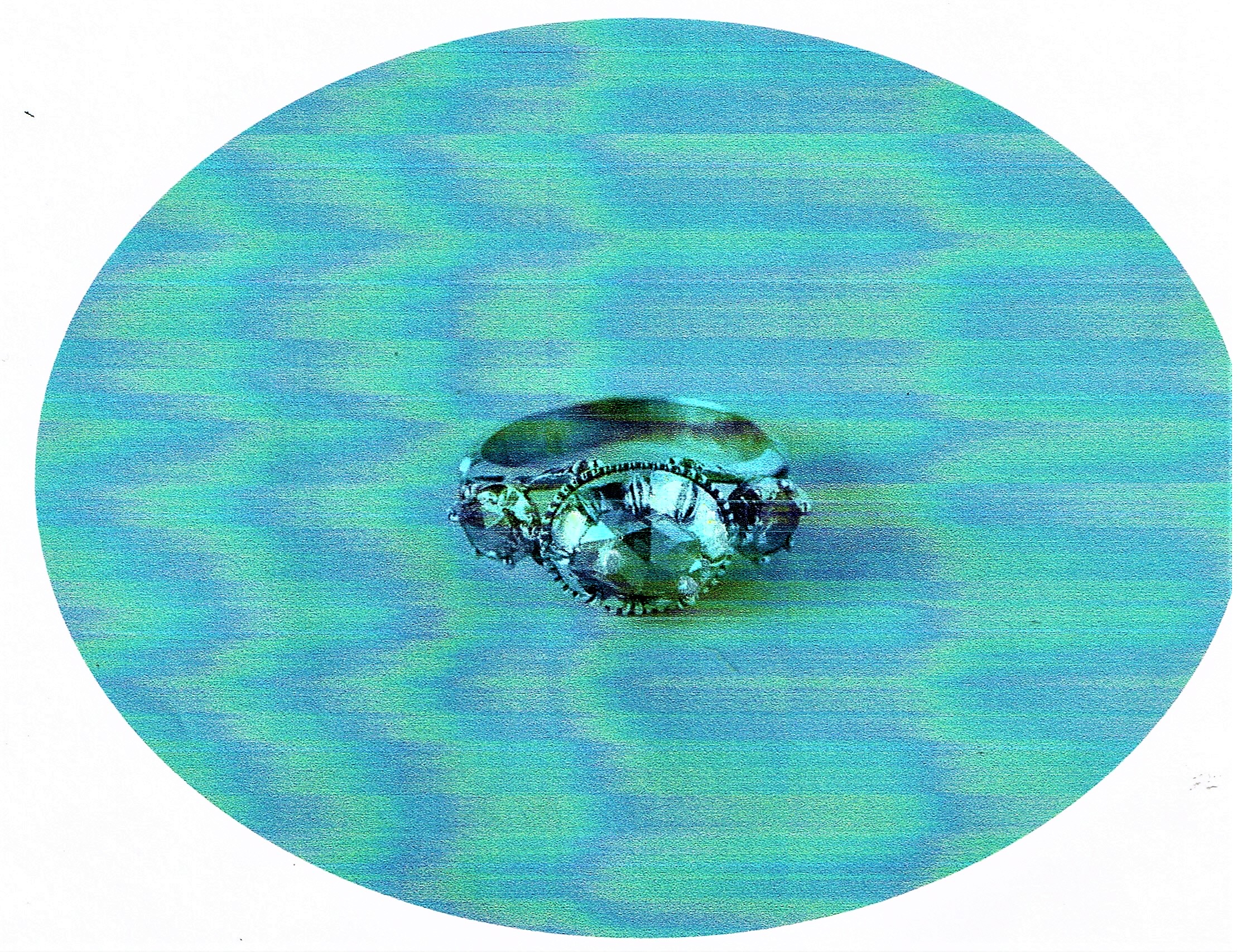
     Chester kept a tiny, gray velvet box hidden in his pocket. A ring with a big white diamond lay in a soft spongy space inside. He said it belonged to his mom. She died and went to heaven not long after he was born.

     “You can’t touch it, Stacey,” he said. “Only I can do that ‘cause it belonged to my mom. I like to hold it and pretend she’s right next to me. Dad said she had hair dark as molasses and a voice that made the angels cry.”

     He rolled the ring in his palm, then held the jewel to the sun, as if he could see more than a few sparkly places. Then he carefully put the ring back inside, and we ran to find swings next to one another on the playground. If there weren’t any, we climbed the monkey bars, and he never seemed to care that I always beat him to the top.

     One day in the lunchroom, Mrs. Craftwood saw Chester take the ring out of his pocket. She dragged him to the principal’s office. I threw away the other half of my bologna sandwich and followed them. They didn’t close the door. I saw everything.

     “This ring had to be stolen,” Mrs. Craftwood told Mrs. Austin, “because this boy’s father is incapable of affording something like this.”

     Mrs. Austin glared at Chester. “Stealing is a sin, son. You should know that.”

     After school when Chester’s dad got to the principal’s office I sat outside the office and listened again. I knew that he had a job in a big, important office a long time ago, but the company closed one day, and he never found another job like it. Then after his wife died, he moved into an old four-room house on the edge of town and did odd jobs now and then. Folks said he didn’t seem to care anymore. But when he charged into Mrs. Austin’s office, it was clear he cared about something.

     He didn’t say anything while she and Mrs. Craftwood accused Chester of stealing. Then he asked if either one of them took a close look at the ring.

     “Why should that be necessary?” Mrs. Austin asked.

     “Because it doesn’t take much light to see the truth in that diamond.  Let me guess.  Came in a gray box. Smells a little like grass stains and peanut butter.”

     “What are you talking about, sir?” Mrs. Austin said.

     I had to cover my ears because Chester’s dad got so loud. And this time the door was shut. He’d slammed it when he went inside. Hard.

     “Would a real diamond look as scratched up as the side of a matchbox?”

     “Please lower your voice,” Mrs. Craftwood said.

     “Not until you return his mother’s ring.”

     I wanted to lean into the door and catch everything that went on, but then Chester’s dad started talking about how his wife deserved better, and so does Chester. Wasn’t so exciting anymore. Something I couldn’t explain made me feel strange, almost like I walked into the boys’ dressing room by mistake. So, I sat on the bench outside the door and waited for what seemed like a long time.

      “Thank you,” Chester said as his dad opened the door. Simple, like nothing was ever taken from him in the first place. He didn’t even see me right away because he was too busy slipping the ring on and off of his finger.

     But his dad’s face looked so red it must have hurt. I could have sworn it burned right through his whiskers. He stopped when he saw me. “Stacey, you’re a good kid. Chester’s crazy about you. Don’t ever get too big for yourself.”

     “I won’t,” I said. But I thought that was a strange thing to say.

     Chester never did come back. He went away to a special-needs school on the other side of town. Mom said it was time for me to start playing with normal children.

     “What’s normal?” I asked, and Mom accused me of being smart aleck.

     But this time I wasn’t.

     After that, I decided it was best to be vague about what I was doing. Sometimes I went to Chester’s house and we explored the woods behind it. We hoisted ourselves into the trees with lower branches and hunted for birds’ nests and woodpecker holes. He carved our names into a young beech tree.

     “Someday when we’re old enough, let’s get married,” he said. “We’ll come back here and I’ll draw the heart and put the date on it.”

     “Maybe,” I said. “But let’s look for salamanders down by the creek now.”

     “Okay. But why can’t we ever go to your house to play?”

     “Mom said I had to play outside. She’s cleaning.”

     “You said she was sick last time,” he said.

     “That’s because all she does is clean. And that much cleaning would make anyone sick.”

     I stopped going to his house as much because I got tired of lying. To Mom. To Chester. Then one day I told Mom I was going for a long bike ride all by myself. I went to Chester’s house, but no one was there. When I peeked into his house it was empty, blind-dark. On the way home I felt mean, like somehow, I made Chester move away. I stopped at our beech tree in the woods, took a sharp rock and etched a shallow, lopsided heart around our names. It didn’t look very good. I’m not sure why I did it. Playing house never appealed to me. And Chester and I were never boyfriend and girlfriend.

     But when I went to my cousin Janet’s wedding that summer, I thought about what it would be like to be a grown-up getting married. Maybe just for that day I would be willing to wear a lace dress, one made by a silly third-grade girl who grew up to be a fashion designer. Of course, I didn’t want to marry just anybody. The groom needed to be special, someone like Chester, who could give me a fake diamond, yet be real inside.


originally published in Piker Press

Read Full Post »

My Rat-Brother’s Freedom Mission

“I don’t understand you. You don’t understand me. What else do we have in common?” Ashleigh Brilliant

I doubt my brother even noticed that I faced the wall, a book to my face when he came into the bedroom. Randy and I weren’t exactly on brother-love, best-buddy speaking terms, not since I needed to hide my gas money in a locked box in the trunk of my ancient Toyota. Anything else of any value my girlfriend held for me. I slept with my phone and charged it as needed at her house.

Besides, I didn’t want Randy to see the expression on my face when he opened his sock and underwear drawer. He spent a lot of time in that drawer, and believe me, it wasn’t to change socks or underwear.

 “What the…” He pulled out an empty bourbon bottle with a skull and crossbones picture glued to the front. I’m not much of an artist, so I copied and pasted one from clip art.

 “You finally found your brand,” I said looking him full in his face, absolutely not a pleasant picture. He hadn’t shaved in weeks. His color mimicked a semi-rotten tomato. Except the tomato would have smelled better.

 “This was not empty when I left it.”

 “Are you sure? My guess is your memory is as long as a beer commercial. And that a drink serving is measured in bottles not glasses…”

 “I am doing just FINE, Stan!”

“Right,” I said, sitting on the edge of the bed in case I needed to move out of the room quickly. At least he still knew his younger brother’s name. “I saw your grades. Congratulations, you almost made it to a 2.0 this quarter. You started the term with how many courses?”

“I’ll catch up. I’ll get that certification I promised Mom.” Randy was 28 years old, eight years older than I was. This time he decided he would go into radiology as a technician. Eventually. He plopped onto his bed instead of arguing further. “I just feel trapped right now. Don’t feel free. Need a change of scenery. Something.”

Nope, not trapped yet, I thought. Besides, you’ve had too much rat poison to see you are the one who set the trap.

Strange how he didn’t say one word about my editorial comment on the front of the bottle,. He only noticed that the bourbon was drained. I had flushed the contents down the basement toilet. Hope it didn’t damage the pipes.

He reached inside his wastepaper basket. We each had our own. His was full—fuller than I knew. An unopened bottle lay at the bottom. “Going out for a while. If Mom asks, tell her I’ll be back later.” He knew Dad wouldn’t ask. He had given up on Randy a long time ago. Once I overheard Dad tell Mom that she had gone through sixteen hours of labor with him. She could continue to hope. His part had been a lot easier, so he could say adios to the bum. Sure, Randy was a rat and a jerk, but I thought that was a pretty mean thing to say to Mom.

 Randy waved goodbye. That was the last I saw of him until we got a call from the police two days later. My brother had blown more than twice the legal limit; then he passed out.

Mom screamed as she repeated something about blood all over the road. It happened to come from a large dog that had run in front of the car. A horrible picture. Fortunately, no other person had been with my brother when he was arrested.

No one. That struck me for the first time. He didn’t have friends. None that I knew anyway. He’d had a girlfriend or two, but the relationships never lasted long.

I looked for old pictures of Randy and me as we were growing up. There weren’t many. We didn’t have a large family, and no one was good at taking photos. He smiled in the earlier shots, but never in the ones taken since he hit high school. I wondered about that, but didn’t feel free to ask my parents. Dad had already cut him off. And Mom never talked about such things. The ten commandments had all the answers. Psychology was reserved for folk who talked to themselves and got answers in different voices.

When I came home from school one day a few weeks later Mom said she had good news. “Randy is going to an in-patient program. And if he graduates, he doesn’t have to go to jail.”

“All right.” I wasn’t ready to move my good watch and Grandfather’s saleable baseball cards back into the house yet. But I was genuinely glad to hear it.

Then, one night at about eleven in the evening I had turned out the light and climbed into bed when my cell rang. I usually look to see who is calling, but I was so surprised I just answered.

“Is this Stan Weeks?”

“Uh, yeah.”

“Sorry to bug you. This time of night and all. My name’s Shelby. I’m a new friend of Randy’s. From Elmcast House. I got sprung yesterday and your brother asked me to call. Was so nervous. I had to work up the courage.” The tone and inflection of her speech shouted uneducated inner city.

“Okay.” I wondered why she hadn’t called the previous day, but as she hesitated so often I could almost hear her gulp, I was shocked that she had contacted me at all. And that piqued my curiosity.

“You know…not many of us make it. Ten percent. Maybe. Took me three gosh-miserable tries. I ain’t proud of it. Your brother’s gonna make it up to you… and everybody. He said he’s really done wrong by you.”

“Glad he’s reformed,” I said, my cynicism leaking out and my grammatical sensor secretly tearing her apart.

“He’s been so honest,” she said, her words suddenly pouring out. “I mean it must of tore your family apart when that minister raped him when he was fourteen. Just a kid. Tender and bleeding. He didn’t know there was men that done that.”

I sat upright. My Ten Commandments family knew nothing about it. Our minister WAS God. Although as I remember him I didn’t care for his self-righteous tone. I couldn’t tell when he was reading Scripture and when he was reading the word of Reverend Knows-It-All. And Randy’s smile in the photos evaporated just about that time.

“Shelby?” my voice must have stammered.

“You okay, Stan?”

“Yes and no.”

“Did I say something wrong?”

“Not at all. Will you be keeping in touch with Randy?”

“You bet.”

“And will you keep my number, too?”

“Sure.”

“Good. Then let me know how Randy is doing. You, too.”

“Okay. Bye.”

My phone went black, like the darkened room. Silent. Like all these years had been. I wondered if Randy was awake or asleep. And if he had finally discovered freedom, whatever freedom meant to him.

originally published in Piker Press on March 31, 2015

Read Full Post »

A smile is a facelift that’s in everyone’s price range! Tom Wilson

One Cowboy Hat

When my two sons were teenagers my husband’s brother owned a timeshare condo in Colorado. Occasionally, when my brother-in-law couldn’t get away from his medical practice, he let us use his space for his allotted time.

We pretended to be rich on our marked-down budget. The mountains didn’t care, and we had a blast celebrating their beauty. Of course, the souvenir shops offered limited possibilities.

Our boys checked out the cowboy hats. No way could they afford to purchase two. They pooled their cash and bought one.

The wearer of the hat called himself Tex. The young man who waited for his turn became Ass. Tex-as.

“Okay, Tex, I’m ready for a snack. Let’s check out the refrigerator,” my younger son announced.

“First syllable first, Ass.”

They both laughed. And the vacation continued.

public domain illustration

Read Full Post »

Confidence is ignorance. If you’re feeling cocky, it’s because there’s something you don’t know. Eoin Colfer

  DOING RIGHT BY MAMA AND THE LORD


In Lime Creek, Kentucky we had rocks for farmland, a truck garden with more weeds than tomatoes, and a cabin set up on stones with copperheads underneath. But the snakes didn’t call us hillbillies like the folk in Ohio did, and me and my brothers and sisters didn’t have a stepmama who’d sooner kick us than share a loaf of five-cent bread.

We had Mama then. She got sick and couldn’t do nothing no more. Didn’t change her being Mama. Not to us. All of us kids took over chores. At four years old I held the metal pan for her to puke in. The blood scared me, but I never dropped the pan.

Then Mama got so skinny she hardly had enough skin to cover her bones. She asked all us kids to gather around her one day before the sun woke up. She told us an angel had come. She was going to heaven. That morning. She said she loved us. We didn’t want to hear it. Mama didn’t talk about loving—she done it. That was enough. We wanted her to stay right there in the cabin with us. Even if TB had stole all her breath and she couldn’t get out of bed no more.

Then Papa, my brothers and sisters, and me moved to Cincinnati in the summer of 1930. I had turned seven by then.  

My big sister, Cloda, talked about heaven, where Mama lived, all the time. She talked about hell, too. Though I can’t say how she knew about either one. Neither Papa nor Mama ever brought us to any kind of church. And Cloda took care of Mama while she was ailing. Cloda never had time for schooling.

Cloda got this notion that she had to take me, my bigger sister Violet, and younger sister Elva to church to learn about God. Soon as we had proper clothes. So, when some folk from school dropped off a box of used stuff on our doorstep, she decided the time had come, a sign from God and a sign from Mama.

“Toy,” Cloda told me as us four girls settled down on our mattress one night, “I don’t want to hear no fussing from you about this. We’re going to honor the Lord and we’re starting this Sunday.”

My sister, Violet, groaned so I guessed Cloda had already told her about it. She leaned on her elbow and stared at us. “When you get your head on something, it sure stays stuck there. A tick don’t hold on the way you do.”

Cloda acted like she didn’t hear her, though in our tiny house, it wasn’t likely words could hide. Our room and mattress fit almost to the walls. Our bed didn’t have a sheet. We had one dingy window that opened to the morning sun, and a wood floor so worn that cleaning it was like trying to wipe the dirt off the top of an old sponge.

 “Good night.” Cloda’s voice gave the notion everything would be okay. Just by setting in something called a pew and listening to a preacher talk.

I doubted it. Even as the dullest and oldest kid in third grade, I knew God took Mama away and didn’t bring her back. I couldn’t get excited about something I didn’t know nothing about. Besides, cracks around the window leaked cold air, and Violet smacked me when I leaned into her.

***

“So, what church we going to?” I asked Cloda that next Sunday as we walked what seemed a awful long way down Amity Road.

 “Church of Eternal Holiness.”

 “The Methodist church on Beech is a lot closer,” Violet said. She was smart and always acted like she had a bee buzzing around her that needed swatting.

 “We can walk. It’ll be good for us. Besides, I like the name, with holiness in it and all.”

 “What kind of church is the one we’re going to?” my little sister, Elva, asked.

 “Don’t know, but a girl I work with at the trunk factory likes it.”

 The church looked more like a old store than a church, no cross on it or nothing. We set down in the back, on this long bench. The room looked plain as a barn. Up front, right in the middle, stood a small, slanted table with one leg holding it up. A man, probably the preacher, leaned into it. He talked soft and down-home at first. I liked the sound of the a’s and o’s I remembered from Kentucky, more like music than in-a-hurry Ohio talk.

“Praise the Lord,” the preacher says. His voice sounded a little high for a man, something like our old neighbor, Homer’s, one of Papa’s drinking buddies.

“Praise the Lord,” the people answered, some loud, some mumbling.

 “Because he tests our faith and finds us worthy.”

 “Amen.”

 “Oh, Lord, test our faith and heal our many sins.” Then he started hollering.

 Elva scooted closer to me. “For the sins of flesh, the sins of pride and envy will condemn you into the eternal flames of hell. Sin against the word of God and forever after your death.” He stopped to look around at folks. “Your arms and legs, your head, body, and entrails will suffer the burning pain that never ends. And your soul!” He said soul like it was a bullet aimed into my chest. “Your soul will suffer forever.

I looked at Violet. She sat stiffer than the bench.

Would God send Mama down to hell?

I tried to think about something else: spending the day with friends, taming trees and eating chunk chocolate. But I couldn’t shut out the screams of the high-talking preacher up front. Folks started moving around, hopping sideways. The “Praise the Lords” and “Amens” around us kept getting louder, like a train coming closer and closer, then jumping the tracks and running us all down. Some folks hollered stuff that wasn’t words I ever heard. Kinda like gargling or baby babble, but a lot scarier.

 “But we will prepare ourselves. Yes, believers, we will prepare ourselves,” the preacher said. “Fast and pray. Pray and fast. Put your faith in God. Next Sunday we will handle serpents without fear. Their poison cannot harm us because our faith is strong.”  The preacher raised his arms up like he was making a Y or reaching for the ceiling.

 What? I tried to sit as still as I could since I couldn’t disappear. All this yelling was bad enough. Copperheads or rattlers? My heinie wasn’t showing up for that.

As soon as the service was over, I ran out the door, Violet and Elva not far behind.  Cloda stopped to shake hands with the preacher.

When we were halfway home Violet said, “Try the Methodist Church next time you get a hankering for religion, Cloda. But I’ll get a book from the library and read next week.”

“Get one for me too,” Elva said. “One about animals maybe, but nothing about anything that hisses.”

 “I ain’t gonna take part in no snake handling,” Cloda said.  “But it might not be a bad idea to come again a time or two and see about maybe settling in.”

 “That girl from the trunk factory, the one who told you about Church of Eternal Holiness?” Violet said.  “I hate to say this, Cloda, but she’s as crazy as a chicken visiting a fox den.”

I didn’t say it out loud, but I kind of wondered about my big sister too.“Tell you what,” I said. “If you try the Methodist Church on Beech Street, I’ll go with you. Besides, I heard they got some pretty good cake bakers over there. And the preacher’s sweet as fresh peaches.”

 “Well, guess I could think on that, Toy.” Cloda stopped walking and looked at me like I brought up a whole new idea.

 Violet rolled her eyes.

I didn’t know nothing about the church on Beech. I made it all up. And I didn’t sit still that good in school, so an extra hour in church didn’t sound like such a great idea. But you just got to help your family sometimes.

“Toy, are you out of your mind?” Elva asked kicking a pebble back into the gravel road.

“Probably.”

“Okay. Okay. I’ll read my book after we get back,” Elva said.

“You aren’t leaving me at home with wicked stepmother,” Violet shrieked.

Cloda smiled like she’d just won a blue ribbon.

We didn’t follow through as good as we could have. After the first time or two, we couldn’t be counted on to listen to a preacher who didn’t have no Kentucky sweetness in his voice. But, Violet, Elva, and me remember that day we saved our big sister from seeing Mama way too soon because she wandered into a rattlesnake pit.

We reckon Mama would be proud of us. Though Mama was proud of us, even when we didn’t do nothing special at all.

originally published in Pine Mountain Sand & Gravel No. 17, Theme: Tricksters, Truthtellers, and Lost Souls


Read Full Post »


I can be changed by what happens to me. But I refuse to be reduced by it.” 
 Maya Angelou

Hope in Small Doses

The day’s news. 
The details of a bloody shooting 
rise with the same tone of voice 
a stranger would use to give directions 
to a local parking lot. Then a commercial appears
advising a product to prevent hair loss.
Compassion and energy 
struggle to appear in human form.

Then a toddler grandchild
reaches out with a smile made of fresh energy.
A closer place of love emerges.
And while I can’t make the world kinder,
I can begin by planting hope into this moment.


Read Full Post »


Any fool can know. The point is to understand. –Albert Einstein

Strawberry Pie Quatern
Your handwriting in purple ink
resurrects you ten years after
your death when a recipe card
falls from a forgotten cookbook.

Tart, sweet, secrets sneak through curves of
your handwriting. In purple ink, 
with bold color, you claim knowledge,
if only how to bake a pie.

Mom, you were taught to stay hidden
in the background of a man’s world.
Your handwriting in purple ink
trembles to be more than pie dough.

I apologize years later
for asking so little of you.
I long to see your soul shared through
your handwriting in purple ink.

Read Full Post »

park bench

“Being deeply loved by someone gives you strength while loving someone deeply gives you courage.” ― Lao Tzu

ONE MORE DAY IN THE PARK WITH INGRID

Mick:

“Ingrid, come sit next to me. I brought that blue jacket you gave me to sit on. Not that you need physical comfort. I want something you’ve touched, even if a breeze is more solid.”

My wife died five years ago.

I pat the plush lining and wait. My wife won’t take long to arrive. The veil between this world and the other side has been thin lately.

About a week ago she appeared in an early morning lucid dream as the young Ingrid. Even asleep I remained wobbly and weak. We walked hand-in-hand through this same park. I knew that everything I saw and touched would disappear when I opened my eyes.  Even so, all the subtleties of nature emerged as we traveled familiar passageways. I saw details in each rock, blade of grass, hill, and squirrel.

Ingrid told me that direct contact with the deceased happens only under special circumstances. I asked her how we qualified, but she told me I would find out later. “Just relax and enjoy.”

When I woke up, she was sitting on the edge of my bed. She comes and goes now. All I need to do is call her—no phone is necessary. I have enough sense not to blab about Ingrid’s visits. Recovering from toxic chemotherapy drugs is bad enough. I don’t need my daughter to worry that I need psych meds, too.

Within about thirty seconds my wife emerges next to me. Slowly. Similar to the way fog comes up from the horizon. But with a lot more warmth. At first, she seems as transparent as air. Her features surface. Young. Beautiful. The way she looked when we first met.

She places her hand on my arm. “Okay, dear, what’s on your mind?”

“Jan told me I could use some Vitamin D from the sun. That’s why I’m out here today while she and the kids hike down to the lake. As if I’d miss the chance. She doesn’t know I heard her talk to Les on the phone last night. He can’t babysit me today. Got a new client coming in. True, I have the hearing of the old dog I am. But Jan’s voice doesn’t need a loudspeaker when she gets excited. Seems lately our daughter has the disposition of a ticking time bomb.”

“I’d say she is upset, and her attitude is more about her than about you.”

I’d say it’s not easy taking care of your father when he’s recovering from chemo. Not easy at all. Sure glad that the final session’s over! Last treatment forever.”

Her hands have lost all their thick arthritic lumps now that she’s in a spiritual state. Her hands are small, delicate, and gentle again. She runs them over my head, mostly bald, with a few sparse patches of dull, almost colorless hair.

 “Ah, Mick! Jan’s not ready for a halo, but I wouldn’t jump to conclusions. Yet anyway. Tell you what. I’ll follow her for a while. Find out what’s going on and let you know. Then I’ll get back to you. The grandkids have been knocked down by your illness. They don’t understand what happened, or why Grandpa doesn’t have the energy to joke with them anymore. But you know you can count on me. We’ll talk tonight. In your dreams.”

Ingrid’s kiss on my forehead could be a warm, gentle breeze.

 I sigh as I hear the kids run ahead of their mom up the trail. Much faster than they would have if I were with them. They don’t know I’d feel just as sick at home. At least in the park, the sun casts incredible shadows through the tree branches. The birds sing an avian kind of harmony. The sky is never the same color longer than a few hours. It darkens or lightens, blends in with the clouds or not. A hint of silver has lined a cluster toward the west. Like the gray in the few clumps of my hair that refused to fall out. Maybe I have a stubborn streak. I have always worn my hair short as a hyphen, so I didn’t need to shave my head.

Change arrives slowly. Although Ingrid says the word that I’m searching for is transformation. Sure, I’m glad my wife broke through the impenetrable barrier from the other side. But I’d take the wrinkled-but-solid Ingrid to the see-through-yet-perfect version any day.  

Ingrid:

I watch and listen to Mick’s family as they pretend to be aware of what they are doing. Les has brought work home. He shuffles papers like a deck of cards and stares at his computer. “What do we do about your dad? Should we just, I don’t know…” He spit-whispers into the computer screen.

Jan leans her behind into the refrigerator and turns her body into an awkward V. From the look on her face, I’m guessing she wants the stretch to pull out all her anxiety.

“I could scream,” she says. “I won’t. Even though Dad isn’t listening in. He’s heavily medicated and sound asleep for the night. The kids are out for the count, too. It is a school night.

I hover over the kitchen table, one of the benefits of the afterlife.

“I talked to Dad’s doctor,” Jan continues. “No doubt about it. He hasn’t got much chance. A heavier course of chemo could give him a few more months. Tops.”

 “So why hasn’t the oncologist told your dad?”

“That doctor has professional knowledge. Yes. But he has the bedside manner of a debt collector. I told him I would give Dad the options.” Jan straightens up again. She groans, her hand on her forehead. “Actually, I insisted. Said he could answer Dad’s questions on his next visit.”

“Then?”

“Okay. Then I sort of chickened out.”

“You mean you chickened out. No sort-of about it.”

“Thanks for your support.”

“So, what do you want me to do? I’m a lawyer, not a social worker.”

“You are also my life mate. Come on. Give me an idea.”

“Okay. I’ll stop by after I see my last client tomorrow. We’ll tell him together. Calmly. Let him decide. In the meantime, let your dad know how much you love him. It’s all you can do. Yeah, you’re nervous about the situation. But all he sees is nervousness. He doesn’t know why.”

 Jan drops her head almost to her knees. “Hey for a lawyer that’s not bad advice.”

“Uh, thanks for the backhanded compliment.”

I stop hovering and put one arm around my daughter’s shoulders. She doesn’t know I’m the one comforting her, but after a few sighs she finally says, “Maybe I’m underestimating Dad.”

“More than maybe, sweetheart.”

In a few hours, I will slip into Mick’s dreams. I will break the news about what his children are going to tell him tomorrow. I know my guy. He will allay his family’s fears. Because Mick isn’t afraid. He’s seen me. He knows he will be okay. I will tell him why I broke the bridge between our worlds—because he and I are closer than he knew we were. I slipped through a hairline break between this world and the next one, the designated place where we were meant to meet. When the time came.

When he accepts my invitation, we will be together again. In a few days if he wishes. If he is ready all he will need to do is concentrate on the separation, nothing artificial or traumatic about the transition. In the meantime, perhaps I should set up the scene for his final dream: a sunny day…a park bench…a place where we both can run, laugh, and sing out of tune if we want. It doesn’t matter. Some details look different after passing through the light. But the beauty Mick and I savored will remain the same.       

Always. Always.

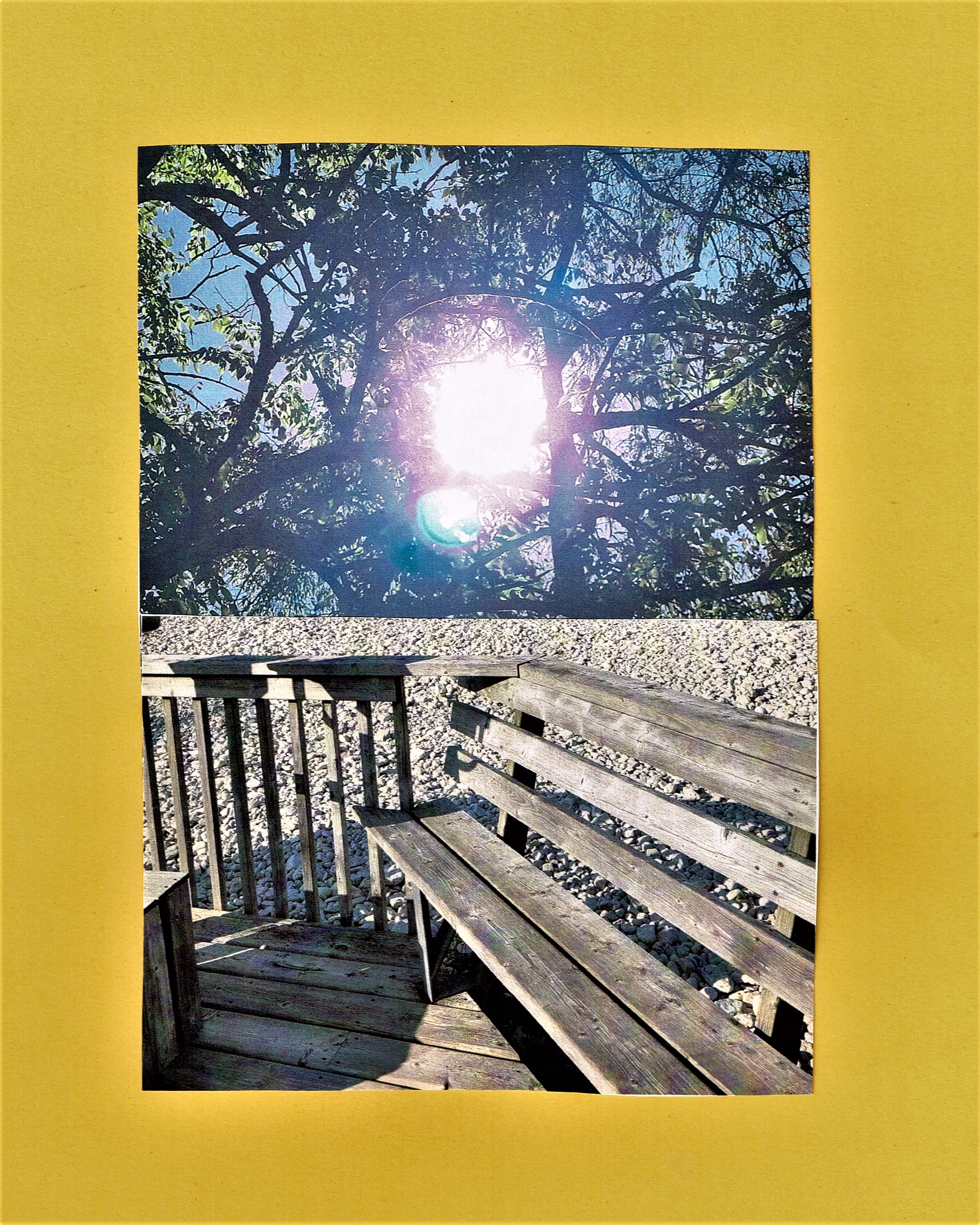
illustration created from two personal photos scanned together

story previously published in Piker Press


Read Full Post »


Life does exist. It’s the purpose that counts. (Toba Beta, My Ancestor Was an Ancient Astronaut)

Me: What is wrong with you? Ten minutes ago, you turned bacon into the crisp treat my granddaughter loves. Now you have the power of a second-hand toy microwave, the kind with parts that aren’t made anymore.

Microwave: You really want to know.

Me: Yes, I really want to know. STAT. I have guests for brunch.

Microwave: STAT. That stands for Some Time After Therapy. Extensive treatment. You warmed that coffee long enough to mimic molten lava. Did you really think that would coax me into action? If I suddenly rose from the dead, whose tongue were you trying to burn?

Me: Okay. Okay. I was desperate. Wait a minute. You are dead?

Microwave: Not completely. You need to pull my plug.

Me: Literally.

Microwave: Yes. I’m an appliance. You don’t pay for my healthcare. Electricity was all I needed. And an occasional cleaning. I can deal with a garbage-pickup burial. I wish you warm leftovers with no spillovers. May my replacement last as long as I have.

Me: Your timing stinks, you know.

Microwave: And you think you will be planning your demise?

Me: You’re mighty clever for an appliance. No. I don’t think I will jump into a casket on purpose.

Microwave: Well, your son has taken over the stove. Quite well. He’s not staring at a dying appliance for help. Time to face facts, human. You are mighty lucky to have something like me. Gratitude? Yeah. For what you have. For what you can do. Your son is calling you now. Your meal is ready. Celebrate. I’ll wave at you from the curb on pickup day. Well, I’ll wave metaphorically.

And by the way, nothing is wrong with me. Not in the larger scheme of things. You don’t blame a battery for wearing out. Or a day from turning into night. I did what I was meant to do.

Now, you do the same.

Read Full Post »

True forgiveness is when you can say, “Thank you for that experience.” (Oprah Winfrey)

What can’t be accomplished in reality, sometimes can be faced through poetry.


Facing the Darkness Under the Bed


As I sweep under my bed and touch

the darkness below the frame

I imagine going back into time


and watch my mom as her mother lies

on another bed. Twelve-year-old Mary Ann

cooks then washes dishes.


Her history textbook is opened

on the kitchen table. Ancient war dates fade,

battles with human losses,


each its own variation

of an untold Pyrrhic victory.

She hears a different kind of battle.


My mother as a young girl

longs to soothe the endless

cries of her mother


in labor for forty-eight hours.

Mama survives but delivers a

second dead baby. Mary Ann learns


to bury hurts as well, cover them

inside forgotten dreams. She leaves

the darkness under her bed


with the dust. Imagination,

it may be physically impossible.

Yet, I reach for the hand


of the twelve-year-old girl who will one day

give birth to me, and allow her

the gift of forbidden tears.


Perhaps then I can give

me full permission for

releasing mine.


Read Full Post »

Older Posts »