Feeds:
Posts
Comments

Posts Tagged ‘family’

Vision is the art of seeing things invisible. (Jonathan Swift)

As I’m sorting the mountain of items on top of my dresser I find an old earring in a box of don’t-throw-out-yet-stuff—the mate was cracked and discarded in another decade. The relationship with the gentleman who gave it to me shattered long before the jewelry did. In another century. Admittedly I did not appreciate the gift at the time. It probably cost my fiancé more than I realized. But I needed to experience a profound personal loss to realize that the only reason I continued the relationship with this young man was because I didn’t think anyone else would ever take an interest in me. The two of us had nothing in common.

Now, as I discard that earring in the trash I forgive us for our ignorance. He had no idea how lost I felt at the time, and I had no way to explain the inside of a vacuum. My vision has changed; I suspect his has, too. He married someone else and so did I.

Now, many dark, bright, and muted-colored years later, my husband of 43 years plays Christmas music on our CD player while I clean. I recall Simon and Garfunkel’s Silent Night/7O’clock News from their “Parsley, Sage, Rosemary and Thyme” album of 1966. It appeared during my own difficult time. Crime reports and promises of continued war played in the background of gentle sound, a bizarre kind of counterpoint. In some ways not much has changed. The challenge of peace remains immense, even on a personal level.

Sure I like days where the sun shines with amiable warmth and I have enough time to do whatever I want, whenever I want to do it. I doubt that these are the moments where I grow most, however. Chances are if my life had been cushioned in silk and affluence in a the-world-centers-around-me existence I wouldn’t appreciate innate beauty.

I wouldn’t smile all the way from my lips through my heart and into my gut every time Katie J. posts a new entry in her blog for Elysium. Kyle, like my Ella, has Down syndrome. Katie tells about the joys of her young son’s life, but she does not minimize the challenges. I appreciate her honesty, as well as the information she shares about Trisomy 21, what it affects and what it doesn’t. Both Kyle and Ella have a deep capacity for love without strings attached.

These are kids, scoffers may say. You can’t predict a life based on early cuteness. Yet, I have met adults with Down syndrome who have not lost the gift of innocent goodness. And it is a gift.

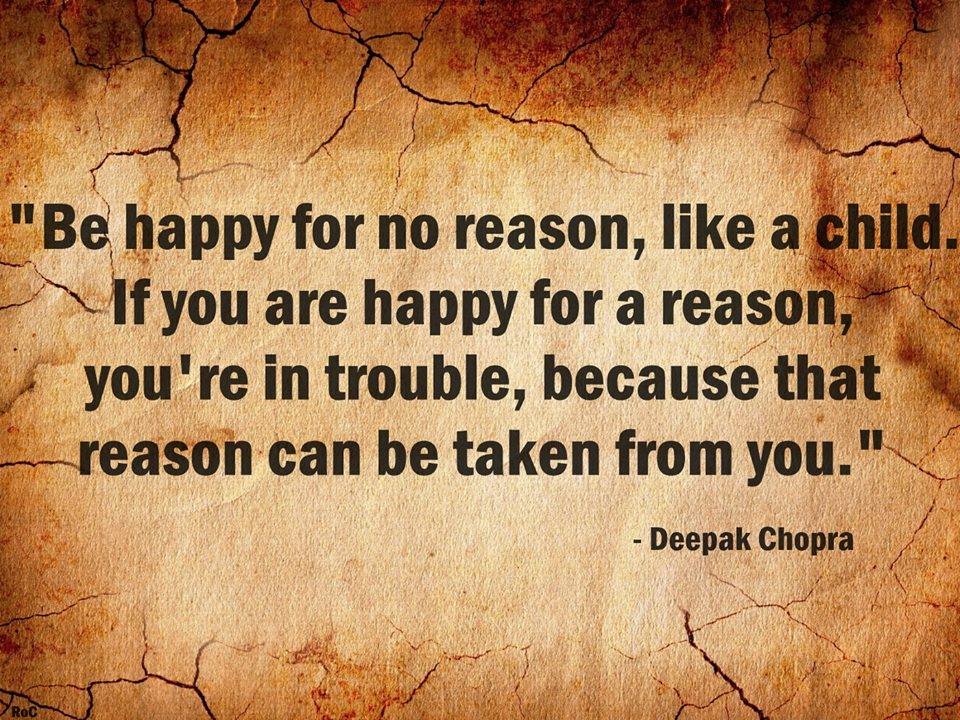
I think about that silly box on my dresser with mismatched, lost or broken pieces. This is probably the time to get rid of those useless attachments and become more like Ella and Kyle. Things will never make me happy. People-who-care can; they have. Knowing people who don’t have an agenda make discarding the past even easier.
happiness without a reason

Read Full Post »

Don’t judge each day by the harvest you reap, but by the seeds you plant. (Robert Louis Stevenson, novelist, essayist, and poet, 1850-1894) 

I decide to let my two older grandchildren know their overnight visit is important by serving their breakfast on our good china.

However, I am in more of a hurry than I realize. One of my husband’s favorite gold-edged beer glasses falls and shatters on our hardwood floor as soon as I unlatch the cabinet door.

“Oh, oh, got a delay here,” I say, although that isn’t really what I am thinking. Irritation wants to rise and boil inside me—at my lack of awareness, at my eagerness to bite off more than I can chew.

Fortunately my husband doesn’t complain. He simply suggests vacuuming as well as sweeping, and I tell the girls that shoes are a must right now, whether they match their jammies or not.

“What’s a delay?” seven-year-old Rebe asks.

“It means something isn’t going to happen exactly on time,” I say.

Rebe doesn’t appear to completely understand.

“You know,” ten-year-old Kate says. “When it snows we have a two-hour delay. That means school starts later.”

I’m distracted; Kate uses examples her little sister recognizes. I’m grateful for my number-one granddaughter’s explanation. I turned down the heat on the stove before I grabbed the broom. But without saying a word, Kate has made the texture of our scrambled eggs look terrific. And I thank her for her helpfulness.

I think about how easily this moment could have gone downhill. I was upset that my plans were interrupted by my own clumsiness. And I was one-frayed-hair-away from allowing a long stream of inappropriate language from destroying the atmosphere.

At a settled, much more comfortable time later, I consider how strange life can be. In our culture we deify the perfect score on a test, the body with the ideal BMI, the quintessential existence that fits on a travel magazine cover, but never inside a real-life experience. Yet, the sequoia, the oldest and largest tree on earth, depends upon fire to flourish. Fire prepares the soil and allows the seed to germinate. Individuals who have always been coddled curdle when they discover the sun doesn’t revolve around their needs. Plants need a balance of both sun and rain to grow.

Somehow I suspect that the human being needs just enough imperfection to be real. A flower, a tomato, or an oak isn’t promised fruition by any single seed. Perhaps that is why we need so many of them. And thank goodness life offers more than one patience-test. A pass-fail system would put most of us in jeopardy.

planting seeds

Read Full Post »

Most of us spend too much time on what is urgent and not enough time on what is important. (Stephen Covey)

 My husband, younger son, youngest granddaughter and I have traveled across two states to visit my 94-year-old mother-in-law. Daylight has barely replaced darkness as Ella climbs onto the foot of her great grandmother’s bed. Nana is awake; she greets her, and then closes her eyes again. Ella leans toward her. “Wake up!”

Great grandmother shows no sign of hearing. She sleeps most of the time. After Nana rouses she complains that the little girl was something of a pain. However, she doesn’t seem to hold a grudge. The two adore one another. I have no doubt that Ella sees into the older woman’s spirit and recognizes a need for a laugh or two before she moves into another dimension, whenever that time arrives. Nana was in hospice care, and then improved. She is one tenacious lady.

I have heard that people in the last stages of life appear to be unresponsive, but they hear every sound. I decide to be quieter as I work in the kitchen, bang fewer pots as I dry them, raise my voice only when absolutely necessary—or when I share something uplifting about Nana’s life.

I feel the spirit of late Midwestern autumn during this visit. The wind blows the last of the tenacious don’t-wanna-let-go-yet leaves from one yard to another. Most deciduous trees are bare, or sparse. The red and yellow patterns have already turned to a crisp brown, ready to be crushed underfoot, dissolving along with the experiences of past seasons. Winter is inevitable. Nothing lasts forever.

In Nana’s room Ella pretends to be a bear, growling as Nana responds with feigned fear. “Save me! I’m so scared.”

Wild Woman has replaced Wild Man, my name for her daddy as he was growing up. And we celebrate both past and present, even as time moves on an inevitable course. I wonder if time were unlimited how much of it I would savor, how much I would waste. At age twenty-five my youth seemed invincible. My head knew clocks don’t travel in reverse except in fantasy. But the days until my next vacation seemed as uncountable as slender grains of rice. Old age lived in the next century, an era beginning in the year 2000—as far away as Jupiter or Mars. Now that year has passed. I’m not sure when I will embrace the term old. But I know each moment is important and must be used well.

So I tell my mother-in-law that I chose to spend more time with my grandchildren because she had chosen to spend time with my children. She showed me how beautiful and strong the bond with a young person could become.

Ella smiles and reaches for me. We will be sitting next to one another during the drive back across two states. I couldn’t ask for a better traveling companion.

decorate life with colors

Read Full Post »

You cannot create experience. You must undergo it. (Albert Camus)

As I get into the car to pick up my number-one granddaughter from school I wonder how much energy I have left in this sixty-eight-year-old body. Hopefully, I’ll last through the hour and a half before Kate’s music lesson. However, Kate’s enthusiasm is contagious. She continues in high gear to tell me about school events, and she doesn’t soften the blow about the difficult moments. I am grateful for my new hearing aids and for a restaurant that isn’t exceptionally noisy as she tells me about unfair situations that affect other kids and how she discerns her part in helping. Her wisdom shows restraint as well as concern, the ability to know when to jump in and when to wait for a safer, more effective moment.

Every freckle on her face glows and I revel in her fresh beauty.

I am now awake, aware; chances to learn surround me. Sometimes those moments are pure gift, the opportunity to simply say thank you. My most recent short story at Piker Press, Return of the Goldfinch, was published one day before a long-time friend’s brother died. Judy had taken care of her brother in her home during his final days. The story comforted her. While I can be grateful for that, the greater gift is my awareness of a friend who gave her home to a brother who could give nothing of material value back. Judy gives because she is Judy. I am blessed because I know her. My spirit awakens as I think about her. She gave her brother the opportunity to fly from a weakened body. In peace.

My youngest granddaughter, Ella, has led me toward the narrower, higher path since the day she was born. I had the notion that I would spend my day writing to my heart’s content. Page upon page would pour from my spirit because I had just retired. Time could now be mine! A divine higher power had other plans. Ella was born seven weeks early, with Down syndrome; she would need two surgeries before leaving the hospital. A giraffe bed in an intensive care unit was her first home. Since her parents needed to return to work I was among the chosen caregivers. Not only did my spirit deepen so that I could write on a more effective level, I made a new friend—an infant who would become my teacher.

In fact, when Ella was barely crawling, my husband was watching a movie too violent for me. One scene came painfully close to my own experience. That long-ago incident does not need to be relayed  here, but as the drama unfolded I gasped as if I were the young woman on the screen, as if time had removed almost fifty years of my life in the flash of a movie frame. Ella climbed into my lap. She looked directly into my eyes as if to say, Look at me, not into the past. And I saw such beauty and compassion in my granddaughter’s eyes that I knew wisdom lived inside this child. I felt blessed to be in her world.

Yes, the narrow road ahead that involved her care would be difficult. Not everyone would understand that a child with special needs gives more than the cost entails.

Easy isn’t always better.

I suspect that if I had taken a nap instead of spent time with my oldest granddaughter on this ordinary Wednesday afternoon, I would have awakened groggier than ever. And this train of thought would have never begun.

I wonder what opportunities tomorrow will bring. But that is on tomorrow’s agenda.

conquer fear beginning of wisdom narrow bridge

Read Full Post »

­­­­­­­­­­­­­­­­­­­­­­­­­­­­­­­­­­­­­­­­­­­­­­­­­­­­­­­­­­­­­­­­­­­­­­­C­­­­orrection does much, but encouragement does more. (Johann Wolfgang von Goethe) 

“I have to read to a grownup for homework,” Rebe says. Her sister, grandfather, and the television create a distraction so we go to the computer-toy room, door closed, her idea. She lies across a pillow on the floor and I sit on the rug. She can’t see my smile as I revel in her first-grade-cadence: the words she amazingly sounds out, and the ones I’m surprised she misses. To me the particulars are not as important as the privilege of hearing her enter the world of books.

I stroke her hair. It’s thick, wavy, a dark red, but it isn’t any physical feature I’m admiring. I relax in this grandma-granddaughter moment.

“You have to sign this paper and write how I did when I’m finished,” she tells me.

At my granddaughter’s age I read extremely well. However, I doubt that I would have been open enough to encourage anyone to write a solitary word of criticism about my performance. First-grade Terry wasn’t that secure.

Of course I also remember being on my own most of the time, too, as far as achievement or anything else was concerned. My parents were too busy with their own chores, with staying out of debt, with the day-to-day struggles of existence. Perhaps that was the way of the times. Children were meant to be seen and not heard.

I loved my maternal grandmother and was absolutely certain she loved me. She made an aqua dress in my size based on a design I’d drawn and then left lying around. The dress was a surprise, created without a special occasion. However, snuggling and compliments, sharing of our ideas and lives rarely happened.

My granddaughters and I have options. We pretend, swim, crack eggs for breakfast and jokes on the way home from school. When the playground isn’t crowded I have even been known to climb next to Rebe on sturdy equipment. I think about that as I watch her close one thin book and open another. She is doing well. Perfect isn’t necessary—not the way I thought it needed to be more than a generation ago.

“I’m proud of you, Rebe,” I say. And I hope she knows those are not cut-and-paste words suited for any occasion. A forehead kiss serves as a kind of softened exclamation point, something like interpreting expression in dialogue, the kind the reader needs to discover—learn as she goes and grows.

 raise words not voice Optimism Revolution

Read Full Post »

Innocence is one of the most exciting things in the world. (Eartha Kitt)

My old cell phone hasn’t had a battery for who-knows-how-long. However, five-year-old Ella picks it up and brings it to life with her imagination. She mimics the motions she has seen in adults, complete with subtle movements and voice tones. When her conversation has ended she closes the flip top slowly, deliberately. I’m the follower in this scenario, the fortunate observer. Ella understands but is not able to fully verbalize what she knows.

I guess the phone has rung again as she says, “hello,” hands the blackened screen to me, and adds, “It’s Dy,” short for Daddy.

She grins when I say that he is playing baseball and not at work. Daddy is working, but explaining an office setting to a five-year-old doesn’t create fun play.

“Should he stop at the store and get bananas on the way home?” I try for mock seriousness and hope she buys it.

“Yes,” she answers.

“What else?”

“A bike,” she adds.

I refrain from laughing. Nothing seems random in a child’s world. After we finish with several quick turns saying hi, bye, and what-are-you-doing-now, we enter a pretend playground where Dora, the Explorer; a tennis ball; and a plush ladybug all take turns going down a plastic slide. Reality is suspended for a while.

And I feel strangely free, privileged, invited to this spot on the floor surrounded by toys on an ordinary Thursday morning.

The folk who read my blog regularly know that my youngest granddaughter has Down syndrome; Down syndrome does not own my granddaughter. She continues to play as I get her ready to leave for the day. I have trouble getting her shoes on properly. They need to give her adequate ankle support. She seems to understand my frailties and doesn’t fuss. I thank her for her patience and wonder how much she intuits. This little blonde with the huge blue eyes is amazingly easy to love.

I envision her at Daycare after school some day as she plays with a toy phone. Does she ever say, “Hi, Mawmaw?” This isn’t the kind of thing I am likely to know. My hearing isn’t that good within the same room, with amplification, much less from one part of town to another. Nevertheless, I smile thinking about it.

She smiles back now. That’s more than good enough.

the world as it should be

Read Full Post »

A dog will teach you unconditional love. If you can have that in your life, things won’t be too bad. (Robert Wagner)

I’ve often said that I won’t be allergic to dogs and cats in my next life—as if I had a genuine grasp of what a next life looks like, embraces, or involves. I don’t always know where my cell phone is, much less the substance of the infinite. However, I really would love to squat down and call, “Come here, Spike,” and then let my grand-dog lick my arms, neck, and  face—slobber all over me if he wanted.

Spike is an example of acceptance and unconditional love.

My youngest granddaughter is sick. I’m bringing dinner to her daddy’s house. My visiting time must be limited. I can manage short encounters, but as soon as I feel the slightest chest tightness I need to leave the premises, as in immediately. Itchy eyes would be difficult enough; I need to give up breathing to enjoy the presence of a fur-bearing creature. Fortunately, the weather allows us to eat on the patio. Outside, Spike can shed all he wants and the air absorbs the allergens. And I can appreciate him.

He looks for morsels of dropped food, but doesn’t growl when no one gives him a handout.  He already had dinner.  He stops by my chair and looks up, dark eyes begging to be petted. I smile and congratulate him on his many virtues, but don’t make contact with his soft fur. He moves away, patiently lying close to the table and waits for attention.

I think about how unlike Spike I would be in similar circumstances. So you’re the snooty type. Okay, suit yourself. I don’t need you either. Perhaps my grand-dog sees deeper than I do. He settles next to Ella and her daddy as he cradles the suffering little girl in his lap. Maybe Spike is sending positive vibes.

It’s hard to tell what he understands. I don’t speak dog. The folk who have a loyal pet are both fortunate and blessed.


Spike is a tad larger, black with white markings, but his expression is similar to this dog’s.

sleeping dog

Read Full Post »

How much does one imagine, how much observe? One can no more separate those functions than divide light from air, or wetness from water. Elspeth Huxley

My granddaughter Rebe and I go to a small local park. She has brought four of her children, dolls of varying sizes crammed into a single doll carrier.

When we arrive we see another woman holding an infant surrounded by five to seven children as well as a dog tied to a bench. The older children seem to be attending to the younger; I assume that the group is part of some kind of daycare but don’t ask. The woman has enough to handle.

One young man, who could be twelve-years-old tops, attends to a boy on a baby swing. The smaller child appears to be approximately two.

“Is he your little brother?” I ask.

“No, he’s my step sister’s baby,” the boy says. He stops pushing the little one on the swing and grabs an adjoining swing. When the baby swing slows and the little boy whines, Rebe pushes him.  I had considered pushing the little guy, but decided to wait until he became accustomed to my presence. Sometimes children are afraid of strange adults. Kids accept kids immediately.

“Thanks,” the older boy tells Rebe. He pumps his swing higher and then quickly lowers himself when my granddaughter decides to play elsewhere.

“You take good care of him,” I say.

He looks at me as if forming an unspoken response, but doesn’t share his thoughts. Something in his eyes startles me, a look suggesting complexity beyond his years.

A few minutes later the woman carrying the baby, leads the other children toward a shelter down a slight hill. The boy jumps from the swing mid-air, and then hands the little boy a cell phone, perhaps to distract him. “Got to go now,” he says.

The child in the swing shakes his head.

“Come on,” he says gently. “We have to go.” He lifts the toddler from the swing and puts him in a stroller.

I smile at the boys, in a reserved kind of way. I don’t know this pair’s story, not sure what I need to say—In fact, I sense that the caretaker doesn’t want to talk. I don’t know the boys’ names! Perhaps the older child is babysitting for an hour. Perhaps this situation is an everyday, overwhelming task.

The older boy pushes the stroller out of the park.

Rebe runs to the slide with her dolls and drops them down, one at a time. Our middle granddaughter hasn’t begun first grade yet. Her everyday world is relatively simple.Today she creates scenarios where we need to dive from play equipment into shark-and-alligator-infested water. Rebe magically turns into a mermaid. Then without warning, our six-year-old innocent child becomes Rebe again when she decides it is time to leave for lunch.

I am grateful for one-on-one time with my granddaughter, yet sad because I was not prepared to meet the young man and his step-sister’s son at the park. Perhaps I could have been helpful, perhaps not. Life’s whole does not belong to me.  Rebe tells me later that she loves me as much as the whole world and back again. If I could have one wish I would zap that kind of love around. But, I don’t know any genies, so with just one day at a time, guess I’m going the slow, uncertain route.

In the meantime I trust the evidence and my gut. Sometimes I will be right-on. Other times I won’t know one way or the other. I am only one small part of a very large whole.

everyone fighting a batle

Read Full Post »

The true sign of intelligence is not knowledge but imagination. (Albert Einstein)

While I loved and admired my grandmother, we didn’t share that many secrets and stories. I treasure the few incidents from her life that she did tell me. Her health wasn’t good. She lacked the stamina for running or getting down on the floor with an active child. Moreover, those were formal times. The generations were held together with a love focused on respect instead of interaction. I’m grateful for a break in the generation barrier that allows me to play with my grandchildren—to enter into their imaginative realm.

During an out-of-the-box moment I try to teach pretending-to-be toddlers Kate and Rebe how to say Mama. They refuse. They can speak in full, well expressed sentences. The word, Mama, however, isn’t on their list. They giggle at the absurdity of it, and I roll my eyes.

“You can say paparazzi,” I say with an exaggerated sigh.

“Paparazzi,” they repeat with perfect diction.

Their laughter fills the room.

“But not Mama?” I plead.

They shake their heads.

“What about historiography?”

“Historiography!” the girls say, not missing a syllable.

Then Kate breaks the tone of the game. “What does it mean, Grandma?”

“That’s a college word. It is the study of history and how it is put together from the tellers’ viewpoint. The South would have a completely different way of seeing the Civil War than the North would.”

She nods, appearing to understand.

She runs to get a note card to write down the information. It is storming, so I am glad that I don’t go to the computer for an official definition. Dictionary.com presents a meaning less easy to process—true, but nowhere near as child-friendly.

“More words! More words!” Kate exclaims returning to character.

But Grandpa enters the room. It is time for a different activity.

I hope we play this game again. We reach from the real into the unreal and back again, with elastic minds. Sometimes I learn from my girls; sometimes they learn from me. Our time is always an adventure.

believe in magic

Read Full Post »

You are the sum total of everything you’ve ever seen, heard, eaten, smelled, been told, forgotten—it’s all there. Everything influences each of us, and because of that I try to make sure that my experiences are positive. (Maya Angelou)

Before the temperatures temporarily dropped in my corner of the Midwest, I watched the fluctuating dark and bright skies and wondered if they were playing some kind of game. Either that or the atmosphere has a bipolar disorder with rapid cycling. At the pool on Saturday my husband and I were able to tread water for almost two hours while the sky simply made threats. By Sunday we weren’t in the water thirty minutes before the thunder and lightning started.

Storm and blue sky often coexist in metaphorical ways, too. They just aren’t always as obvious.

I’m trying to figure out a problem with the computer—something like asking a second grader to solve quadratic equations. A message has popped up about the validity of my word processor. My gut suspects it is spam; emotion makes a different response. So, my head suggests that I try the checks I know.

While I wait for my icons to reappear after an update and restart I study my current desktop photo—of my two older grandchildren in matching Sisters-Forever T-shirts. The girls both appear happy, confident in their own styles: Kate’s natural smile shows her readiness to embrace the good in all. Rebe’s closed-mouth grin promises humor, in some form, as well as the blunt honesty innate in children too young to be anyone other than themselves.

Actually I have no idea what the girls thought or felt as the photo was taken. A photo presents only one moment. The observer guesses based on clues.

I’m asking what-the-heck-is-going-on-with-my-computer? I’m also questioning my ability to solve problems. And this waiting feels longer than the minute or two it actually takes to watch for the bizarre message to either reappear or vanish into whence it came. The speed of thought is rapid. It can go backward and forward through decades within sixty seconds.

By the time I was the girls’ ages, I already had accepted false notions of myself. Insecurity could have been my mantra, stated in so many forms I automatically went to the end of the line in almost any situation. If I could I would go back through the years and rewrite history, become a different person. However, that person wouldn’t have walked the same journey, and these two dressed-alike granddaughters wouldn’t exist.

I think about positive attitude all the time. However, the notion that all must be blue skies and sweet-smelling flowers interferes with reality. Sure, I need to have an outlook that says today’s effort is worth it. But, sometimes that effort can cost a few tears—maybe even a complaint or twobefore success is realized. No one or no thing is perfect. Sometimes success means choosing another path, without crying, Why me?

So far, so good in the computer fix department, even if I don’t know how I did it. Not sure it matters.

being happy

Read Full Post »

« Newer Posts - Older Posts »