ICED WINDOWS, FROSTED VISION, revisited

To appreciate the beauty of a snowflake, it is necessary to stand out in the cold.
Aristotle

White sky and ground
blend into a seamless horizon of gray
where snow-encased branches rise
as part of both threat and beauty.
Darkness and slick roads threaten travelers.
Glistening ponds and crystal trees
tempt artists and treat the spirit.

I kick off my boots,
let them dry inside a warm house,
and allow my toes to find feeling again.
Then I embrace bitter and sweet
for as long as each experience lasts, in order to live
inside the fullness of each moment.
“Hey! This-thing-that-tells-us-who-called, went blank,” I call to my husband. “I unplugged it and plugged it back in and it didn’t work.”
“Your dad put that up for us years ago. I’m surprised it lasted this long.”
“Then I guess it’s lived a good life.”
And I realize I’ve been thinking about my father a lot lately. When I was in high school I had a high fever and he carried me to bed. As an adult, I wrote a song for him and he avoided listening to it. And I never understood why. I remember him in the nursing home. I watched him say goodbye to this world and hello to my mother. She was his world. How could someone so primary to my existence be such an enigma?
The entry below I published in 2011. It fits again today in a peculiar way.
Peace to all–as you are now and as you are in your memories.
Friday, December 16, 2011
Whenever you think or you believe or you know, you’re a lot of other people: but the moment you feel, you’re nobody-but-yourself. ( E.E. Cummings)
Last year, during this season, the unheated hall upstairs was filled with painted glass and I was afraid it would freeze and crack. It didn’t. But some of the lovely, easy permanent paint-on-glass pens I bought were not so permanent. My paint didn’t make it through washing. I suspect that love isn’t that fragile; it doesn’t dissolve in the dishwasher.
This year I painted only a few items. One project may or may not get completed, late. It looked like I struggled through the job. My design went down the kitchen drain–too much on my mind this year. It showed. I would love to be the kind of person who can remain distant from the hurts of the people who are important in my life. I don’t succeed at that ploy. Perhaps if I did, I would become someone else.
I watched my father struggle.
“You don’t have to visit if you have a lot to do,” he said a day or so before he went to the hospital, and I was glad that I told him that I would always find time to see him. First things need to come first.
Now, buying becomes secondary, a lost opportunity. No credit cards. I am allergic to carrying a lot of cash. Gift-giving will be light this year. Maybe that baking I hoped to do really will happen. If not, it is all okay. Somehow. Perhaps, in this last week the final opportunities will appear. If not, Christmas lights don’t have to be strung in neat primary colors or brilliant white. They can appear when the right word or person appears at the right time. Right now, I attend to my father.
Forgiveness is the fragrance that the violet sheds on the heel that has crushed it. (Mark Twain)
Joy to the World” rose dulcimer sweet and holiday warm from my car radio as I pulled into the church parking lot last December 23. The song’s bright spirit irritated me. It reminded me of the heat in my ‘85 Buick—hell-fire hot on high or dead cold on any other setting. Turning off the ignition eliminated the carol, but it didn’t solve my problem.
So why was I going to a Christmas program, advertised as experiential, in a grumpy mood? A place where joyous carols were inevitable? I could convince myself that I was here because some random sign recommended the evening: Be in St. Patrick’s lot at seven. A bus will take you to the program from there. Location will not be announced. This is a definite don’t-miss! But my reason was less noble. I had refused to go with Jack and Tara to the airport to pick up my mother. My mother’s plane arrived at seven—I wanted to be almost anywhere else. This sign was the first thing I saw on my escape route.
Tara had brought a white poinsettia for Grandma Paisley. With her own money. I don’t know where my fifth-grade daughter found such fondness for the old witch. It’s not like Grandma gave her any more than an obligatory birthday gift now and then, usually the wrong color and the wrong size—from the double-mark-down, non-returnable rack.
Tara hadn’t even seen her grandma in two years. Mother moved to Florida in November on a whim. She didn’t even say goodbye. She just packed a suitcase and moved into an old friend’s apartment in case she decided to move back. She stayed for six months but didn’t pay rent—the friend evicted her. So much for Mother’s friends. I’m not certain where she went after that.
I couldn’t understand Jack’s enthusiasm for Mother’s visit either. He had been so supportive of me when I went into counseling, so depressed I grew dehydrated by crying. Not literally, but it felt that way.
The counselor was only minimally helpful, too confrontational. She had the audacity to suggest that I intentionally put on weight to hide my obvious resemblance to my mother. Yes, we both have eyes the color of weak coffee, slender noses, and square chins.
However, I’ve never been drunk in my life. And you can be certain Tara didn’t learn profanity from me. Any resemblance is skin-deep. That monotone-professional-doc-distance that the therapist used made me even more angry.
“Anna,” Jack said sighing. “Paisley has been sober for five weeks now.”
“So, you say. She also told you she’s vegetarian,” I said, shuddering because Jack said my name with disdain, yet referred to his mother-in-law by her first name. “She’ll take one look at our Christmas turkey and call us a bunch of carnivores. Then she’ll spread wheat germ into my cookie dough as if she were disinfecting it.”
“But nothing like that has happened yet.”
“Right. The key word is yet. Have you ever heard Mother say one kind word to me? And has she asked to say one word to me?”
“Compliments aren’t her way,” he answered.
***
I locked my old Buick and zipped the keys in my purse, I felt betrayed. Tara was barely ten years old. She didn’t know any better. But where had Jack’s support gone? I knew—to the airport to bring home a woman destined to destroy the happiest season of the year.
I was the last person in line to get on the bus.
“Not much of a turn-out for a production that’s supposed to be so incredible,” I mumbled.
“Oh, people are busy and over-committed this time of year,” the young, pregnant girl in front of me said. She had thin, stringy hair, washed, yet hastily combed, so it dried in haphazard clumps. She wore a faded wool coat that was the same shade of sweet potato orange as her hair. Two oversized buttons connected with their buttonholes at her neck and across her chest. Successive buttons and buttonholes grew farther and farther apart, exposing bib overalls over a belly ripe for birth.
I decided she couldn’t possibly be married. “Too bad you couldn’t bring your husband with you tonight,” I said, with only the barest tinge of regret.
“Oh, but he is here,” she said revealing a mouthful of crooked teeth. “He’s driving the bus.”
Two green, bulging trash bags lay on the seat behind the driver. She dropped them next to her husband, in the space between the driver’s seat and the window. He turned around and grinned. I guessed him to be part Mexican, a good ten years older than the girl. He had long, straight, dark hair that looked even straighter jutting out from a tight, brown knit hat. I wasn’t impressed with him either.
The girl motioned for me to get into the seat first.
“My name’s Marilyn. What’s yours?” she asked.
“Anna Barnes,” I answered. I didn’t really want to tell her, but “none of your business” contains three more syllables. I looked out at the pale flurries swirling in the darkness as if I really cared about them.
“We have an Ann in our famil…,” she said.
“That’s nice,” I said as free of affect as I could.
“I’m sorry you need to be so angry,” she said.
“What makes you think I’m angry?” I turned to face her.
“It’s thick around you, dipped-in-concrete thick.”
“If I were angry, could it be any business of yours?”
“Oh, we’ve had to forgive lots of folks who don’t understand the birth of this child. Haven’t we, José?”
José nodded and I felt emotionally naked and stupid in front of these bizarre strangers, despite the fact that my views were probably identical to the views of the forgiven.
“Nice lofty thought,” I said. “But some people deserve to be kept at a distance.”
“Maybe,” she said. “But keeping them off saps my energy. Besides, this baby is due any day now! He’s my first and I have no idea how long my labor is going to be.”
By now we were thirty miles east of the city, cornfield country. José turned down a narrow, unpaved road. The loose rocks made it difficult to drive with any speed. About one-half mile down, he stopped the bus at a farmhouse. One light shone from what was probably the living room. Silently he got out of the bus, walked to the door, and knocked. No one answered, he knocked again. The light in the house went out. José climbed back on the bus.
“We’ll try farther up the road,” he said to Marilyn.
He started the bus again and drove ten more minutes until we came to another house. He got out again and knocked. A man came to the door. Gesturing and pointing, he said something to José we couldn’t hear. José smiled as he re-entered the bus.
“Maybe not what we’re looking for, but this is it,” he said to Marilyn. Then he took the green trash bags to the back of the bus. Most of the people in the bus looked puzzled as the men and women in the last three rows reached into the first bag. Inside were angel costumes, white robes with gossamer wings attached. The angels sang as they pulled the robes over flannel shirts and faded blue jeans, “Silent night, holy night. All is calm. All is bright…”
Their voices blended a Capella—bass, alto, and tenor—with simple, unpretentious strength. A man opened the second bag and brought out shepherd costumes. He passed them out to anyone who would take one, then stood carrying a lantern. Outside the bus he lit the lantern while the angels continued to sing, “Oh, holy night. The stars are brightly shining…”
José took Marilyn’s arm and led her behind the house to a barn.
The people inside the bus followed.
The man with the lantern opened the door of the barn as Marilyn and José went inside. “In those days a decree went out from Caesar Augustus,” he began, loud and clear without help from a microphone.
There were no chairs, but I didn’t feel like sitting anyway.
The singers directed us to join them in “The First Noel.” I don’t have much of a voice, but even I couldn’t disobey angels.
Marilyn looked at me and smiled. Somehow, from center stage she didn’t look like an ignorant young girl to me anymore. She was smiling into my soul as if she could see all the concrete-angry ugliness I cherished. Yet she chose to care for me anyway. I wasn’t ready to accept or give that kind of love yet. But I was willing to learn—difficult visitor at my house this Christmas or not.
Merry Christmas
The illustration was made from a public domain image, color paper, and a piece of an old Christmas card.
Thanksgiving Day. It was yesterday in the United States. Its history is not something I choose to pursue because love does not echo from the core of the story. Instead, let love and gratitude for the possibility of peace take over. Begin today.
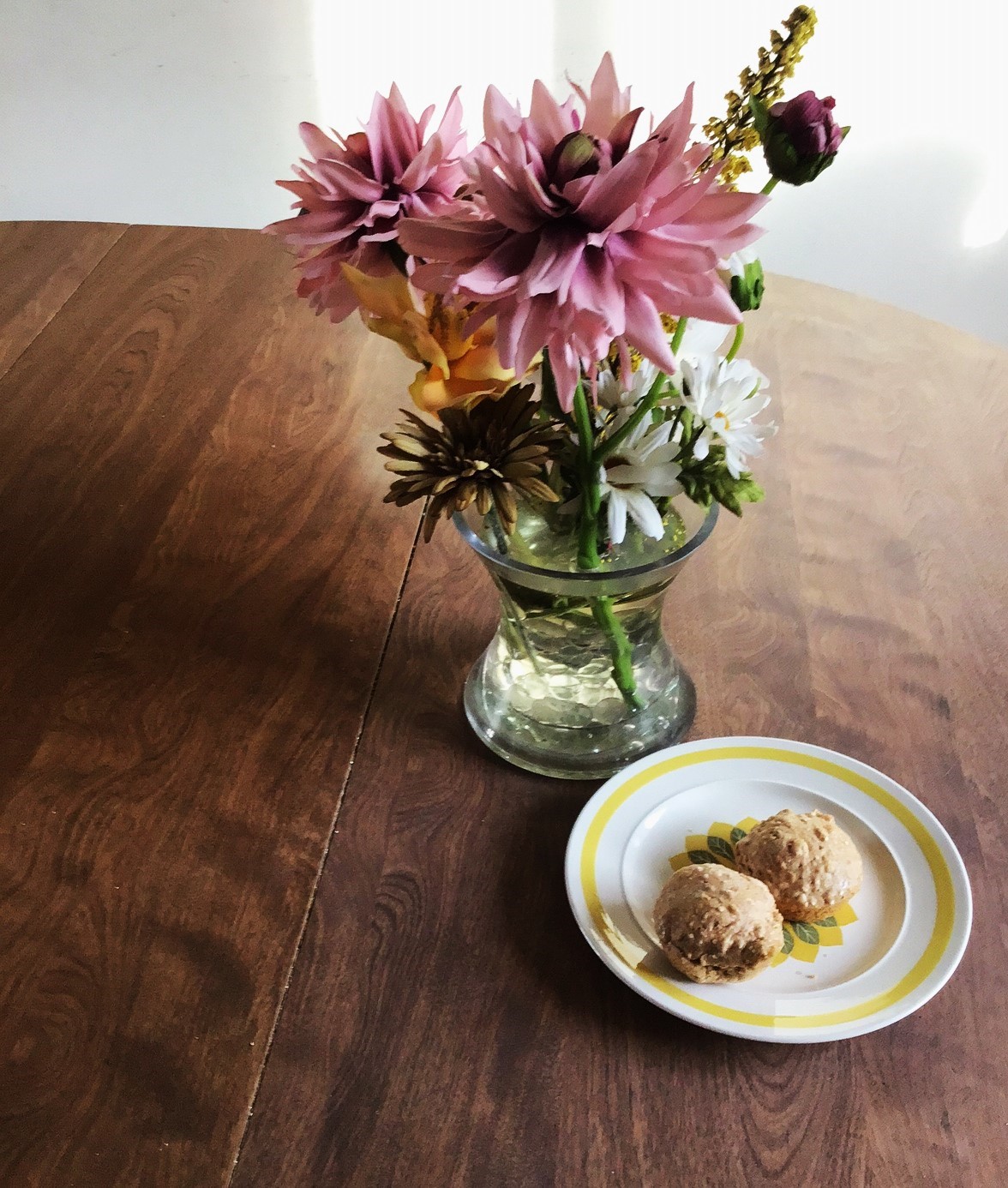
Recipes for peace are not easy. This recipe is. If you know someone who doesn’t have access to an oven or the following simple ingredients, perhaps that family would appreciate your gift of something warm and baked.
Mama’s Easy No Yeast Dinner Rolls:
1 Cup Flour 1 tsp Baking Powder 1 tsp of salt 1/2 Cup milk 2 Tablespoons Mayonnaise
Combine all ingredients and spoon into a greased muffin pan. It makes approximately (5) rolls. Bake in a preheated 350-degree oven for 15 minutes or until golden brown and a fork inserted into the center of any muffin comes out clean.
(In the picture I used whole wheat flour blended with steel oats and quinoa. Hey, experiment. Why not?)
"Children are the hands by which we take hold of heaven." ~ Henry Ward Beecher
When Real Can Be Almost Anything
You tape scraps of multicolored paper
to white cardboard. With pink, blue, orange,
and violet squares you design hair.
A purple crayon creates a squat body.
Outstretched arms wear six fingers on
one hand and four on the other.
Your signature justifies to the right. You
draw off your canvas and onto paper below.
I smile, pleased by an image too powerfulfor a single square of paper,
created by chi too fresh to know its power.Imagination, the world under controland capable of change and fun, time made of this moment only and how it can be turned into play.
Until reality challenges its optimism.
“When we establish human connections within the context of shared
experience we create community wherever we go.”
― Gina Greenlee, Postcards and Pearls: Life Lessons from Solo Moments on the Road


On Route

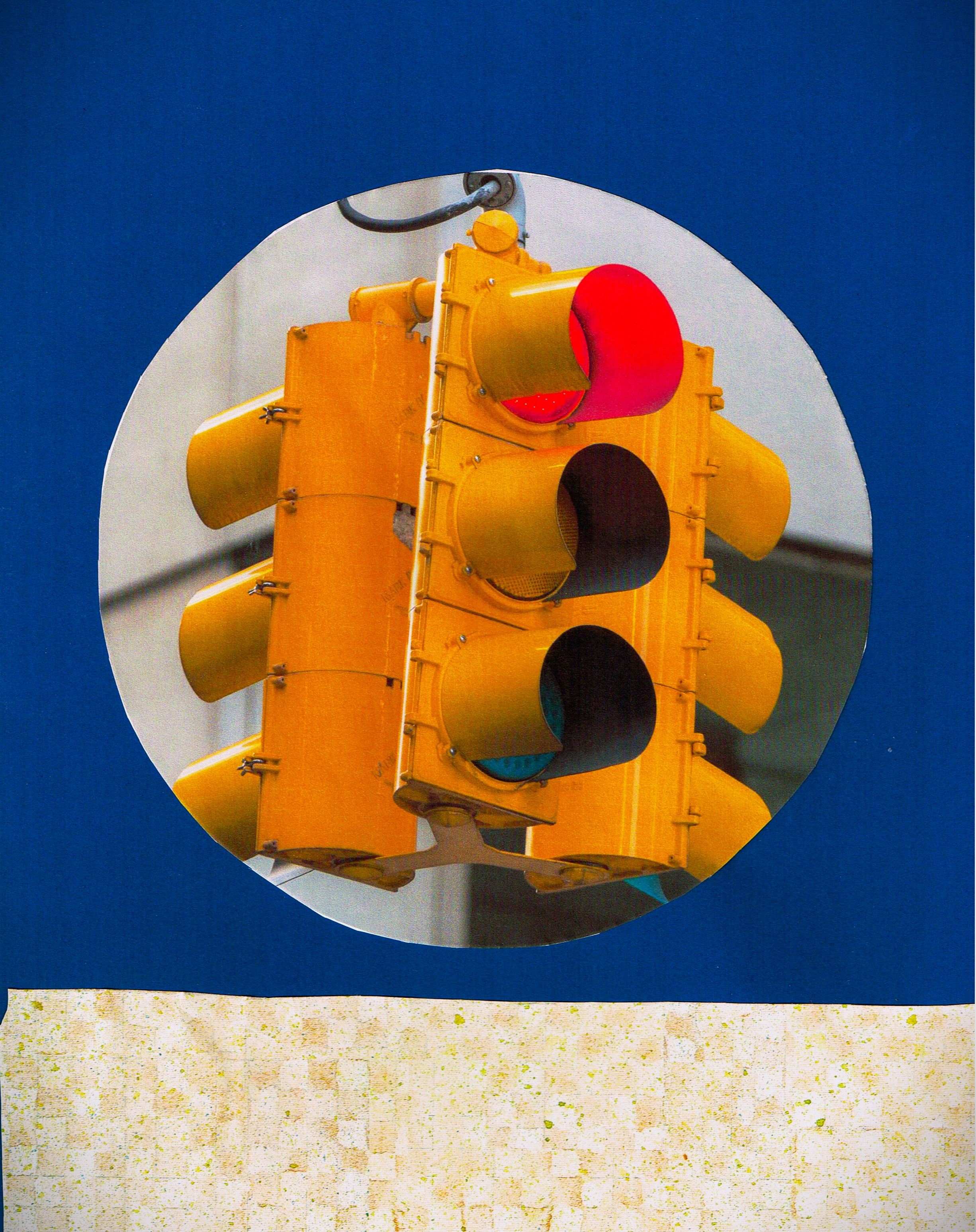
Another traffic light turns red.
As I wait, I notice a man
at a bus stop. He leans
on a white cane
and faces the direction
the bus will take him.
His ears know the unique
sound of a bus.
.

On the other side of the street
a young couple take turns
holding a baby too young to lift
an almost bald head.


A teenager guides an older woman
across the street.
The elderly woman stares ahead
toward the curb,
while the younger person
watches her companion’s feet.


The light turns green.
I know the lane patterns ahead.
This is familiar territory.
Yet, the space feels different,
made of intangible pieces,
concrete connected to spirit.


illustration made from public domain image and cut paper
Life is too short to be wasted in finding answers. Enjoy the questions. Paulo CoelhoOne square block of sidewalk.
Sometimes it appears sufficient,
a part of a whole.
On other days the pocked places rise.
And the darker pebbles act
as if they are meant to rule
my spirit. As if the promise
of lighter squares on the path ahead
couldn’t exist. I’m stuck.
One more step, then one more
until the walk becomes a journey again.
“It is important for people to realize that we can make progress against world hunger, that world hunger is not hopeless. The worst enemy is apathy.” – Reverend David Beckmann, president of Alliance to End Hunger.
“Our deepest human need is not material at all. Our deepest need is to be seen.” – Eckhart Tolle
TWO FIFTY-DOLLAR BILLS
Cora rubbed the back of her head as she stepped onto the curb. Ooh, that really hurts! Damn, the stress has got me. She turned around and watched the traffic move at least twenty miles over the speed limit. Stress, right. Now that’s something like calling the ocean a tad damp. I’m 67, look 80, and feel 105.
A colorful sign caught her eye on the lawn of a charming three-story red brick house: Housekeeper wanted, great pay, inquire within. She hadn’t recalled seeing it before. The house didn’t appear familiar either. But survival had taken all her focus when she got on and off the bus Monday through Friday—when she’d had a job. She’d gone back today to try to get it back.
“I’m sorry,” her old boss had told her. “The company now requires all employees to have a high school education. You should have chosen retirement last year. Why run around like a dog chasing his own tail?”
I washed stuff and took out the trash for a company that made parts for something, ain’t sure what. You don’t need no education for that. Besides, this old brain ain’t got the energy for homework and exams no more.
“Hey,” she said to the sign. “What the heck. If the homeowner tells me to go to hell at least I can just turn around and say howdy to Satan. Eviction’s tomorrow. Wonder what I should wear for my first day on the streets.”
She walked to the door with her back as straight as possible. A junior high gym teacher had told her that good posture is confidence. Not much else brought it.
“Wish I had a purse,” she murmured. “Could use an ibuprofen. Not sure what hit me, but it had an attitude.”
Uncertain, she knocked so softly only a hound dog could have heard her, but a short, round woman with hair the color of silver tinsel answered. “Come in. Come in.”
“Saw your sign…”
“Yes. Yes, of course. And do you mind cleaning a house of this size? I have twelve rooms, and none of them are small.”
“Huh? No.”
“Do you mind being paid in cash?”
“That’s, that’s fine.” Cora tried not to stare at the woman, at least half a foot shorter than she was. She would have pinched herself to see if she was dreaming if she thought the woman wouldn’t notice. However, this lady seemed to catch every breath and eye flutter.
The house looked fantastic! The polished oak floor gleamed. The blue leather furniture appeared to be new and easy to maintain. Sunshine streamed through the windows and found no dust. How much would she need to clean? And any question she asked in protest would show how inadequate she really was. She could think of only one.
“I’m sorry, ma’am. I don’t know your name.”
“Angela.”
“And yours?” Angela cocked her head to one side.
“Cora.”
“Now is $200 a day enough?”
Cora gasped. This woman hadn’t even asked for her last name.
“Then follow me. I will show you your room. Then I will remove the sign from the yard.”
“That’s it? I’m hired?”
“You will clean whatever you see that needs to be done.”
“There’s gotta be a hitch to this,” Cora said, sorry she’d opened her mouth.
“Not a hitch exactly,” Angela answered. “But it isn’t what you might expect. I will pay you half in advance.” She reached into the pocket of her old-fashioned flowered apron and pulled out two fifty-dollar bills. “Perhaps you can confront what is in your way as you work here. And by the way, I suspect your headache has lightened.”
“How did you know…?”
“Your forehead had bulldog wrinkles when you came in. And your eyes were scrunched together so tight you almost had one eyebrow. Easy-to-interpret signs. By the way, I read people extremely well.”
“Oh.” That made sense. Sort of. Cora scratched the back of her neck, a nervous gesture.
“When can you begin?”
Afraid the money could be taken from her as easily as she had received it, Cora stuffed the fifties into her pocket. She glanced around until she saw a broom propped in a corner.
Angela seemed to notice. “Now that is the kind of attitude I like. We will talk later.” She pointed out the door to the room where Cora needed to start, waved, and went outside.
Cora expected her to return with the sign tucked under her arm, but when she peeked outside she didn’t see the silver-haired lady or the help-wanted sign. And she didn’t see anything that needed sweeping either.
She sighed. Clean what needs cleaning? Yeah, sure. This place is sterile enough for open-heart surgery. Then she opened the door. And gasped. Dust filled the air. She opened a window and then ran to find bug spray in a hall closet. Spider webs filled the corners of the windows. Clothes lay on the floor.
When she picked up one of the T-shirts, she recognized it. Her husband’s favorite: tie-dyed with IT’S NEVER TOO LATE TO HAVE A HAPPY CHILDHOOD printed across the front. The brash colors irritated her. He had worn it the day he left to pick up their daughter from kindergarten. He’d been home with a headache, like the one she had now, but she was gosh-darned sure he was faking it. He’d had an argument with his fix-it shop partner. Cora figured this was Jake’s way of getting even. The business hadn’t been doing well. So, she insisted he pick up Millie from kindergarten that afternoon. Then she could finish the laundry.
He’d had a heart attack on the way home and crashed into a tree. In those days children were allowed to sit in the front seat. Both Jake and Millie died.
And Cora thrived on bitterness. Friends ran away. So did the money.
She grabbed the shirt, uncertain whether she wanted to tear it apart or cry into it. She screamed, “How can there possibly be two shirts like this one?”
No one answered. Angela had not yet returned. Cora felt the fifties in her pocket. She remembered what the silver-haired woman had said. “We will talk later.” Cora considered running, but she had no place to go. “We will talk about what?”
The only thing she knew to do was clean, get rid of garbage, scrub. She held her breath as she opened the closet. She suspected the unpleasant surprises had not ended. Yet. She saw a cardboard box of toys and knew the next horror had arrived—on top of the stack lay a naked doll with over-combed blond hair. She remembered how she had lectured her daughter Millie about taking off her doll’s clothes and leaving them scattered all over the house—hours before she would never see her again. And this doll was an exact clone.
Cora dropped the doll. Maybe it was better to live on the streets than to face that day again. She sobbed until she didn’t think she had any energy left.
She had not heard Angela re-enter the house and come into the room. “You can let go now,” she said.
“Let go of what?”
“You are doing a spectacular cleaning job,” Angela said. “I trust you destroyed the cobwebs of your past and said goodbye to the guilt you created in here.”
“I didn’t clean nothing.”
“Well, actually I took your experience and gave it shape in here.”
“Who are you and what is going on?” Cora’s eyes widened. She wanted to run but stood frozen.
“You don’t remember how you got that headache, do you? But don’t worry. This memory lapse happens often after a ruptured brain aneurysm. It was fatal.”
“I may be dull as a rubber knife, but I know what fatal means,” Cora said.
“And you are absolutely right. This may not be as terrible as you think it is. Perhaps you need to know you are forgiven. With absolute certainty. Come. You have visitors. They want to take you home.”
The front door swung open, and a five-year-old girl ran inside. “Mommy, Mommy, I have been waiting and waiting for you. Daddy is outside. He said to hurry.”
Cora looked down at her arms and saw young, untroubled taut skin. She reached into her pocket, pulled out the two fifty-dollar bills, and handed them to Angela. “I don’t need these anymore.”
She ran out to meet her family as Angela placed the same sign in the front yard: housekeeper wanted, great pay, inquire within.
“When infants aren’t held, they can become sick, even die. It’s universally accepted that children need love, but at what age are people supposed to stop needing it? We never do. We need love in order to live happily, as much as we need oxygen in order to live at all.”  Marianne Williamso


A toddler wanders wherever his curiosity leads
while Mommy and older siblings caution him.
Greens, blues, and moving objects call
to his curiosity. Come.

This moment is alive
even if he doesn’t know language
or time. Grandma’s wrinkles intrigue him.
He sees intricate gold on her wrist,

not the hours held inside her memory.
To Grandma this moment seems
as limited as the space Mommy
permits her son to roam.

Toddler snuggles against
Grandma’s cheek. She knows
that all moments face limits.
Yet love endures.





 terrypetersen