“Life becomes easier when you learn to accept an apology you never got.” — Robert Brault
FINAL APOLOGY
Dear Helen,
I’m sorry. Three syllables, like tiny drops of water offering to renew a desert. I’ll whisper them to Lyle during his funeral. Tomorrow. Even if it is too late.
Remember how Lyle always was a tad different? Borrowed Mom’s lipstick when he was five and painted his lips instead of the wall. Mom didn’t understand. She couldn’t understand anyone. Her actions mimicked the uneven beige wallpaper flowers in our attic storage room. Not only bland. Disconnected. Didn’t matter what anybody did. When Lyle’s report cards dropped from A’s to failing in middle school, she reacted the same way. Numbed on antipsychotics. Better than when she wasn’t.
Then Dad left and took Lyle with him. Good move. At least he graduated. Got a commercial art degree and a good job until his boss found out. You know. About how he was different. Downhill developed into an avalanche after that.
You managed the falls, like always. You were there for him.
Lyle called you from Michigan. Often. You told the latest Mom-sitting-on-the-porch-naked stories and sent him exotic pears. Shared hair dye secrets.
No surprise when Mom died in the expensive facility. Just before her sixtieth birthday. And the cash ran out.
You got busier. And busier. Took on more work than anyone else on the sales team.
When Lyle called and said he needed to talk, you were working on contracts. Two at the same time. You told him you’d call him later. He swallowed so hard you heard it. In the noisy office with rock music in the background. In desperate memory now.
Then came the call from Dad. The note. The details…
I can’t write any more now. Later. Maybe. Can’t sign a letter written to me. When I’m ready to step past the fact that Helen could have stopped her brother’s suicide and didn’t.
And forgive her—forgive me…forgive me… Tell me about how I held up the mountain before it fell. One more time.
“It’s dreadful what little things lead people to misunderstand each other.” ―L. M. Montgomery
Penguins and kangaroos don’t live on the same continent. Yet, Penny and Kango are university students in this tale. Since some human creatures believe space lasers started the California wildfires, I am stating: this story is fiction.
The college name appears distracting. However, even in today’s reality, words have multiple meanings. On the island manure referred to common happenings in real life. Word meanings change over time. For example, internet referred to two nets dropped for the same fish.
Penny and Kango spoke a semi-common language. However, different definitions and idioms often confused them. In Penny’s tribe, the word lounge meant escape. When Kango told Penny he was going to lounge in the common area, Penny assumed his roommate wanted him out of his metaphorical hair.
In Kango’s tribe, Penny’s word for please repeat meant I-am-irritated-big-time. A screaming hyena interrupted Penny when he asked Kango to repeat what he had said about a student who had fleas. A fire bell rang. It stopped Kango from smacking Penny on his left wing.
Fortunately, the words communicate and forgive made a perfect fit in all student dictionaries. Communicate and forgive appeared in an unexpected conversation the roommates had on the grounds between classes. Penny spoke one word and Kango mouthed the other. Exactly how that could happen is another story. It occurred after a lightning strike missed the pair by a miracle and a half. A moment the current world needs. With enough communication and forgiveness.
image made from public domain photo and colored paper
“Our deepest human need is not material at all. Our deepest need is to be seen.” – Eckhart Tolle
TWO FIFTY-DOLLAR BILLS
Cora rubbed the back of her head as she stepped onto the curb. Ooh, that really hurts! Damn, the stress has got me. She turned around and watched the traffic move at least twenty miles over the speed limit. Stress, right. Now that’s something like calling the ocean a tad damp. I’m 67, look 80, and feel 105.
A colorful sign caught her eye on the lawn of a charming three-story red brick house: Housekeeper wanted, great pay, inquire within. She hadn’t recalled seeing it before. The house didn’t appear familiar either. But survival had taken all her focus when she got on and off the bus Monday through Friday—when she’d had a job. She’d gone back today to try to get it back.
“I’m sorry,” her old boss had told her. “The company now requires all employees to have a high school education. You should have chosen retirement last year. Why run around like a dog chasing his own tail?”
I washed stuff and took out the trash for a company that made parts for something, ain’t sure what. You don’t need no education for that. Besides, this old brain ain’t got the energy for homework and exams no more.
“Hey,” she said to the sign. “What the heck. If the homeowner tells me to go to hell at least I can just turn around and say howdy to Satan. Eviction’s tomorrow. Wonder what I should wear for my first day on the streets.”
She walked to the door with her back as straight as possible. A junior high gym teacher had told her that good posture is confidence. Not much else brought it.
“Wish I had a purse,” she murmured. “Could use an ibuprofen. Not sure what hit me, but it had an attitude.”
Uncertain, she knocked so softly only a hound dog could have heard her, but a short, round woman with hair the color of silver tinsel answered. “Come in. Come in.”
“Saw your sign…”
“Yes. Yes, of course. And do you mind cleaning a house of this size? I have twelve rooms, and none of them are small.”
“Huh? No.”
“Do you mind being paid in cash?”
“That’s, that’s fine.” Cora tried not to stare at the woman, at least half a foot shorter than she was. She would have pinched herself to see if she was dreaming if she thought the woman wouldn’t notice. However, this lady seemed to catch every breath and eye flutter.
The house looked fantastic! The polished oak floor gleamed. The blue leather furniture appeared to be new and easy to maintain. Sunshine streamed through the windows and found no dust. How much would she need to clean? And any question she asked in protest would show how inadequate she really was. She could think of only one.
“I’m sorry, ma’am. I don’t know your name.”
“Angela.”
“And yours?” Angela cocked her head to one side.
“Cora.”
“Now is $200 a day enough?”
Cora gasped. This woman hadn’t even asked for her last name.
“Then follow me. I will show you your room. Then I will remove the sign from the yard.”
“That’s it? I’m hired?”
“You will clean whatever you see that needs to be done.”
“There’s gotta be a hitch to this,” Cora said, sorry she’d opened her mouth.
“Not a hitch exactly,” Angela answered. “But it isn’t what you might expect. I will pay you half in advance.” She reached into the pocket of her old-fashioned flowered apron and pulled out two fifty-dollar bills. “Perhaps you can confront what is in your way as you work here. And by the way, I suspect your headache has lightened.”
“How did you know…?”
“Your forehead had bulldog wrinkles when you came in. And your eyes were scrunched together so tight you almost had one eyebrow. Easy-to-interpret signs. By the way, I read people extremely well.”
“Oh.” That made sense. Sort of. Cora scratched the back of her neck, a nervous gesture.
“When can you begin?”
Afraid the money could be taken from her as easily as she had received it, Cora stuffed the fifties into her pocket. She glanced around until she saw a broom propped in a corner.
Angela seemed to notice. “Now that is the kind of attitude I like. We will talk later.” She pointed out the door to the room where Cora needed to start, waved, and went outside.
Cora expected her to return with the sign tucked under her arm, but when she peeked outside she didn’t see the silver-haired lady or the help-wanted sign. And she didn’t see anything that needed sweeping either.
She sighed. Clean what needs cleaning? Yeah, sure. This place is sterile enough for open-heart surgery. Then she opened the door. And gasped. Dust filled the air. She opened a window and then ran to find bug spray in a hall closet. Spider webs filled the corners of the windows. Clothes lay on the floor.
When she picked up one of the T-shirts, she recognized it. Her husband’s favorite: tie-dyed with IT’S NEVER TOO LATE TO HAVE A HAPPY CHILDHOOD printed across the front. The brash colors irritated her. He had worn it the day he left to pick up their daughter from kindergarten. He’d been home with a headache, like the one she had now, but she was gosh-darned sure he was faking it. He’d had an argument with his fix-it shop partner. Cora figured this was Jake’s way of getting even. The business hadn’t been doing well. So, she insisted he pick up Millie from kindergarten that afternoon. Then she could finish the laundry.
He’d had a heart attack on the way home and crashed into a tree. In those days children were allowed to sit in the front seat. Both Jake and Millie died.
And Cora thrived on bitterness. Friends ran away. So did the money.
She grabbed the shirt, uncertain whether she wanted to tear it apart or cry into it. She screamed, “How can there possibly be two shirts like this one?”
No one answered. Angela had not yet returned. Cora felt the fifties in her pocket. She remembered what the silver-haired woman had said. “We will talk later.” Cora considered running, but she had no place to go. “We will talk about what?”
The only thing she knew to do was clean, get rid of garbage, scrub. She held her breath as she opened the closet. She suspected the unpleasant surprises had not ended. Yet. She saw a cardboard box of toys and knew the next horror had arrived—on top of the stack lay a naked doll with over-combed blond hair. She remembered how she had lectured her daughter Millie about taking off her doll’s clothes and leaving them scattered all over the house—hours before she would never see her again. And this doll was an exact clone.
Cora dropped the doll. Maybe it was better to live on the streets than to face that day again. She sobbed until she didn’t think she had any energy left.
She had not heard Angela re-enter the house and come into the room. “You can let go now,” she said.
“Let go of what?”
“You are doing a spectacular cleaning job,” Angela said. “I trust you destroyed the cobwebs of your past and said goodbye to the guilt you created in here.”
“I didn’t clean nothing.”
“Well, actually I took your experience and gave it shape in here.”
“Who are you and what is going on?” Cora’s eyes widened. She wanted to run but stood frozen.
“You don’t remember how you got that headache, do you? But don’t worry. This memory lapse happens often after a ruptured brain aneurysm. It was fatal.”
“I may be dull as a rubber knife, but I know what fatal means,” Cora said.
“And you are absolutely right. This may not be as terrible as you think it is. Perhaps you need to know you are forgiven. With absolute certainty. Come. You have visitors. They want to take you home.”
The front door swung open, and a five-year-old girl ran inside. “Mommy, Mommy, I have been waiting and waiting for you. Daddy is outside. He said to hurry.”
Cora looked down at her arms and saw young, untroubled taut skin. She reached into her pocket, pulled out the two fifty-dollar bills, and handed them to Angela. “I don’t need these anymore.”
She ran out to meet her family as Angela placed the same sign in the front yard: housekeeper wanted, great pay, inquire within.
“Not the one who does not have an umbrella, but the one who does not like the rain, gets wet most under the rain!” (Mehmet Murat ildan)
PEACE ROSE
Jess stepped into the empty house. She owned it now. Or maybe it owned her. She didn’t know yet. Too many payments ahead. The moving truck carrying the bulk of what was left of her life had not yet arrived. She complained out loud about how she had ended up in this run-down neighborhood.
Sure, she had been living alone for years in a so-so two-family house on a mediocre side street, but her landlord had sold the building and the new owner wanted both floors. Jess wondered if this unmarried son who needed it was on drugs and would drop that second floor and his family into despair. She didn’t know and would never find out because she would now live across the street from a tattoo parlor and a thrift shop with uneven white misspelled lettering in the window: “uzed items, will close soon, cheaper than cheap.” Cheap was all she could afford.
At least her so-called new house had indoor plumbing. The front yard could have fit inside a child’s sandbox. The once-white siding sat on a smog-dirtied, heavily traveled state route. “I deserve better,” she muttered. The floorboards squeaked as she moved into the hallway; they mocked her.
The previous owners hadn’t left one curtain or blind on a window. At least a huge oak tree in the center of the yard saved her from an open view into the living room.
Her realtor had grown less friendly by the time the bank had closed on the buy. “The previous owners have re-glazed the tub, re-finished the floors, and done every inspection you requested. You got a fantastic price. There is no need or time for further changes.”
Jess had suggested that someone remove the jungle from the backyard. She didn’t know plants but thought poison ivy vines could easily hide in the tangled mass that climbed the back wall.
The moving van pulled up outside. On-time. Jess had the feeling that even after her furniture and rugs were settled, she could still expect some form of emptiness. Jess would sleep on the couch until her new bed arrived. A double, occupied by a single person—possibly indefinitely.
Even her eighteen-year-old daughter, Maura, had chosen to live with dear old Dad—a year after the divorce. Jess rarely saw Maura after that. Conversations with her daughter tended to be clipped and superficial.
“Refrigerator is here, ” a man, with a belly that mimicked the fifth month of pregnancy, announced.
“Around the corner,” Jess answered in the same curt tone. He smelled as if he hadn’t bathed in weeks. She was certain her mother would comment later. Her mother had met the movers at Jess’s second-floor flat. Jess wanted to be ready at her new place before the truck arrived. She tried to sigh out memories of her original home: a family with a mommy, daddy, and a girl who grew up to be a senior in high school…without her.
The sight of the man’s belly triggered another memory. She wouldn’t let it rise to consciousness. Besides, the thought seemed out of context, bizarre. Why should I remember that now?
The man’s partner arrived. Slender, but smelling just as nasty. “Where do you want the rug?”
“Front room. Where else?”
“Suit yourself. By the way, some guy just dropped off a girl, said she was your daughter. She’s standing outside.”
As if Les couldn’t come inside before he left. I doubt his legs are broken.
She stuck her head out the door. “In here, Maura!”
“Be right there.” But Maura waved with enthusiasm in another direction, toward the yard next door. She had the kind of personality that made friends with a pit bull trained to fight. However, Jess couldn’t see where Maura’s wave was aimed, and she certainly couldn’t hear a bark.
Before Jess could go to the door to check out what was going on, the slender man said, “We got a couch, chairs, and a slew of boxes. So where do you want them?”
Jess thought she knew exactly how everything should be positioned, but the furniture didn’t fit. After they were rearranged, Maura sauntered into the house.
“So, who were you talking to?” Jess asked.
“The girl next door. Cousin of a friend.”
“Small world.” Jess’s tone could just as easily have said, pass the potatoes. Her voice was flatter than the wallboard.
“So, what do you want me to do first, Mom?”
“You can help me unload the boxes I have in the car.”
“As long as I don’t have to unpack your undies,” she whispered toward her mother’s ear. “By the way, Dad gave me some money to take you out for lunch. Later.”
“How kind of him,” Jess said allowing the sarcasm to rise as if it were water boiling in a too-small pan.
“Well, he’s trying.”
“Trying as a verb or adjective?”
“Mom, let’s just get you settled. I can’t make things right between you and Dad.”
“There’s more to it than you know.”
Maura leaned a box against the car and dropped her head against it. “Uh, too much information.”
“I would never talk about that!”
The moving men finished sooner than Jess expected. Efficient? Maybe, but she hated to think about how much this was costing her. She let out a long sigh. At least she could be glad the stink was out of her house.
“Dad said he could pick me up at six…or I could stay longer, if…”
“If what?”
Maura turned away as she opened a box marked kitchen items. “Mom, this gets weird. Do you know that? I hate feeling like everything I say could start an argument. That’s why I decided to live with Dad. A long time ago. But I’ve been thinking a lot lately. Remembering.”
Jess pulled a plastic silverware divider from the box. “Good stuff or bad? Or should I ask?”
“Great stuff. I had chicken pox the day our class was going to the science center. I’d been looking forward to that day for weeks. And you sat with me. All day. Played games. Read my favorite books. Then you traded off a day of work and just the two of us went. Your feet hurt by the time we got home from the center.
“Another time this kid in the neighborhood was going to give me a turtle, the biggest thing I had ever seen in my life. I thought it was part dinosaur. He told me to feed it some lettuce with my bare hands. You had just come out to work in the garden and heard him. Boy, did you ever give him the what-for. You got the broom, stood a distance away, and then took it and gently directed the handle toward the turtle’s mouth. It went for that broom as if that handle were course one at a turtle banquet.”
“The snapping turtle. Yeah. That kid was a mean hot wire. But that was a long time ago. How old were you anyway?”
“I don’t know. Before fourth grade anyway. Then something happened—you weren’t my best friend anymore.”
“Sometimes life throws you a wrench.” Jess opened another box. “But I’m sorry it turned out that way. Really.”
“Sorry. That’s not something you say often.”
“And don’t expect to hear it too many more times.”
The doorbell rang. It sounded like clapping seals. “Now there is something I didn’t think about checking before I bought this house,” Jess said.
“Maybe you can get a bell that plays ‘I hear you knocking, but…’”
“Who the heck could be at the door?” Jess asked.
“I’ve got an idea, so I’ll get it.”
Maura opened the door. A young girl of about thirteen and a tall man with dark hair stood outside. “Yup, I was right!” Maura said.
The man carried a box. “I noticed you didn’t have any curtains. These will work temporarily. At least they are clean. And my daughter and I brought you a housewarming gift. It’s on the front porch. I’d be glad to plant it for you, just show me where you would like it to go.”
“A gift?” Jess stood confused.
The girl opened her mouth, but the sound wasn’t clear. She and Maura spoke to one another using sign language.
“Come on out to the porch, Mom, let’s look.”
“Oh my, a rose bush. Yellow, moving toward a dark pink around the edges. Lovely. Please thank your wife for me, too.”
“My wife died two years ago.”
“I’m sorry,” Jess said. Sorry, twice on the same day. She looked at the back of her hands as if they suddenly interested her. She realized she really was sorry. The sudden turn toward softness took her off guard, a guard she had maintained for a very long time.
“If you would like I could clear out those weeds in the back. They’ve been there so long I’d bet the roots are oak tree deep.”
The girl signed to Maura again. “She’s saying these are Peace roses. I’m thinking we could use their vibes.”
“Well, I’ve got to go to a meeting,” the man said. “But here’s my card with my phone number. Call if you need anything. I understand my daughter and yours already know one another.”
“Yes, yes. Thank you,” Jess said.
“I’m not really sure what happened there,” she told Maura after they left. “Since when did you learn sign language?”
“I took it as my foreign language choice. I volunteer at a camp for kids with special needs, too. I liked it so much that I’ve decided I’m going into special ed. Eventually anyway.”
Jess touched one of the flowers with the tip of her finger. She’d missed her daughter’s life. Because she had chosen to live with her dad? Or was there more to it than that? “Hope I can keep this thing blooming. The thing is…” She sank onto the front step.
“Mom, what’s wrong?”
“I’ve been trying so hard to forget. But then one of the movers had this out-front belly. Then you say you want to go into special ed.”
“Forget what?”
“You know I lost a baby when you were ten, a little boy. But you don’t know the rest of the story. I never told you. The doctor told me I was lucky because the baby’s intestines were outside his body. His esophagus didn’t connect to his stomach. And he had problems inside his brain. The hospital staff tried to console me by saying life would have been horrible.”
“He had Trisomy-18?”
“You know what that is?”
“Yeah. I did a report on it for a science class last semester.”
“But I didn’t care. He would have been my baby boy. Dad agreed with the doctor. He said I was overreacting. We should start over. But then, within months, he decided one child was enough. So, I stopped talking about it. I stopped a lot of things. And everything around me turned ugly.”
Maura sat next to her mother but said nothing for a few minutes. “I’m spending the night. Got a toothbrush in my purse. All I need is a floor and a pillow. Maybe we can plant the Peace Rose tomorrow. Then again, we could ask a mighty tall-dark-and-handsome neighbor to do it for us. I mean, I know you can’t un-plant ugly memories overnight, but I could deal with a stepfather who likes rose bushes and makes my mama happy… Someday anyway.”
Jess swung and intentionally missed her daughter. She smiled for the first time in a very long while.
Never dull your shine for somebody else. – Tyra Banks.
REMORA MELANIE
I’m a remora, the sucker fish. No one else calls me that, but I cling to a shark named Kurt. Ever since I came to Ohio from Connecticut to live with my dad, I’ve held onto Kurt Remora-style. He pays attention to me, and I tell him the difference between a verb and an adverb, a fraction and a minus sign. I protect him from being in secondary school forever. He’s at least a year older than I am, but he hasn’t reached the depth of seventh-grade subjects yet.
He forgets the difference between your and you’re between the first and second cigarette. I can smell the smoke on his jacket hours later. Sometimes, on other days, I detect something else, too. A sweeter smoke. Amazing that I can notice anything over the scent of the same shirt he’s worn for a week. Red plaid, frayed collar.
“Want to try a joint?” he asks me as we sit on swings in a park across from the school, about twenty minutes before we need to be in our first class. “Whatever mood you are in, it will make it bigger and better.”
Since I usually feel like the inside of a clogged garbage disposal, an enhanced downer doesn’t appeal to me.
“No thanks. Some other time.”
Then he tells me about playing basketball with his uncle last week. “He’s really cool. Kind of funny that we get along. He’s nothing like what you’d expect in a cop.” He says cop with the same tone he would use to talk about poop.
I don’t ask him about it. We just glide along. There’s a dead bird under a tree two feet from us. I don’t want to talk about that and hope he doesn’t want to either, so I tell him about how my mom and I know spaghetti is done when you throw it against the wall and it sticks.
He doesn’t ask if my parents live together, and I don’t ask for details about anything in his life either.
Remora and sharks don’t bond; they coexist. Commensalism.
“Let’s skip school today,” he says. “Play arcade games at the mall.”
“Sure.”
I can fake my excuse by calling Dad. He’d never know where I was anyway. No big deal from my end. He’ll call the office and say I have a virus.
I imagine my father showing up and seeing me with Kurt—for the shock value. My dad’s out of town more often than he is home, although he would never let Mom have me right now. Not until she’s in remission again.
Who says I’m not responsible enough to stay to help her? I’ve been thirteen for three months now. I can cook any microwave dinner available. Then, I think about how I’m a remora—smart enough to know what it is, a fish that rides a bigger fish—not savvy enough to be a warmer-blooded creature.
Of course, warm-blooded creatures bleed bright red. I don’t want to think about the day Mom passed out and sliced her head. I called 911. Minutes before it happened, I’d argued that I wanted to get an expensive new phone. I couldn’t accept the fact Mom was less than the perfect giver she’d always been—making up for Dad’s distance. She got better, somewhat, but something called Multiple Sclerosis never goes away completely, especially not in the later stages.I’ve been told I have a high IQ. Unfortunately, I have a low tolerance for reality.
The next day Kurt and I show up two minutes before being marked officially late. I missed a quiz and then rush through it between Science and lunch. Kurt texts me as I’m getting ready for my last class. Meet me by the back fence after school.
I don’t get a chance to answer. I’m called to the office. Apparently, the guidance counselor wants to see me.
“You seem withdrawn,” she says facing the closed door.
An odd thing to say to a slab of wood.
“I’m okay.
“Okay as in you don’t feel like talking?”
“My grades are fine. Just not perfect.”
Her office has beige, almost colorless walls, with pictures on her desk of kids and a golden Labrador retriever.
She pats my hand, just once. I want to trust her. I want to ask if she knows anything about the remora of the West Indies. The Aborigines sang about them. I want to explain how sometimes you just need to latch onto the side of a shark and ride along, but the question sounds non-sequitur.
“Well, Mel, I called you in because you have a brilliant mind, incredible intellectual talent. Your grades have slipped steadily. I’d advise you to stay away from Kurt Blester. His parents could buy the school. But… well, I’m not sure how to say this. It’s just that you could be headed into more trouble than you want. I’m not judging Kurt. I’m saying he’s confused right now. Confusion won’t lead you toward the kind of life and career you were born to find. Do you understand the difference?”
I nod, even though I don’t understand at all.
My name is Melanie, not Mel, and if the secret about Kurt’s family’s financial status isn’t safe, my thoughts aren’t either. Or does she think I already know everything about Kurt? Because I’m with him so much. I change the subject and tell her I can’t decide which school to consider for ninth grade because I heard criticism about the math programs at both local choices. She doesn’t bring up Kurt again until I get up to leave.
“Right.” I wave goodbye without letting her see more than the side of my face. I can’t hold a controlled façade longer than it takes to get into the hallway.
“Thanks,” I call back as an afterthought, not that I follow her reasoning. I want closure to this conversation.
I have scarcely joined the crowd between classes when the fire alarm sounds.
“This is not a drill,” a voice from the loudspeaker announces.
Kurt is already outside. I won’t follow him—not so soon after meeting with the counselor. I do watch every move he makes. His hands clutch the outside of his pockets and then let go, in spasmodic motions, as if something inside the cloth could bite him. He shivers, although the air is warm.
The firemen and police arrive.
Kurt squeezes his eyes shut. He appears to be mouthing, no…no…no.
I think about what the counselor said about Kurt’s family. Are his parents like ghosts in his life, untouchable and unavailable? Or is it worse? I think about how I wanted my dad to see me with him, for shock value. Have Kurt and I been riding, or drowning together?
One of the firemen comes to a loudspeaker. “The cause of the fire has been determined. A lit cigarette in a trash can in the boys’ restroom.” He continues to talk, giving the usual lecture. The principal lets us know when we can go back into the building. Sooner than originally expected.
Kurt glances around so quickly that his head almost turns as far as an owl’s.
Don’t run. Please. Just don’t. They’ll know you did it.
My thoughts don’t reach Kurt. He bolts but doesn’t get far. He must have been running without looking where he was going. He lands directly in the arms of a police officer.
A gasp comes out of me like a small, popped bubble.
I move closer.
“Uncle Mike!” Kurt cries.
The policeman reaches into Kurt’s pockets and pulls out a pack of cigarettes and a lighter. “Tell me the truth and I will do everything I can to help you.”
Kurt, the shark, stops swimming. He follows his uncle.
I wonder what happens to remoras who remain still. And alone.
Then the counselor comes up next to me and puts her hand on my shoulder.
I try to remember what it was like being with my mom. Before I became a fish.
“When infants aren’t held, they can become sick, even die. It’s universally accepted that children need love, but at what age are people supposed to stop needing it? We never do. We need love in order to live happily, as much as we need oxygen in order to live at all.”  Marianne Williamso


A toddler wanders wherever his curiosity leads
while Mommy and older siblings caution him.
Greens, blues, and moving objects call
to his curiosity. Come.

This moment is alive
even if he doesn’t know language
or time. Grandma’s wrinkles intrigue him.
He sees intricate gold on her wrist,

not the hours held inside her memory.
To Grandma this moment seems
as limited as the space Mommy
permits her son to roam.

Toddler snuggles against
Grandma’s cheek. She knows
that all moments face limits.
Yet love endures.
Any fool can know. The point is to understand. –Albert Einstein

Strawberry Pie Quatern
Your handwriting in purple ink
resurrects you ten years after
your death when a recipe card
falls from a forgotten cookbook.

Tart, sweet, secrets sneak through curves of
your handwriting. In purple ink,
with bold color, you claim knowledge,
if only how to bake a pie.

Mom, you were taught to stay hidden
in the background of a man’s world.
Your handwriting in purple ink
trembles to be more than pie dough.

I apologize years later
for asking so little of you.
I long to see your soul shared through
your handwriting in purple ink.
The afternoon knows what the morning never suspected. (Robert Frost)At dawn and duskthe sun touches the horizonwith the same elegance.I celebrate evening.Not because nightdissolves the sky's brilliance.But because dayif livedbrightens midnight.
I joke with a gentleman in the deli area of the grocery as I wait for my turn. Hurry and I have been unhealthy comrades lately. Being in the moment is my current goal. The man has a dark green melon in his cart that could feed a family of 16. We talk about the beauty of watermelon. Of water. He says that the human body contains a large proportion of H2O. We celebrate its importance and laugh about how years ago no one would have bought bottled water. We wish one another a blessed day as he continues to the next aisle.
I am grateful to greet others and speak simple messages of recognition. I nod to a store employee and a mother with a baby. The light brown employee and olive-skinned mama wish me well.
A woman with hair as red as mine faces me as we approach from opposite directions. I smile. She speaks about the high cost of groceries and its difficulties for many families. I think we understand one another until she says she supports Governor DeSantis. “We have enough diversity,” she adds.
I say that I disagree but don’t pursue an issue that doesn’t belong in the political realm because the government can’t decide who is human and who is not.
Instead, I recall the previous day. I was in a hospital setting and heard a little girl say to her mother as they entered the registration area, “I will be the doctor.” If only her innocence could leak into the world. And the beauty of her color could be appreciated. The other individuals I spoke to in the store today also wore different shades of color, from peach to umber.
Diversity. Forget limiting it with definitions. Reach for an understanding of the larger world.
“Being deeply loved by someone gives you strength while loving someone deeply gives you courage.” ― Lao Tzu
ONE MORE DAY IN THE PARK WITH INGRID
Mick:
“Ingrid, come sit next to me. I brought that blue jacket you gave me to sit on. Not that you need physical comfort. I want something you’ve touched, even if a breeze is more solid.”
My wife died five years ago.
I pat the plush lining and wait. My wife won’t take long to arrive. The veil between this world and the other side has been thin lately.
About a week ago she appeared in an early morning lucid dream as the young Ingrid. Even asleep I remained wobbly and weak. We walked hand-in-hand through this same park. I knew that everything I saw and touched would disappear when I opened my eyes. Even so, all the subtleties of nature emerged as we traveled familiar passageways. I saw details in each rock, blade of grass, hill, and squirrel.
Ingrid told me that direct contact with the deceased happens only under special circumstances. I asked her how we qualified, but she told me I would find out later. “Just relax and enjoy.”
When I woke up, she was sitting on the edge of my bed. She comes and goes now. All I need to do is call her—no phone is necessary. I have enough sense not to blab about Ingrid’s visits. Recovering from toxic chemotherapy drugs is bad enough. I don’t need my daughter to worry that I need psych meds, too.
Within about thirty seconds my wife emerges next to me. Slowly. Similar to the way fog comes up from the horizon. But with a lot more warmth. At first, she seems as transparent as air. Her features surface. Young. Beautiful. The way she looked when we first met.
She places her hand on my arm. “Okay, dear, what’s on your mind?”
“Jan told me I could use some Vitamin D from the sun. That’s why I’m out here today while she and the kids hike down to the lake. As if I’d miss the chance. She doesn’t know I heard her talk to Les on the phone last night. He can’t babysit me today. Got a new client coming in. True, I have the hearing of the old dog I am. But Jan’s voice doesn’t need a loudspeaker when she gets excited. Seems lately our daughter has the disposition of a ticking time bomb.”
“I’d say she is upset, and her attitude is more about her than about you.”
“I’d say it’s not easy taking care of your father when he’s recovering from chemo. Not easy at all. Sure glad that the final session’s over! Last treatment forever.”
Her hands have lost all their thick arthritic lumps now that she’s in a spiritual state. Her hands are small, delicate, and gentle again. She runs them over my head, mostly bald, with a few sparse patches of dull, almost colorless hair.
“Ah, Mick! Jan’s not ready for a halo, but I wouldn’t jump to conclusions. Yet anyway. Tell you what. I’ll follow her for a while. Find out what’s going on and let you know. Then I’ll get back to you. The grandkids have been knocked down by your illness. They don’t understand what happened, or why Grandpa doesn’t have the energy to joke with them anymore. But you know you can count on me. We’ll talk tonight. In your dreams.”
Ingrid’s kiss on my forehead could be a warm, gentle breeze.
I sigh as I hear the kids run ahead of their mom up the trail. Much faster than they would have if I were with them. They don’t know I’d feel just as sick at home. At least in the park, the sun casts incredible shadows through the tree branches. The birds sing an avian kind of harmony. The sky is never the same color longer than a few hours. It darkens or lightens, blends in with the clouds or not. A hint of silver has lined a cluster toward the west. Like the gray in the few clumps of my hair that refused to fall out. Maybe I have a stubborn streak. I have always worn my hair short as a hyphen, so I didn’t need to shave my head.
Change arrives slowly. Although Ingrid says the word that I’m searching for is transformation. Sure, I’m glad my wife broke through the impenetrable barrier from the other side. But I’d take the wrinkled-but-solid Ingrid to the see-through-yet-perfect version any day.
Ingrid:
I watch and listen to Mick’s family as they pretend to be aware of what they are doing. Les has brought work home. He shuffles papers like a deck of cards and stares at his computer. “What do we do about your dad? Should we just, I don’t know…” He spit-whispers into the computer screen.
Jan leans her behind into the refrigerator and turns her body into an awkward V. From the look on her face, I’m guessing she wants the stretch to pull out all her anxiety.
“I could scream,” she says. “I won’t. Even though Dad isn’t listening in. He’s heavily medicated and sound asleep for the night. The kids are out for the count, too. It is a school night.
I hover over the kitchen table, one of the benefits of the afterlife.
“I talked to Dad’s doctor,” Jan continues. “No doubt about it. He hasn’t got much chance. A heavier course of chemo could give him a few more months. Tops.”
“So why hasn’t the oncologist told your dad?”
“That doctor has professional knowledge. Yes. But he has the bedside manner of a debt collector. I told him I would give Dad the options.” Jan straightens up again. She groans, her hand on her forehead. “Actually, I insisted. Said he could answer Dad’s questions on his next visit.”
“Then?”
“Okay. Then I sort of chickened out.”
“You mean you chickened out. No sort-of about it.”
“Thanks for your support.”
“So, what do you want me to do? I’m a lawyer, not a social worker.”
“You are also my life mate. Come on. Give me an idea.”
“Okay. I’ll stop by after I see my last client tomorrow. We’ll tell him together. Calmly. Let him decide. In the meantime, let your dad know how much you love him. It’s all you can do. Yeah, you’re nervous about the situation. But all he sees is nervousness. He doesn’t know why.”
Jan drops her head almost to her knees. “Hey for a lawyer that’s not bad advice.”
“Uh, thanks for the backhanded compliment.”
I stop hovering and put one arm around my daughter’s shoulders. She doesn’t know I’m the one comforting her, but after a few sighs she finally says, “Maybe I’m underestimating Dad.”
“More than maybe, sweetheart.”
In a few hours, I will slip into Mick’s dreams. I will break the news about what his children are going to tell him tomorrow. I know my guy. He will allay his family’s fears. Because Mick isn’t afraid. He’s seen me. He knows he will be okay. I will tell him why I broke the bridge between our worlds—because he and I are closer than he knew we were. I slipped through a hairline break between this world and the next one, the designated place where we were meant to meet. When the time came.
When he accepts my invitation, we will be together again. In a few days if he wishes. If he is ready all he will need to do is concentrate on the separation, nothing artificial or traumatic about the transition. In the meantime, perhaps I should set up the scene for his final dream: a sunny day…a park bench…a place where we both can run, laugh, and sing out of tune if we want. It doesn’t matter. Some details look different after passing through the light. But the beauty Mick and I savored will remain the same.
Always. Always.
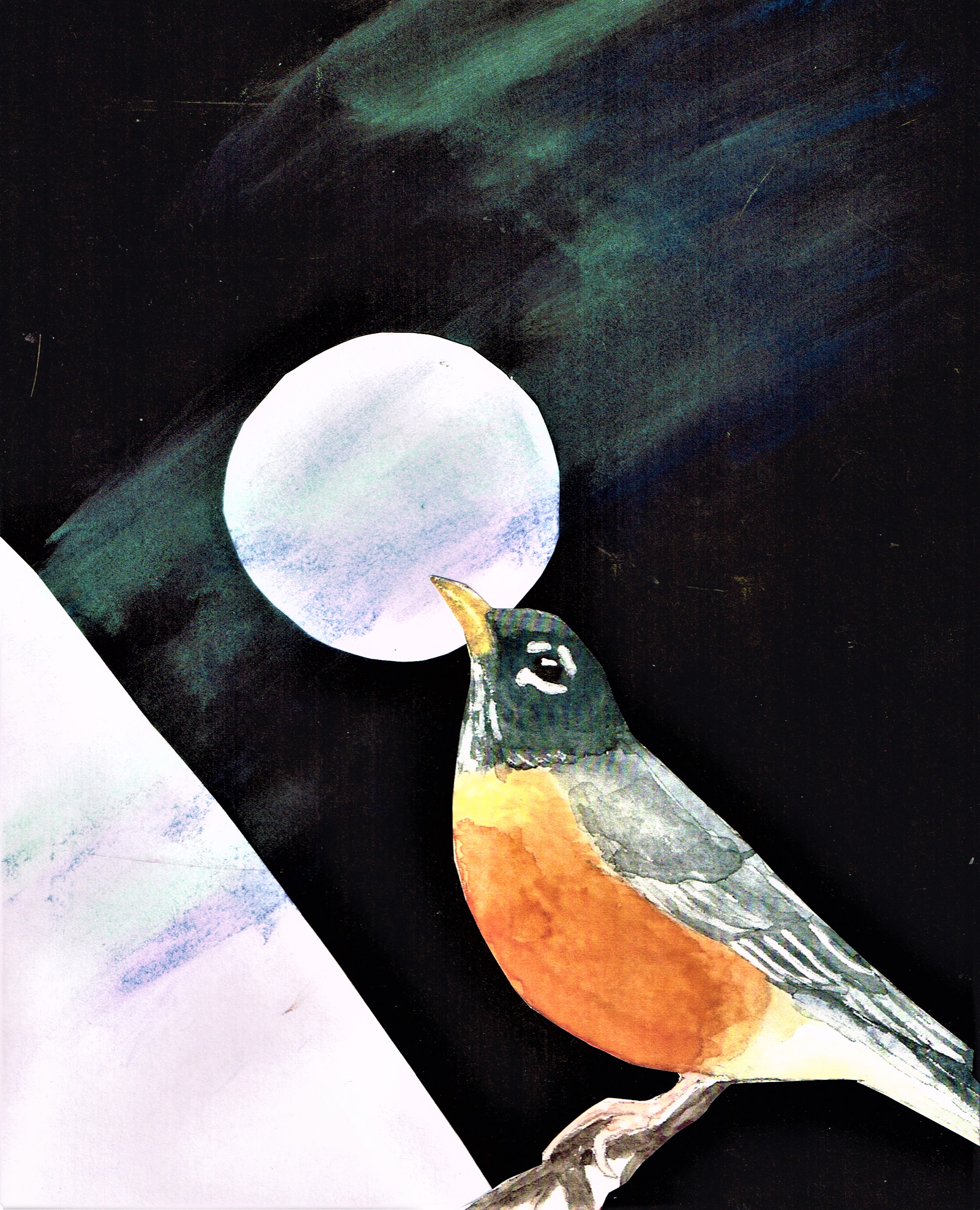
illustration created from two personal photos scanned together








 terrypetersen