Feeds:
Posts
Comments

Posts Tagged ‘intangible gifts’

Learning is weightless, a treasure you can always carry easily. (Chinese proverb)

The anniversary of my father’s death was this week. One of the gifts he gave me is a phrase he repeated during my teens: “Consider the source.” Like most adolescents I didn’t have a clear notion of who I was. Every critical word ate through me as if it were acid. I reveled in J.D. Salinger’s coming of age novels. Romance bored me. I wanted to read about people who saw the world from a unique perspective. I wondered why I was so different, and didn’t realize that my self-questioning probably wasn’t much different than other kids’ thoughts about themselves.

Being one of the popular kids—such a glorious thought—but for me it would have been easier to understand how to make rain fall back into the clouds, fountain style.

“They’re just jealous,” my mother would say. That notion escaped me completely, even though it felt good at the time. Jealous of what? Sure, I’d written a one-act play that won first prize in the Greater Cincinnati area. My grades were better than average. I sang soprano relatively well. But those things never came up in ordinary conversation, especially when the other kids told me I had cooties. I looked in the mirror and wondered what set me apart; it never told me.

I didn’t know that consider the source, three simple words, needed decades to learn. The source of people’s actions and words come from diverse places. Most of the time they tell more about the giver than they do the recipient. The flatterer may want something and the detractor could be jealous, self-involved, or simply unaware.

I can still hear my father’s tone as he spoke to me. It didn’t carry censure, as if one person were right and the other wrong. He asked me to consider the whole. If the taunt came only to make the speaker appear superior, it had no substance. If I chose to be mean-spirited, that would create a win for my adversary—and a loss for my character.

Now, I don’t remember the specific events of three days ago. So, if I decide to live in a past decade most of it will be false memory. Even if I recall every uncomfortable second exactly as it occurred, I would be losing this precious present moment. My skin doesn’t fit as well as it did then, but my spirit has a better notion about who this 67-year-old woman is. Oh, I still have plenty to learn. I misunderstand often enough to need to apologize more often than I would like to admit.

However, I cherish my father’s teaching and I cherish the life he gave me. This day is an opportunity. I pray that I use it well.

only visit the past

Read Full Post »

This content is password-protected. To view it, please enter the password below.

Read Full Post »

The great thing about getting older is that you don’t lose all the other ages you’ve been. (Madeleine L’Engle, 1918-2007) 

I made a big mistake when I told my two older grandchildren about the time my brothers climbed into the dollhouse my grandfather made for me. Since the house had been created for thumb-sized dolls, not little boys, the walls collapsed onto them.

Kate and Rebecca were horrified. Two giants had invaded precious pretend space and demolished it. Back then I probably saw the torn walls as slaughtered puppies. Now, I understand the viewpoint of my younger brothers, an exploration into uncharted territory. I really don’t think they planned destruction; it happened as a side-product of their exploration. Somehow, I expected my little girls to see with my adult point of view. They didn’t.

When Kate knew my youngest brother was coming to the house, she asked, “Is he one of the brothers who broke your doll house?”

“Uh, no, he was too little.”

I have a few weeks before my other brothers face my girls’ wrath—for a misdemeanor committed before computers, space travel, cell phones, and flat-screen television sets existed. Any pictures from that era would have been in black-and-white. They couldn’t have been instantly posted on Facebook.

Then again, my granddaughters may forget all about the long-ago dollhouse. Actually it’s likely. The holidays are filled with far more interesting opportunities. If the subject comes up I could ask if they ever made a mistake and then felt sorry about it later. The word, oops, appears early in a child’s vocabulary. I could mention again the story about the time my brothers and I wanted to play Indians in the basement when I was about four-or-five-years old. We needed a campfire. So I gathered some sticks from the front yard, placed them on the cement floor, and then lit them from the pilot on the hot-water heater. Fortunately, my mother had a good sense of smell.

“Did you get a spanking?” Kate asked.

“I don’t remember that part. But you can be pretty sure I did.” I certainly earned one.

The consequences of a fire in the basement didn’t occur to me at preschool age. I had planned to put it out. There was a faucet a few feet away, right next to the wringer washer. As an adult the thought of flames in the house strikes me with intense fear. I’ve apologized to my parents many times over the years.

Yet, somewhere deep inside me is that little adventurer who wondered what-would-happen-if? She learned to respect the parameters of reality, but appreciates the spunk of the kid with just a touch of mischief inside.

Yes, I loved that dollhouse my grandfather crafted for me. He was an incredible, gentle man. I loved my brothers even more. And, I still do.

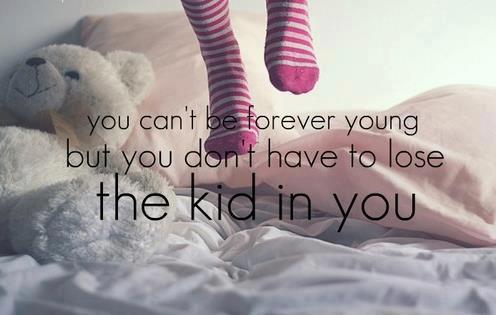
save the kid in you

Read Full Post »

What a pity every child couldn’t learn to read under a willow tree… (Elizabeth George Speare)

“Book,” Ella says with enthusiasm.

She hasn’t been talking for longer than a few months. However, our four-year-old granddaughter reads.

When she first began vocalizing she chose the alphabet and tried to sound-out such letters as e-x-i-t in stores and libraries. But, most of her communication remained through sign language. Now she reads with me as I turn back to page one of “The Wheels on the Bus” for the five-thousand-four-hundred and sixty-third time. Well, I feel like the doors on the bus have opened and closed at least that many times “all day long.” Ella knows these last three words especially well and repeats them with a joy that is contagious. How can I mind the repetition when she is so excited?

When we get to the last page she turns to the vocabulary words, takes my finger and points to them. She wants to absorb each one, learn, grow—and I want to celebrate that expansion with her.

I decide to see how much more our little girl understands. Down syndrome has limited, but not stopped her. Among the books is a Dora the Explorer coloring book. I ask if she wants the crayons. She answers, “yes,” but then hands them to me. I decide to turn this situation around.

“What color should I use?” I ask.

She gives me green for the grass, and then points out places that I have missed, including hidden background. The walk, as she calls it, close enough for sidewalk, needs to be gray. She chooses red for the barn. Usually when I color with my grandchildren I shade the edges, layer color, blend yellows and oranges, play the artist. Not now. The focus is not on perfection, but on Ella as director. Not many four-year-old kids gets to legitimately play that role. In less than an hour we will need to tell her it is time to get her coat, get in the car, and go to physical therapy. For now she can be the guide for the next move, however simple it may be.

Early in the evening I see a video made by Ella’s maternal grandmother on her phone: Ella and her daddy are in a restaurant. He is printing words on a placemat: up, down, do, cat, and dog. Ella reads them all with a voice so sweet I could listen to her as many times as I have read “The Wheels on the Bus.”

She isn’t performing. She reads for the innate satisfaction of language. Competition from others hasn’t appeared yet. I consider my creative projects and question my motives. Do I approach them seeking success or to live this moment through them?

I love you, Ella, and I hope to become a better me because of you.

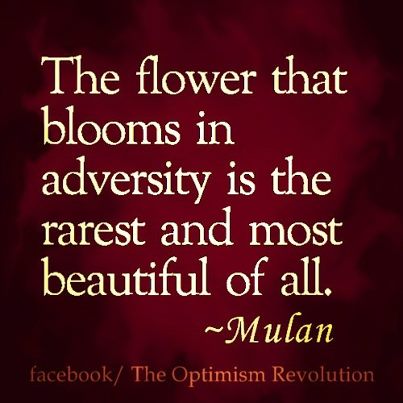
flower blooming in adversity

Read Full Post »

There is no such thing in anyone’s life as an unimportant day. (Alexander Woollcott) 

Ordinarily quiet and I get along like cake served with ice cream. However, I’d rather be at my aerobics class. Unfortunately, my breathing sounds as if my lungs were tossing pebbles at one another. After a while those pebble turn into stones and they sting. This isn’t the best time for lively exercise. Left kick, right kick, mamba, turn, and wheeze. Besides, my cough could scare off a class of battle-trained marines.

Since the monster wheeze responds only to steroid treatment I am now faced with the steroid monster’s side effects. I have the attention span of a two-year-old who has devoured half a bag of candy, and I probably won’t sleep much for the next twelve days. However, breathing is not generally considered an extra.

Okay, Ter, focus. How can I do that when one-thing-at-a-time feels as possible as collecting a foot of snow in a thimble?

First, drain that coffee and switch to herbal tea for heaven’s sake! Then try one task that requires physical effort—but not too much since my mind may think I’m marathon-ready. My body will balk.

Ah yes, one small section of an untidy cabinet. Face it, girl. Only one portion of cabinet. Slowly. Yeah, I know buzzed-on-prednisone brain, you also want to write an entire synopsis, make your Christmas presents, scrub the floors, finish this blog, annihilate every cob web in the house, and do laundry…all before your husband comes home from that beloved exercise class and the grocery store. Oh, and you will check your e-mail 47 times in between.

Right. Maybe that’s not the most efficient plan.

After that one reorganized section looks decent, I notice there’s a spill in the microwave. My actions snowball, with only one, okay two stops to check e-mail. As I struggle to keep my thoughts under control and lungs working properly, I think about the difficulties other people face. My husband is reading, “The Reason I Jump,” by Naoki Higashida. When Jay is finished he has promised to let me read it. When he comes home from class and the store he tells me he is ready to share the book.

I turn to David Mitchell’s Introduction and I’m lost in words, in pages, in this world opened by a boy born in Japan in 1992. This story explains the autistic world. It isn’t what an observer sees; it is as different as the interior and exterior of a locked cabinet, a wrapped gift, or a capped unlabeled bottle. Seeing the actions of an autistic person doesn’t tell what happens inside.

Day dissolves into dusk and I continue to read, needing to pause once for a drink of water and once for an inhaler break. Naoki answers questions that appear almost rude, with style and grace. He is thirteen. He cannot speak. He uses an alphabet board. Not all autistic people are alike any more than all people are alike.

One experience Naoki relates concerns listening to others instead of looking at them. Eye contact is too overwhelming. He sees with his ears and that is sufficient stimulation. Thanks to Naoki for helping me to focus, using my heart, paying attention to someone else instead of my own petty miseries.

Here is the Amazon link to his incredible and beautiful story: http://www.amazon.com/Reason-Jump-voice-silence-autism-ebook/dp/B00BVJG3CS/ref=sr_1_1?ie=UTF8&qid=1384473869&sr=8-1&keywords=the+reason+i+

walking in someone else's shoes

Read Full Post »

Wheresoever you go, go with all your heart. (Confucius)

Kate sits on my bed with my guitar between her knees as I tell her the names for the strings: E, A, D, G, B, and E. Some of the strings are as much as a full step sharp. They need considerable adjustment. Pain has curtailed my playing for longer than I’d like to admit.

“One of the first things you are going to need is an electronic tuner,” I tell my granddaughter. On the bed isn’t the best place to play, but we aren’t going to get as far as a real song. Not yet. We’ll just see where the open chords are, and how they sound.

I hold my Big Baby Taylor for the first time in a long while. The weight feels precious in my lap and I realize I’ve missed her even if she hasn’t missed me. “This is what a minor chord sounds like and this is how a major chord sounds. They each have a different feel.”

Kate listens carefully and I realize that one chord is not enough to show a mood, just as a single word is never sufficient to give an adequate view of anything. I should have played at least a phrase or two. A first impression isn’t always accurate either. When one of my water exercise classes became aqua zumba, I thought, I dance like a cardboard cutout. I’ll never learn it. The class has ended now and I’d do it again in a heartbeat.

“Taylor,” Kate says looking at my case. She’s a Taylor Swift fan and loves the song, “White Horse.” I hold my breath, unsure how much my nine-year-old granddaughter understands about romantic relationships. The love inherent in everyday giving seems sufficient for a girl who still treasures her American Girl dolls.

“Your turn.” I give her the guitar back. “This is an expensive instrument. But I trust you.”

Kate’s E-minor sounds amazingly crisp for a first-time try. She and I both smile. She talks about all the instruments she wants to play. And I encourage her.

“Not going to be easy,” I say hoping my smile hasn’t faded. “But it will be worth it.”

Kate may not be old enough to be in double-digits yet, but she’s seen the ups and downs of life already. One of her school mates died of cancer this summer. Another friend was disabled by a freak accident when she was three-years-old. Kate has volunteered at the Free Store. She knows designer clothes are not her natural right.

She has no idea how beautiful she really is.

“You play,” she says.

There isn’t much time before Daddy will be here so I show her a few chords: C, G, E, and F, using a variety of strums and picking patterns.

“That sounds pretty,” she says.

“You can do it, too. And more.”

Her long legs are tucked under her and I suspect her thoughts reach into possibilities. No, I can’t see her thoughts, only her expression and glistening eyes. I suspect she sees some day, far away. I see now, a fourth-grade-girl with the world ahead of her.

Wherever you go, go with all your heart, Kate. Go with all your heart.

secret of genius child Optimism Revolution

Read Full Post »

No matter what he does, every person on earth plays a central role in the history of the world. And normally he doesn’t know it. (Paulo Coelho)

At a writers’ conference several years ago, I heard an agent or editor, don’t recall who it was, talk about how important it is to have a polished ready-to-go manuscript. She emphasized the necessity to find a unique approach, a fresh angle. A memoir that simply tells “my story” can’t cut it. However, I believe in tact. When a woman wrote the story of her ordeal surviving breast cancer, this professional bluntly told the woman it did not stand out. It added nothing. In essence it was no different than anything already written. The writer broke down in tears. Perhaps that one-on-one rejection could have come with constructive criticism instead of an ax. But I don’t read so-so manuscripts all day long. I only edit my own groaners.

Writing is a tough business.  I write anyway, whether I make a lot of money or not. I’m addicted. When one small group of folk told me I had touched their lives with my words I felt honored. That doesn’t mean I don’t have goals. I want to write well. But, if I don’t touch hearts, I have failed by writing only fancy words.

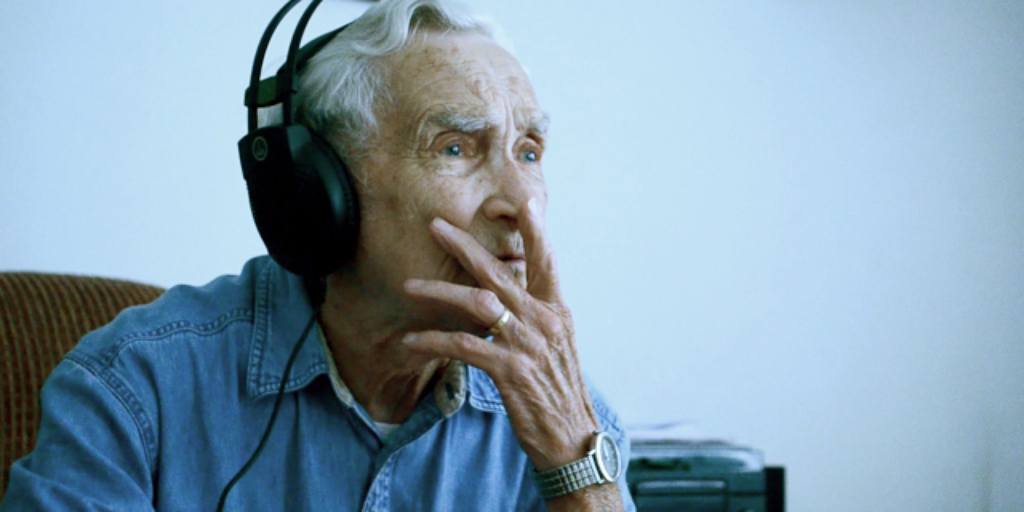
Occasionally I also write songs. These are always positive and have a limited audience. When a friend shared a story about a 96-year-old man named Fred who wrote a song about his deceased wife, Lorraine, I was intrigued. He didn’t follow a single rule for the contest. He couldn’t sing or play an instrument. In fact he wrote that if he sang he would scare people. Yet the professionals who conducted the contest were touched by his sincerity, read his lyrics, and decided to record his song. It didn’t follow the guidelines for the contest, but it fit the requisites for the soul of a song.

Warnings appear on the YouTube clip to keep tissues close by, and don’t watch if you don’t want anyone to know you have working tear ducts. (Well, that’s not a direct quote, but it gives a clear enough notion.) http://twentytwowords.com/2013/08/26/widower-submits-a-song-about-his-wife-of-73-years-to-a-songwriting-contest/

Since I have watched the video, several times now, I find myself humming “Sweet Lorraine.” My son gave me a gift card for iTunes. This sounds like a good place to use it.

In the meantime I celebrate an out-of-the-box success. The video has gone viral. The words don’t suggest that there was anything different about Fred and Lorraine. They lived an ordinary life. Well. But, they did it for 73 years. And that is tougher than facing a hard-nosed publishing world with a few pages of printed words.  

Kudos to Green Shoe Studios! You found the treasure because you could broaden your vision. Thanks.

Fred hears his words come to life in song.

Fred Sweet Lorraine

Read Full Post »

In this world, you must be a bit too kind to be kind enough.
(Pierre Carlet de Chamblain de Marivaux)

Ella runs toward another child with white-blond hair as if their fair heads were halos meant to merge.

“Hi! Hi!” Ella is finally talking. Her vocabulary is limited. She still uses sign language for most communication. Down syndrome has affected her development. But she has always expressed enthusiasm with complete clarity.

The boy seems puzzled, but accepts our little one’s hug. His sister, perhaps a year younger, continues toward the parking area at the Museum Center. Then she hesitates. I suspect she isn’t going to miss out on the love her sibling is getting. Ella doesn’t disappoint her.

Ella, Grandpa, and I are on our way to the Museum Center. However, our three-year-old girl is in no hurry. Each step on the journey brings its own adventure. She sees a little girl in a stroller and blocks Mama’s path to ooh and ah over someone younger than she is.

While my husband and I apologize for the interruption I hear my name called. I see Marcia, a very special friend who has enlightened my life’s path in deep and beautiful ways. I’m both surprised and happy to see her. Her smile fits the halo image. An embrace feels in order.

She introduces me to Mama and the little one in the stroller. The child is on her way to nap time and barely tolerates Ella’s gushing. Fortunately, the little girl isn’t screaming yet. And I am grateful.

I don’t count the number of stops it takes to get to the door. After all, we aren’t late for a plane. A fountain, a cloud, or a block of cement can fascinate if approached with curiosity. Adult responsibility has damaged a lot of my spontaneity. If I don’t catch my granddaughter’s life lessons, she will show me again, without any sign of irritation.

In one play area inside the museum she insists upon putting on a sheriff’s vest by herself. Unfortunately it includes a scarf with an opening along the back that could be an extra arm hole. Although Ella never figures out how to maneuver the vest, she doesn’t give up, and she doesn’t throw a tantrum and blame costume construction for getting in her way. Life is what it is. Difficult. She has known that since she was born seven weeks early with multiple medical needs. She has overcome most of them.

One girl seems insistent upon going up a slide the wrong way. Ella waits patiently at the top. Within minutes the two children are playing together. The other girl runs back to Ella to give her a hug before she leaves with her grandparents.

One embrace has led to another. So simple and honest. And it took a child with a tripled twenty-first chromosome to begin the cycle. May one kind gesture direct another… and another…and another.

hug

Read Full Post »

If you talk to a man in a language he understands, that goes to his head. If you talk to him in his language, that goes to his heart.  (Nelson Mandela)

Service we needed done in our house takes up a large portion of the afternoon: drilling, decisions, and comforting a five-year-old who doesn’t like noise. No time left to go to the Y for a swim. I expect Kate and Rebe to express serious disappointment. They handle the situation well.

Rebe gets custody of PBS Kids on my iPad while nine-year-old Kate and I do artwork in the second-floor storage area of our house. There is no air-conditioning here since we have no place for duct work, but this has been declared girl territory, a clubhouse arena of sorts. The heat isn’t as horrid as August usually offers. I’m holding out. Rebe manages for a while, and then returns downstairs to the cooler air and Grandpa.

“You can have this page,” Kate says, tearing it out of her brand-new book of designs to create and color. “You can make cards for the family, and then copy them on the computer.” Kate is always planning. She wants to turn our storage area into a play room. That will take not only time but ingenuity. With Kate’s enthusiasm, however, I can see it happening.

She watches as I show her how to blend colored pencil, rounding strokes inside a circle, adding depth by easing orange around the edges of yellow. “See how it looks if you leave a tiny bit of white in a block of turquoise—on purpose.”

We share, heart to heart. I feel free to tell her that someday Grandma and Grandma may need to sell this house and move to a condo, when Grandpa gets too old to mow the grass. Not now. Someday.

“I hope that never happens,” she says. “There are too many memories in this house.”

I am impressed by the depth of a child who hasn’t reached double digits yet. She adds that she is not disappointed that she didn’t get to swim today. She got to spend time with me.

I look around at the haphazard space around us: old blankets, photos, a box with my old published materials, the dolls I bought for my mother—nothing of outstanding value. No one from Better Homes and Gardens has ever approached us with an offer to do an article. Nor do I expect any in the future. Yet, I am blessed.

Finally Rebe returns upstairs, her demeanor comments on the heat as she looks at us working in the corner. “Whatever are you thinking?” she asks.

Kate and I laugh. One more memory has been added to the rest.

learning from children  morning coach

Read Full Post »

May my silences become more accurate. (Theodore Roethke, poet (1908-1963)

My husband leads me along a winding, unmarked road in the cemetery—I trust him to direct us out again. There were color-coded lines along the middle before the roads were freshly oiled. Now, I depend upon Jay’s sense of direction. For me north, south, east, and west could just as easily be called here, there, nowhere, and the dark side of the moon.

“How do you know which way is north. . . or west?”

He shrugs, smiles, and looks ahead. His map is innate. Perhaps he understands his place on the globe the way I intuit a new recipe.

We celebrate an unusually cool breeze at the end of July and read the names on the tombstones. I see my maiden surname. I don’t know if these people were related to me or not. The lush rolling hills are covered with angelic shapes, traditional tombs, and huge monuments chosen to stand out, to hover over the others. Yet, we don’t stop to honor the grand and the glorious. The persons buried there are just as dead as the ones under the flat, almost lost markers in center plots: mother, father, or beloved son gone too soon. I consider those lives. Who were they? Who am I to those I meet?

Wasps abound in the grass. They hover over the dates on the tombstones: born this date, died another. Real life includes plenty of unavoidable stings. I just don’t want to be the one who wields thoughtless ones during anyone’s “dash” time on this planet.

I take Jay’s hand. I’m not wearing a watch. My at-home agenda will wait as the silence absorbs me, and we trudge up a gravel hill into the afternoon sun.

listen to your heart

Read Full Post »

« Newer Posts - Older Posts »