Feeds:
Posts
Comments

Posts Tagged ‘self-awareness’

Giving opens the way for receiving. (Florence Scovel Shinn)

The cord to the tree lights is a tad out of my reach. Sure, I could ask Jay to help, but he is in the middle of working on our finances. The two older grandchildren will be here any minute. I’d like to greet Kate and Rebe with some sparkle from the tree, up for only a few more days. Str-e-e-tch your short body, Terry, one more inch, one m-o-o-o-o-re…

Maybe not such a good idea. Crash! My son is pulling into the driveway. The girls run to the front door. They are greeted by broken glass and scattered ornaments. Son number one is going to be late for work. And he can blame it on his clumsy mama. Fortunately, he doesn’t waste time with unnecessary words. He sets the tree upright and leaves with a pleasant good-bye, see-you-later as I get the garbage can and Kate cracks the eggs for breakfast.

Electricity becomes the un-theme of the day after Kate becomes enthralled with a battery-operated candle flame and tiny glass lantern. She decides we will pretend to be a pre-modern-appliance-aged family. We weave our own clothes, plant and grow our own fruits and vegetables, as well as maintain an orchard, an old artificial pine with a few wayward branches in the real world. The television and iPad remain off for most of the day.

Some exquisitely embroidered pillows, a precious and unexpected late Christmas gift to the girls, also become an important part of the game. They provide portable bedding—the pillows travel from one-room cabin to tent to wagon train as the day progresses. The photo below was taken under a sheet tent made with the dining room chairs as posts.

“Don’t you want to go out somewhere today?” I ask the girls.

“No, we want to stay here and play, they both answer.

“Besides,” Kate adds. “Cars haven’t been invented yet.” Okay, so the answer is something of an anachronism, but if our house is a suitable playground, I guess I really can’t complain, even if the day did begin with a broken-glass cleanup. The tree comes down by the feast of the Epiphany anyway. The fun, I’m hoping, lives here.

pillows from Nora

Read Full Post »

No matter what he does, every person on earth plays a central role in the history of the world. And normally he doesn’t know it. (Paulo Coelho)

As usual, I’m eager to move to the next chore on my must-do-today list as my husband, Jay, gets a cup of coffee and continues to chat with fellow Y members. I sit quietly only when I am intent on an edit—or when complete weariness has almost knocked me over. He needs to socialize. My need to accomplish does not necessarily preempt his mission to celebrate the company of fellow senior citizens. I know my agenda needs flexibility, more smell-the-roses time. However, wind-up-and-go is my natural mode.

I intentionally breathe in and out slowly: breathe in to a count of five, out to a count of ten, a soul-cleansing effort. My list seems jumbled anyway. I’m not sure what I planned to do next, or what I have forgotten. I’m on auto-pilot and the plane may or may not have enough gas to get to my destination.

Then I notice Jay is talking to Nora, director of the senior programs at the Y. Nora has an attitude that brightens everyone around her. She is carrying a package. Jay motions to me to come and see it. I’m glad I didn’t insist that we leave the Y as soon as our class ended. The package is a present from Nora to Ella, a hand-made doll with a bright red crocheted dress and wrap. Nora and Ella are good friends. Our little girl has impressed Nora. Ella affects people without realizing it. Last month a young girl bought Ella a present at a rummage sale, because Ella had been charming. I think our youngest granddaughter’s extra chromosome has been misnamed; she has Up syndrome.

As I place the gift in the trunk of the car and prepare for our next errand, I sigh. My oh-so-essential list may or may not get completed. It does not matter. Have I made anyone smile today? Have I pointed out something good about a person that he or she hadn’t noticed? Have I spread a little sunshine, like Nora or like Ella do? Maybe those are the items I need to put first on my list.

To all, have a wonderful holiday.


A photo of Ella’s first printing, taken by another of her grandmothers, Alice. Maybe the E isn’t really backwards. It could be facing toward someone on the other side of where she stands.

Ella isn’t leaving anyone out!

Thanks for the photo, Alice!

first printing

Read Full Post »

Vision is the art of seeing things invisible. (Jonathan Swift)

As I’m sorting the mountain of items on top of my dresser I find an old earring in a box of don’t-throw-out-yet-stuff—the mate was cracked and discarded in another decade. The relationship with the gentleman who gave it to me shattered long before the jewelry did. In another century. Admittedly I did not appreciate the gift at the time. It probably cost my fiancé more than I realized. But I needed to experience a profound personal loss to realize that the only reason I continued the relationship with this young man was because I didn’t think anyone else would ever take an interest in me. The two of us had nothing in common.

Now, as I discard that earring in the trash I forgive us for our ignorance. He had no idea how lost I felt at the time, and I had no way to explain the inside of a vacuum. My vision has changed; I suspect his has, too. He married someone else and so did I.

Now, many dark, bright, and muted-colored years later, my husband of 43 years plays Christmas music on our CD player while I clean. I recall Simon and Garfunkel’s Silent Night/7O’clock News from their “Parsley, Sage, Rosemary and Thyme” album of 1966. It appeared during my own difficult time. Crime reports and promises of continued war played in the background of gentle sound, a bizarre kind of counterpoint. In some ways not much has changed. The challenge of peace remains immense, even on a personal level.

Sure I like days where the sun shines with amiable warmth and I have enough time to do whatever I want, whenever I want to do it. I doubt that these are the moments where I grow most, however. Chances are if my life had been cushioned in silk and affluence in a the-world-centers-around-me existence I wouldn’t appreciate innate beauty.

I wouldn’t smile all the way from my lips through my heart and into my gut every time Katie J. posts a new entry in her blog for Elysium. Kyle, like my Ella, has Down syndrome. Katie tells about the joys of her young son’s life, but she does not minimize the challenges. I appreciate her honesty, as well as the information she shares about Trisomy 21, what it affects and what it doesn’t. Both Kyle and Ella have a deep capacity for love without strings attached.

These are kids, scoffers may say. You can’t predict a life based on early cuteness. Yet, I have met adults with Down syndrome who have not lost the gift of innocent goodness. And it is a gift.

I think about that silly box on my dresser with mismatched, lost or broken pieces. This is probably the time to get rid of those useless attachments and become more like Ella and Kyle. Things will never make me happy. People-who-care can; they have. Knowing people who don’t have an agenda make discarding the past even easier.

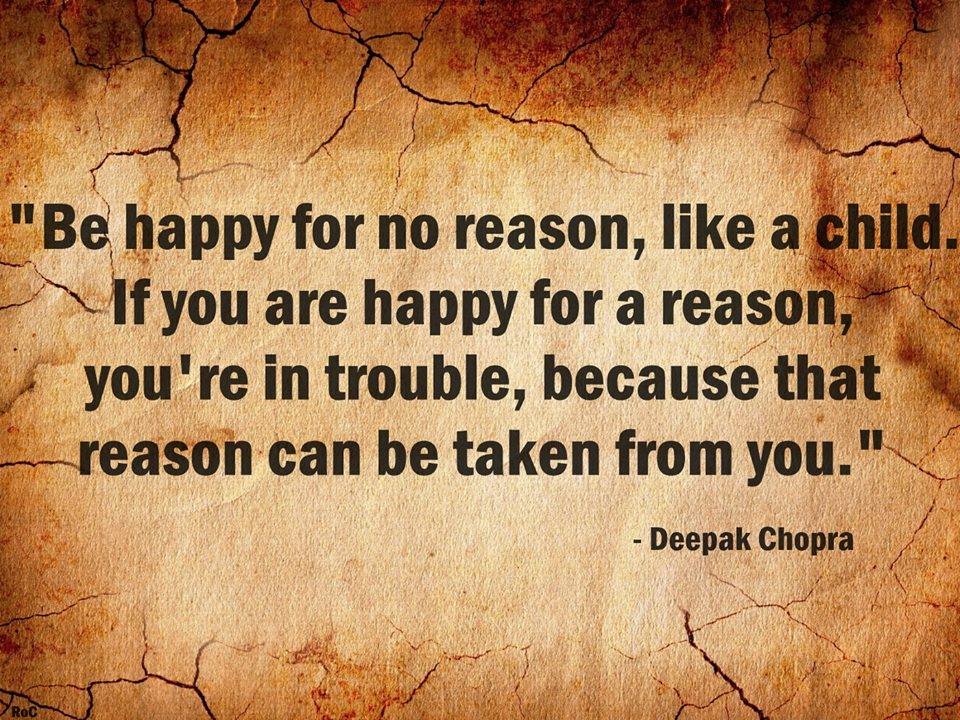
happiness without a reason

Read Full Post »

Don’t judge each day by the harvest you reap, but by the seeds you plant. (Robert Louis Stevenson, novelist, essayist, and poet, 1850-1894) 

I decide to let my two older grandchildren know their overnight visit is important by serving their breakfast on our good china.

However, I am in more of a hurry than I realize. One of my husband’s favorite gold-edged beer glasses falls and shatters on our hardwood floor as soon as I unlatch the cabinet door.

“Oh, oh, got a delay here,” I say, although that isn’t really what I am thinking. Irritation wants to rise and boil inside me—at my lack of awareness, at my eagerness to bite off more than I can chew.

Fortunately my husband doesn’t complain. He simply suggests vacuuming as well as sweeping, and I tell the girls that shoes are a must right now, whether they match their jammies or not.

“What’s a delay?” seven-year-old Rebe asks.

“It means something isn’t going to happen exactly on time,” I say.

Rebe doesn’t appear to completely understand.

“You know,” ten-year-old Kate says. “When it snows we have a two-hour delay. That means school starts later.”

I’m distracted; Kate uses examples her little sister recognizes. I’m grateful for my number-one granddaughter’s explanation. I turned down the heat on the stove before I grabbed the broom. But without saying a word, Kate has made the texture of our scrambled eggs look terrific. And I thank her for her helpfulness.

I think about how easily this moment could have gone downhill. I was upset that my plans were interrupted by my own clumsiness. And I was one-frayed-hair-away from allowing a long stream of inappropriate language from destroying the atmosphere.

At a settled, much more comfortable time later, I consider how strange life can be. In our culture we deify the perfect score on a test, the body with the ideal BMI, the quintessential existence that fits on a travel magazine cover, but never inside a real-life experience. Yet, the sequoia, the oldest and largest tree on earth, depends upon fire to flourish. Fire prepares the soil and allows the seed to germinate. Individuals who have always been coddled curdle when they discover the sun doesn’t revolve around their needs. Plants need a balance of both sun and rain to grow.

Somehow I suspect that the human being needs just enough imperfection to be real. A flower, a tomato, or an oak isn’t promised fruition by any single seed. Perhaps that is why we need so many of them. And thank goodness life offers more than one patience-test. A pass-fail system would put most of us in jeopardy.

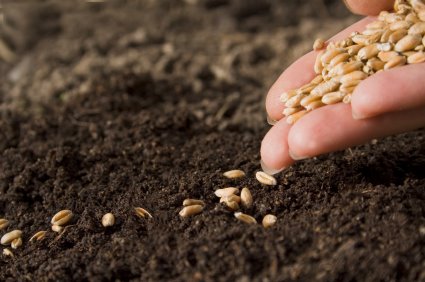
planting seeds

Read Full Post »

We are a landscape of all we have seen. (Isamu Naguchi, sculptor and architect, 1904-1988) 

 As I enter the lab for routine blood tests I see the phlebotomist, a physician from Pakistan working her way into the U.S. system, talking to someone getting ready to leave the building. The two women laugh and embrace like old friends. Apparently they have been sharing similar life experiences. Their meeting has been a blessed serendipity.

I think about unexpected moments I have had: encouragement from unlikely sources, the answer to a pesky problem when I hadn’t brought up the subject, a story about overcoming tragedy when I need a dose of courage.

In fact, before a water aerobics class I talk to a fellow Y member who tells me his sister died from a brain tumor when she was three. He admits that the experience was not easy for him, but he does not speak as if that event exists now—only that it happened. His childhood journey had its metaphorical rocks and broken glass.

The chlorinated water soothes me as the class kicks and jumps and makes waves. Actually this hour wouldn’t be much fun without the action. And life would be pretty gosh-darned boring without its difficulties. Although in the everyday-doing I would like to spare my youngest granddaughter open-heart surgery. My right hand, gnarled with arthritis, would uncurl and flex with ease, not work toward tightening into a claw. I’m fighting that; I have an appointment with a hand specialist soon.

In the meantime I plan to write as much as I always do and let the warm pool water embrace my body and spirit whenever possible. I let the relaxing movement remind me of the gifts I have been given: My youngest granddaughter will not teach nuclear physics to a select elite—she will teach anyone who meets her about love and acceptance. My middle granddaughter exudes imagination, humor, and honesty. My oldest granddaughter spreads enthusiasm and determination. Last week my oldest granddaughter and I talked about how difficult it is for celebrities to maintain perspective when they are viewed as center-of-the-universe figures. I am impressed. She sees with depth, not a me-me-me attitude.

Two women on the other side of the pool laugh; they wave at me. I met the beauty of who they are last week. The landscape of all I have seen expands. I pray to use those gifts well.

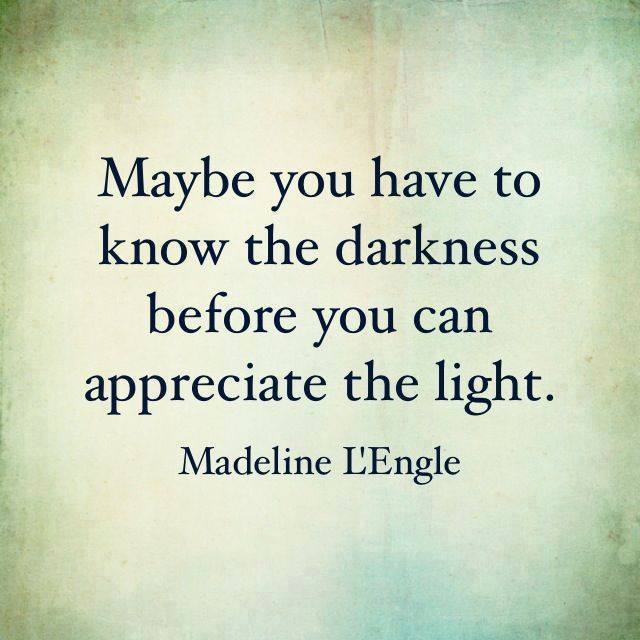
knowing darkness before knowing light Optimism Revolution

Read Full Post »

 Expect trouble as an inevitable part of life, and when it comes, hold your head high, look it squarely in the eye and say, “I will be bigger than you. You cannot defeat me.” (Ann Landers)

Four more hours to wait at the Philadelphia airport. September 25, 2014. Our last flight landed around noon. Although the numbness settling through me makes time seem like an illusion. Jay and I sit in the restaurant area. I read, The Art of Racing in the Rain, by Garth Stein, and my husband loads our vacation photos onto our faulty laptop using Wi-Fi that fades in and out with the reliability of a light bulb with old, frayed wiring.

At least my book is riveting, a tale told from the point of view of a dog with twice the wisdom of a human being. Enzo approaches the end of his life and anticipates re-entry on the earth as a man. The notion does not come from his imagination. In Mongolia a dog is buried on top of a mountain so that no one can step on his grave. If the dog is ready, and worthy, he can return as a human being. Enzo is ready. He has learned and served well.

I would like a taste of Enzo’s understanding about the meaning of life as I stop to look at my watch, again, and then see how my mate is faring with our laptop. An attractive young woman pauses close to the table where I am sitting. She surveys the area.

“You can sit here,” I say gesturing to the chair across from me. “I’m just taking up space while reading. We’ll be here a while. Our flight has been delayed. Twice.”

“Mine has been canceled,” she answers.

“Don’t you just love it?” My question is both rhetorical and sarcastic. I don’t expect a response.

“No,” she answers. “I have an appointment at eight tomorrow morning.”

I mark my place and close my book. I learn that this young woman has an appointment to get into medical school at Yale. She asks how far it would be to drive to New Haven. Jay looks it up on the computer—it responds in almost reasonable time: a three-hour drive.

The young woman says she hasn’t eaten all day; it is now after 4:00PM. She chooses a salad and eats first before calling for a rental car. I hear her name as she calmly makes arrangements on her cell phone with the rental service, but I’m not relaying that information here; I don’t have her permission. However, I choose to remember it because I connect her with the unflinching control she exhibited during an untenable situation.

“Thanks for your help,” she says.

“You are welcome.”

“I guess my little drama puts a perspective on your wait.”

I smile, the toothless kind that holds back more feeling than I want to show. The wisdom I discover in “Racing in the Rain” stands before me in a young woman with both determination and perspective.

“During your interview you can tell them you have resilience,” Jay says.

I nod, wishing resilience were as contagious as a virus. I should be the one thanking you, I think as she disappears down the long, echoing hallways of the airport…

dancing in the rain PIQ


Read Full Post »

Do what you can, where you are, with what you have. (Teddy Roosevelt)                      

I am in the process of returning the smaller items to their place in our house after our floors were refinished: the good dishes, books, our beloved wooden bird collection, and family photos. Our second floor storage area is temporarily in danger of mimicking scenes from Keepsake, by Kristina Riggle. Trish, the main character, is threatened with the possibility of losing custody of her son, injured by boxes stacked to the ceiling—although she will not admit that she is a hoarder. She doesn’t have time to organize. She tells her son, “Mommy isn’t perfect.” Her son accepts their life as normal.

No one, fictional or shouting into a microphone over public media, has arrived at a be-all, know-all state. My husband and I could have hurried less when we shuffled our possessions out of the way of the going-to-be-there-tomorrow work crew. However, we were also packing for a trip to the west coast as well as babysitting for our youngest granddaughter. Now I look at the boxes, stored by what I could name the Helter-Skelter-Give-It-To-Us-And-We’ll-Lose-It Storage Company­­­­­­­­­­­­­­­­­­­­­­­­­­. Where should I start? One step at a time seems the only way to go. If I attempt to embrace the whole I could give up before beginning. I have decided to simplify, choose only a few items for the windowsills, breakfront, and coffee table. But which items?

To discover what matters and what doesn’t—this is my current focus. As I read Riggle’s story I see layers unveiled: dirty corners inside rooms and hurt corners inside lives. I can view a situation and think I know what is there, yet be unaware of how the essence of it works. Deciding what goes where is relatively simple; why people do what they do may or may not be.

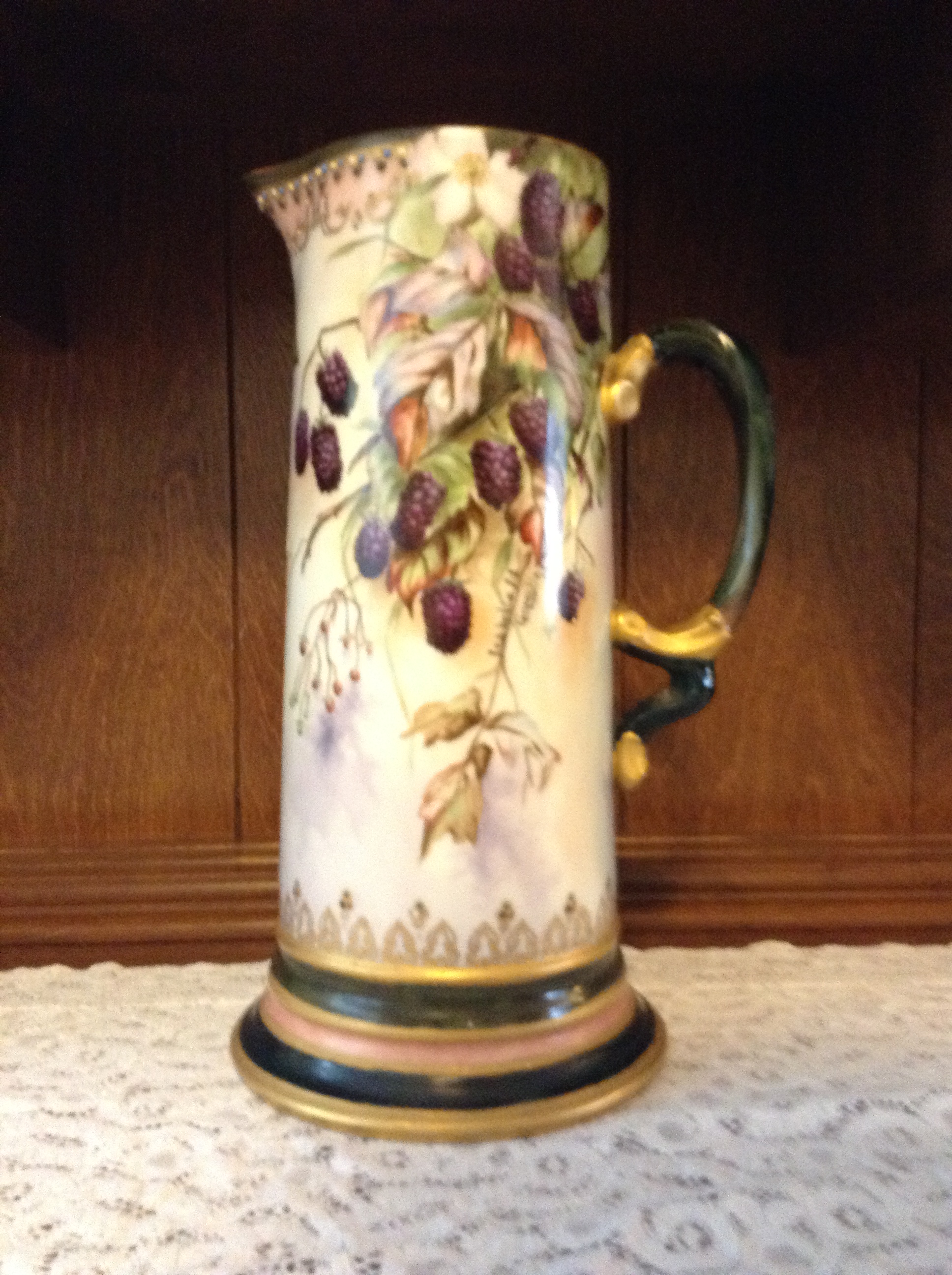
I decide not to rush. The need is no longer present. The floors are finished and gleaming. On the haphazard second floor I am mining for gold; there is treasure in this pile of stuff. In a corner I find a pitcher painted by my husband’s grandmother. I never met her. She died long before I dated my husband. Her work is exquisite. She stopped painting after she married. As an individual with a creative nature I am saddened that she saw it as an interference in her role as wife and mother.

There is no point in investigating what cannot be changed, except perhaps through a wildly disguised fictional story. Her beautiful pitcher hid on top of our breakfront for years before we had our floors refinished. I decide to give her work prominent placement, closer to the bright floor, to where we live—a metaphor for cleaning-up the basics first, choosing the best and starting from there.

As I position the art on the open surface I pray that I live each day well enough that I leave something good in a corner that repels the dust and shines out.  Distant tomorrows are not my business. Using this moment well, is.


Isabelle's pitcher


Read Full Post »

A dog will teach you unconditional love. If you can have that in your life, things won’t be too bad. (Robert Wagner)

I’ve often said that I won’t be allergic to dogs and cats in my next life—as if I had a genuine grasp of what a next life looks like, embraces, or involves. I don’t always know where my cell phone is, much less the substance of the infinite. However, I really would love to squat down and call, “Come here, Spike,” and then let my grand-dog lick my arms, neck, and  face—slobber all over me if he wanted.

Spike is an example of acceptance and unconditional love.

My youngest granddaughter is sick. I’m bringing dinner to her daddy’s house. My visiting time must be limited. I can manage short encounters, but as soon as I feel the slightest chest tightness I need to leave the premises, as in immediately. Itchy eyes would be difficult enough; I need to give up breathing to enjoy the presence of a fur-bearing creature. Fortunately, the weather allows us to eat on the patio. Outside, Spike can shed all he wants and the air absorbs the allergens. And I can appreciate him.

He looks for morsels of dropped food, but doesn’t growl when no one gives him a handout.  He already had dinner.  He stops by my chair and looks up, dark eyes begging to be petted. I smile and congratulate him on his many virtues, but don’t make contact with his soft fur. He moves away, patiently lying close to the table and waits for attention.

I think about how unlike Spike I would be in similar circumstances. So you’re the snooty type. Okay, suit yourself. I don’t need you either. Perhaps my grand-dog sees deeper than I do. He settles next to Ella and her daddy as he cradles the suffering little girl in his lap. Maybe Spike is sending positive vibes.

It’s hard to tell what he understands. I don’t speak dog. The folk who have a loyal pet are both fortunate and blessed.


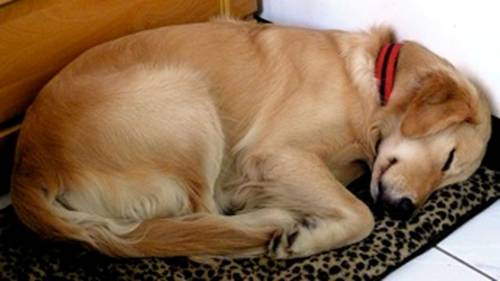
Spike is a tad larger, black with white markings, but his expression is similar to this dog’s.

sleeping dog

Read Full Post »

You can’t depend on your eyes when your imagination is out of focus. (Mark Twain)

I drive alone in silence and savor the freedom. Certainly traffic brings noise, but that sound is outside my jurisdiction and it isn’t emergency-vehicle or passing-train loud, at least at the moment. Sometimes I crave space simply to be, to make a detour if I want, shorten or elongate a trip on a whim—celebrate a day without obligations or deadlines, with only open blue skies and a sense of the continuing now. I love hours when words and I work together at the computer, sometimes leading to a story, occasionally discovering a truth. That takes a certain amount of love-for-the-hermit’s-life.

I haven’t traveled far when I recall an incident with my youngest granddaughter, as she dressed herself with an infant bib, at least three long necklaces, a length of cotton batting, and sunglasses. Since her speech is limited I’m not sure whether she played the part of a princess, actress, or model getting ready for a shoot. Then I recall treading water with my older grandchildren, the joy we share as the warm water caresses us, the games we play as the deep end of the pool supports us with a little kicking and a lot of laughter.

I am hit with the fact that this moment of freedom isn’t really where I want to live forever. I just need to breathe occasionally and observe the whole. Chances are I’m going to be exhausted after spending a full day tomorrow with grandchildren again. Perhaps living perpetually alone could become a tomb, not the utopia I desire. One, two, three, breathe… Real life is about to return in a matter of hours.

time alone PIQ

Read Full Post »

Dare to be naïve. (Richard Buckminster Fuller )

Our youngest granddaughter, four-year-old Ella, sounds out words but doesn’t talk in many sentences yet. Down syndrome has affected her speech. She understands, but is limited in her ability to speak fluently.

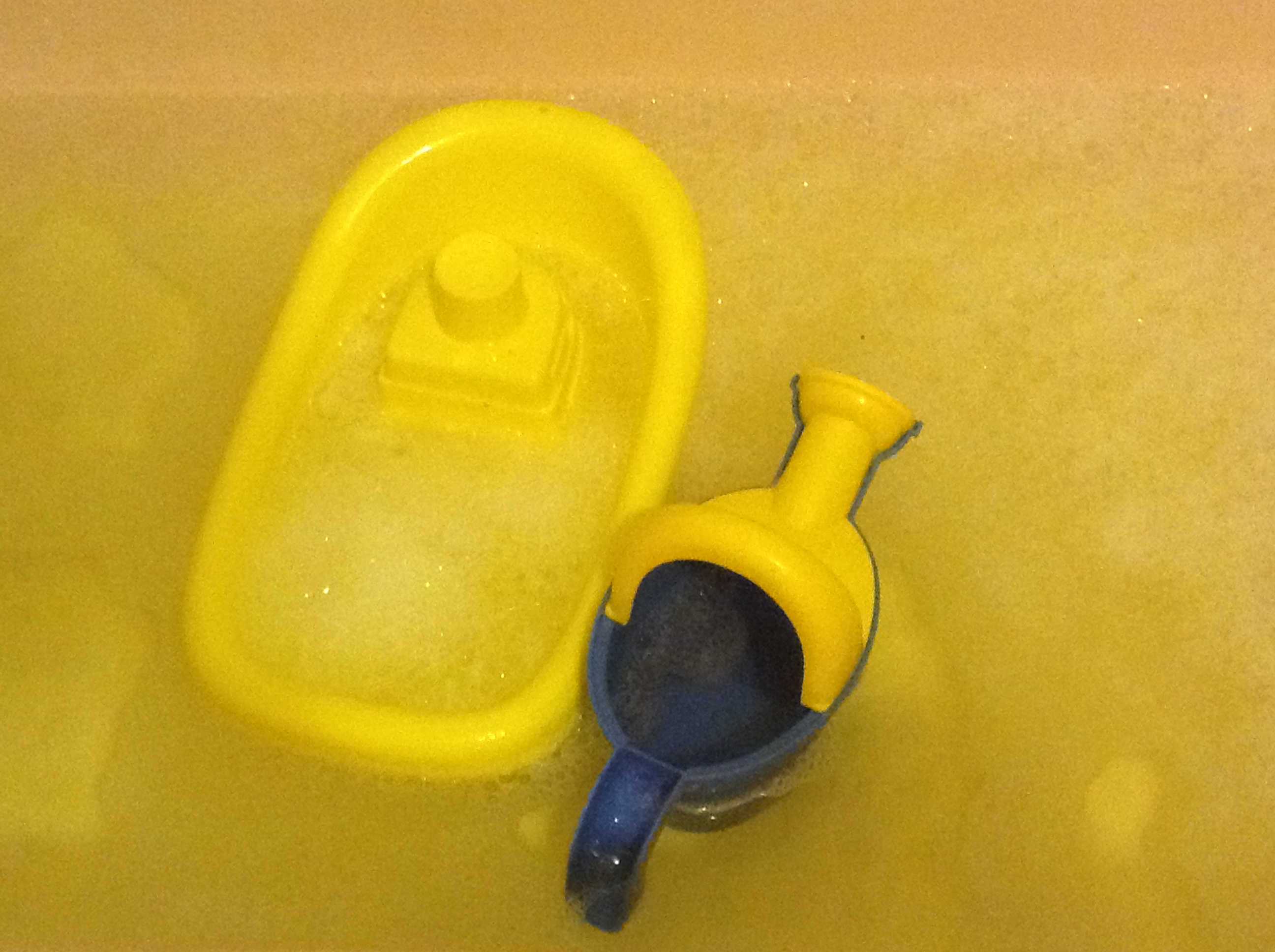
I am giving Ella a bubble bath as she plays with water toys. The boat soon becomes a cooking pot where she makes soup.

“What kind is it?” I ask.

“Green.”

As she pours that pot out into the tub, she dips more suds into her boat-pot. “White soup.”

I suspect that she wants to add some dessert to the menu when she says, “pie.”

“What kind?”

She grins—with an energy that reaches across her face, pauses, and then mouths what sounds like flatulence.

That is not the answer I expect. Apparently her interaction with other children at school and daycare has extended her life appreciation in multiple directions. “Fart-sound pie,” I tell the towel rack.

“Fart,” she says, once, the R well-rounded and clear. She giggles. So do I. Fortunately the word does not become a mantra the way it does with most children when they discover minor vulgarity.

She merely laughs, her blue eyes flashing simple delight. After she is dried and dressed she runs holding the boat out in front of her, leading it from one room to the other. She has places to go and is eager to travel—wherever her path leads.

When her older cousins, Kate and Rebe, arrive several days later the first thing they want to know is when they can see Ella next. Since I don’t have a date yet I share the bathtub story. Ella’s sense of humor can be present anyway.

Kate and Rebe repeat the tale as if they are putting it into a mini-drama and need to memorize every detail. It will grow stale, in time, replaced by another incident. But I hope the three girls are always eager to see one another, to celebrate the freshness of who-they-are. May their naivety remain intact for many years. And may they continue sharing it with Grandma.

After all, Ella’s first full sentence was, “I love you.”


bath toys


Read Full Post »

« Newer Posts - Older Posts »