Feeds:
Posts
Comments

Posts Tagged ‘short story’

Her Name is Dara Nubes

Snow fell avalanche style. Margie didn’t bother to look out the window. Family Christmas celebration would wait until the week after New Year’s Day. It didn’t matter. Her husband Len had left this world. Ten years ago. On December 24. She hadn’t believed him when he told her he didn’t think his weak heart would hold out any longer. So unfair for a man in his fifties.


“We’re seeing the cardiologist on Monday. He’ll find something else we can do,” she had said, as he shook his head, eyes unblinking.


Len. He had seemed to be the lazy half of their relationship. Long before his illness. He always had an excuse for tasks like taking out the garbage. He would lean back and say, “I’ll do it after reading one more page of this book. You need to relax more and stress less, sweetheart.”


Margie often waited until the sun had almost set, then lugged the garbage cans to the curb. So many times.


Len had the energy level of a sloth on sleeping pills, but he was a scholar. PhD. Piled higher and deeper in anything on a metaphorical cloud. Nevertheless, he often bragged to his friends about how his wife could shoot a basketball from half-court and win the game with five seconds left.


Margie qualified the statement. “That happened once. When I was a sophomore in college”
She couldn’t understand how she could love Len and be totally irritated by him at the same time. What could he do? It had to be more than cat lounge. She complained. Often.


Then of course there was the frequent argument. The one where Margie hit Len where it hurt him most. His family. Too many black sheep. A brother in prison. Two more who should be. Why he didn’t like to admit his last name, Crimm. Change the last letter and it could become crime. She bit her lip and was almost sorry it didn’t bleed. They never had time to make up. “Forgiveness,” Margie whispered to herself. “The only gift I really want for Christmas.”


The phone rang.


“Margie,” the voice called. “I have a huge favor to ask of you.”


“Sure, what do you need, sis?”


“A young woman named Dara is on her way from up north. She’s not far from your place, but she doesn’t think she can make it to mine. Okay if she stays out the storm with you?”


“Tell her to stop. If the snow settles soon, we will be at the celebration. If not, I would need more than my little Honda to plow through this stuff.”


“Thanks, Margie, I can always count on you.”


Her sister gave Margie an every-hair description of Dara Nubes. “Black straight hair, pale skin, large bustline, a continuous smile…” Her voice faded and disappeared.


Margie punched in her sister’s cell number. She didn’t get to the final digit before the doorbell rang.


Already. Dara had arrived.


“You are a lifesaver,” Dara said slipping off her boots. “The interstate is backed up for miles.”


“I am glad to help.”


“Awe! I smell something delightful cooking. Oatmeal walnut cookies.”


Margie opened her mouth, but nothing came out. This was the first batch of oatmeal walnut cookies she had ever made. She didn’t have much confidence in the baking world. This was an experiment. For Christmas at her sister’s. If it worked, wonderful. If not, no one needed to know about it. And what kind of sense of smell would someone need to recognize walnuts and oatmeal in a cookie?


Dara rushed to the kitchen, opened the drawer where Margie kept her kitchen linens. She opened the oven and handed the two thickest potholders to Margie. As she lifted the pan to the top of the stove, Dara oohed, “Could you give me that recipe. The smell shouts delicious.” She placed one hand on Margie’s arm.


Margie relaxed as if she had stepped into a whirlpool bath. Warmth. It didn’t come from the weather. Maybe she would figure it all out later and enjoy the moment. Some kind of psychic had visited her house, but at least she was a pleasant one.


“These cookies are lifting off the pan perfectly,” Dara said. “Do you bake often?”


“Not really.” Margie hesitated. “Not the kind of calories I want to wear.”


“Gotcha. Not when there’s so much you can do with a spinach salad.”


“Would you like one? I have some leftovers in the refrigerator.”


“Made the way Les liked them. With so much Caeser dressing the vegetables drown.”


“That’s exactly the way he put it.” She stared at Dara, then blurted out, “How do you know so much about me? And Les? I…I…”


“Your sister is a wonderful friend.”


“Yes. I know. But did she tell you this much about my husband?”


Dara didn’t answer the question. She paused before saying, “You are more valuable than you think. And Les is sorry.”


“What?” Margie wondered how she could stammer so much speaking one word.


“Okay. Let me try again. My name is Dara Nubes. Your sister has never met me. She does not know who or what I am. But all is well. More than well.”


“I’m sorry. I have no idea what you are talking about.”


“Les knew he put off facing his heart condition too long. And it was his biggest regret because he knows it hurt you.”


“How can you know this? Who are you?


Dara handed Margie an envelope that seemed to suddenly appear in her hand. “A message for you. It’s why I am here.”


Margie took the envelope and stared at it. Inside was a handwritten note. When she looked up, Dara was gone. The front door had not been opened.

My dear Margie:
Look inside the old chest in the bedroom. I saved all the letters you sent me when I was in the army. There are some other treasures there, too. And, my dear, please go back to sports, something super active again. Girl, you’ve still got it. You are only in your fifties. Sure, we’ll meet again, but not for a long time yet. My guardian angel told me when that will be, but it’s against heaven’s rules to divulge secrets. I am sending an angel to deliver this message.
Let’s forgive one another,
Les

Margie opened the chest. Inside were coins and jewelry, some possibly worth a fortune. There also were journals in Les’s handwriting from thirty years ago. Page one: Today I met a girl. She let me know I am worthwhile even if my family couldn’t do it. Her name is Margie…
Read Full Post »

A friend is a gift you give yourself.   (Robert Louis Stevenson)

BETWEEN CHESTER AND ME

     Mom and her friends said Chester’s dad was nuts for sending him to an expensive private school after he failed third grade in public school. Again. Especially since the money he spent on out-of-parish tuition could have replaced that worthless pickup truck he drove. But I pretended I didn’t hear. Mom didn’t care what I thought anyway. She said I may be eight years old, but I could give out eighty-years-worth of opinion. Seems to me I wasn’t allowed to have one different notion about anything, much less too many.

     “We get nasty notes about how much money we owe,” Chester told me, his mouth so full of crooked teeth, even I stared, and I was his best friend. “But Dad always pays. Late maybe. Just has to borrow a little once in a while.”

     “So, doesn’t change a single game we play,” I said. “Uhm. You can’t come over today. I’ve got a doctor’s appointment, just for a check-up. See you at school tomorrow.”      

     I ran off before Chester saw the lie in me. I wish he wouldn’t tell me about his money problems. His dad’s dark shaggy beard and one pair of paint-spattered jeans told me he didn’t have much, unless he owned more than one pair of pants with a star-shaped tear in the knee with copper flecks of something on the seat. Chester wore old clothes like the ones we gave to the Salvation Army, things that were too shabby to wear, but too good for rags. Mom said I should never say anything mean to him. But I shouldn’t bring him home either.

     “Stacey, Chester’s not all there. Do you know what I mean?” she said.

     “Not all where?” I lifted the lid to the sugar jar and tapped the sides. I thought about sucking on one of the crystal chunks that fell into the center, but I didn’t really want it. Besides, it would fall apart as soon as I picked it up. Just like most of my arguments with my mother.

     “Don’t pretend ignorance,” Mom said. “You never know what someone like that is going to do. Besides, it wouldn’t hurt for you to play with another girl now and then.”

     I knew better than to argue anymore. I always ended up with extra chores if I did. But Mom didn’t understand. The other girls wanted to be fashion designers or actresses. Or they played with dolls in boring lace dresses and talked for them in voices that sounded like they’d been sucking in helium balloons. I never understood how someone could prefer fancy-pretend to football. Of course, some of the boys would think they had to be bosses. I hated that. Chester never played by those rules.

     Once I broke a string on a brand-new gold yo-yo. I tried to tie the broken part back on but knew that wouldn’t work. I was just being stubborn and trying to prove a point about how I lost good birthday money on a piece of junk. So, I got mad and hurled the worthless thing at a fat old tree. Chester grabbed the two broken halves and covered his ears with them.

     “Hey, Stacey? Look, my head’s winding the string.” He squatted down and stood up again until he got dizzy. Then he stuck his tongue out at me, and I laughed so hard I forgot to be in a bad mood.

     In class, Chester would suck in air through his teeth and fold his arithmetic papers like an accordion. Sometimes his answers were so wrong the other kids laughed their heads off. Then it would take Mrs. Craftwood at least five minutes to quiet everybody down. But I wouldn’t laugh, even if Chester said something really funny, like the time he asked if the earth was hollow like the globe in the science room.

     “Yeah, hollow like his head,” Jerry Freeman whispered. Then he stared at me. “Are you going to marry Hollow Head?” Every freckle on Jerry’s face flashed malice.

     I tripped him when he went to sharpen his pencil. He bruised his elbow when he fell into another kid’s desk. I claimed it was an accident, but I didn’t look the least bit sorry. Mrs. Craftwood sent me to spend the afternoon in the principal’s office, and I had to sweep floors after school, but it was worth it.

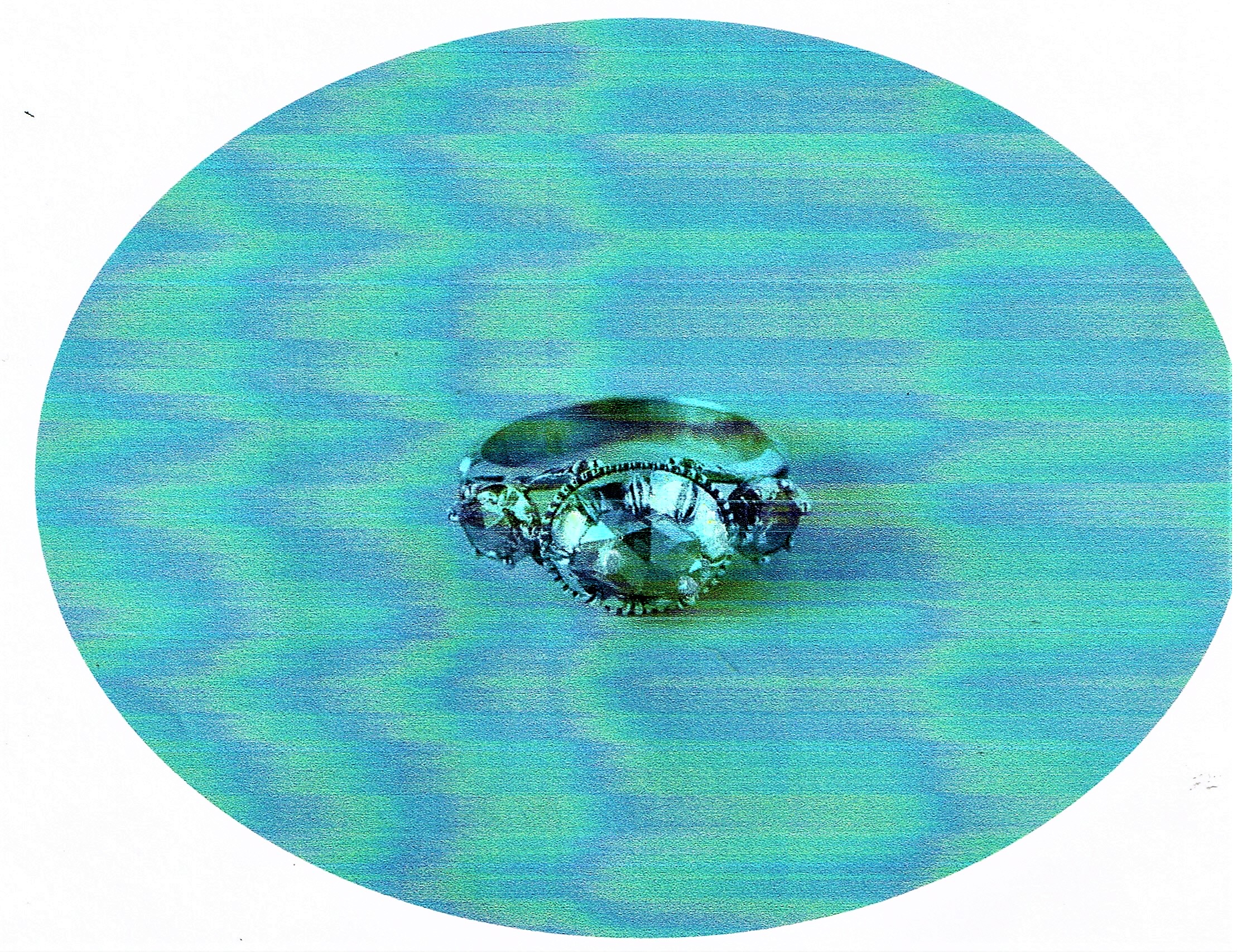
     Chester kept a tiny, gray velvet box hidden in his pocket. A ring with a big white diamond lay in a soft spongy space inside. He said it belonged to his mom. She died and went to heaven not long after he was born.

     “You can’t touch it, Stacey,” he said. “Only I can do that ‘cause it belonged to my mom. I like to hold it and pretend she’s right next to me. Dad said she had hair dark as molasses and a voice that made the angels cry.”

     He rolled the ring in his palm, then held the jewel to the sun, as if he could see more than a few sparkly places. Then he carefully put the ring back inside, and we ran to find swings next to one another on the playground. If there weren’t any, we climbed the monkey bars, and he never seemed to care that I always beat him to the top.

     One day in the lunchroom, Mrs. Craftwood saw Chester take the ring out of his pocket. She dragged him to the principal’s office. I threw away the other half of my bologna sandwich and followed them. They didn’t close the door. I saw everything.

     “This ring had to be stolen,” Mrs. Craftwood told Mrs. Austin, “because this boy’s father is incapable of affording something like this.”

     Mrs. Austin glared at Chester. “Stealing is a sin, son. You should know that.”

     After school when Chester’s dad got to the principal’s office I sat outside the office and listened again. I knew that he had a job in a big, important office a long time ago, but the company closed one day, and he never found another job like it. Then after his wife died, he moved into an old four-room house on the edge of town and did odd jobs now and then. Folks said he didn’t seem to care anymore. But when he charged into Mrs. Austin’s office, it was clear he cared about something.

     He didn’t say anything while she and Mrs. Craftwood accused Chester of stealing. Then he asked if either one of them took a close look at the ring.

     “Why should that be necessary?” Mrs. Austin asked.

     “Because it doesn’t take much light to see the truth in that diamond.  Let me guess.  Came in a gray box. Smells a little like grass stains and peanut butter.”

     “What are you talking about, sir?” Mrs. Austin said.

     I had to cover my ears because Chester’s dad got so loud. And this time the door was shut. He’d slammed it when he went inside. Hard.

     “Would a real diamond look as scratched up as the side of a matchbox?”

     “Please lower your voice,” Mrs. Craftwood said.

     “Not until you return his mother’s ring.”

     I wanted to lean into the door and catch everything that went on, but then Chester’s dad started talking about how his wife deserved better, and so does Chester. Wasn’t so exciting anymore. Something I couldn’t explain made me feel strange, almost like I walked into the boys’ dressing room by mistake. So, I sat on the bench outside the door and waited for what seemed like a long time.

      “Thank you,” Chester said as his dad opened the door. Simple, like nothing was ever taken from him in the first place. He didn’t even see me right away because he was too busy slipping the ring on and off of his finger.

     But his dad’s face looked so red it must have hurt. I could have sworn it burned right through his whiskers. He stopped when he saw me. “Stacey, you’re a good kid. Chester’s crazy about you. Don’t ever get too big for yourself.”

     “I won’t,” I said. But I thought that was a strange thing to say.

     Chester never did come back. He went away to a special-needs school on the other side of town. Mom said it was time for me to start playing with normal children.

     “What’s normal?” I asked, and Mom accused me of being smart aleck.

     But this time I wasn’t.

     After that, I decided it was best to be vague about what I was doing. Sometimes I went to Chester’s house and we explored the woods behind it. We hoisted ourselves into the trees with lower branches and hunted for birds’ nests and woodpecker holes. He carved our names into a young beech tree.

     “Someday when we’re old enough, let’s get married,” he said. “We’ll come back here and I’ll draw the heart and put the date on it.”

     “Maybe,” I said. “But let’s look for salamanders down by the creek now.”

     “Okay. But why can’t we ever go to your house to play?”

     “Mom said I had to play outside. She’s cleaning.”

     “You said she was sick last time,” he said.

     “That’s because all she does is clean. And that much cleaning would make anyone sick.”

     I stopped going to his house as much because I got tired of lying. To Mom. To Chester. Then one day I told Mom I was going for a long bike ride all by myself. I went to Chester’s house, but no one was there. When I peeked into his house it was empty, blind-dark. On the way home I felt mean, like somehow, I made Chester move away. I stopped at our beech tree in the woods, took a sharp rock and etched a shallow, lopsided heart around our names. It didn’t look very good. I’m not sure why I did it. Playing house never appealed to me. And Chester and I were never boyfriend and girlfriend.

     But when I went to my cousin Janet’s wedding that summer, I thought about what it would be like to be a grown-up getting married. Maybe just for that day I would be willing to wear a lace dress, one made by a silly third-grade girl who grew up to be a fashion designer. Of course, I didn’t want to marry just anybody. The groom needed to be special, someone like Chester, who could give me a fake diamond, yet be real inside.


originally published in Piker Press

Read Full Post »

My Rat-Brother’s Freedom Mission

“I don’t understand you. You don’t understand me. What else do we have in common?” Ashleigh Brilliant

I doubt my brother even noticed that I faced the wall, a book to my face when he came into the bedroom. Randy and I weren’t exactly on brother-love, best-buddy speaking terms, not since I needed to hide my gas money in a locked box in the trunk of my ancient Toyota. Anything else of any value my girlfriend held for me. I slept with my phone and charged it as needed at her house.

Besides, I didn’t want Randy to see the expression on my face when he opened his sock and underwear drawer. He spent a lot of time in that drawer, and believe me, it wasn’t to change socks or underwear.

 “What the…” He pulled out an empty bourbon bottle with a skull and crossbones picture glued to the front. I’m not much of an artist, so I copied and pasted one from clip art.

 “You finally found your brand,” I said looking him full in his face, absolutely not a pleasant picture. He hadn’t shaved in weeks. His color mimicked a semi-rotten tomato. Except the tomato would have smelled better.

 “This was not empty when I left it.”

 “Are you sure? My guess is your memory is as long as a beer commercial. And that a drink serving is measured in bottles not glasses…”

 “I am doing just FINE, Stan!”

“Right,” I said, sitting on the edge of the bed in case I needed to move out of the room quickly. At least he still knew his younger brother’s name. “I saw your grades. Congratulations, you almost made it to a 2.0 this quarter. You started the term with how many courses?”

“I’ll catch up. I’ll get that certification I promised Mom.” Randy was 28 years old, eight years older than I was. This time he decided he would go into radiology as a technician. Eventually. He plopped onto his bed instead of arguing further. “I just feel trapped right now. Don’t feel free. Need a change of scenery. Something.”

Nope, not trapped yet, I thought. Besides, you’ve had too much rat poison to see you are the one who set the trap.

Strange how he didn’t say one word about my editorial comment on the front of the bottle,. He only noticed that the bourbon was drained. I had flushed the contents down the basement toilet. Hope it didn’t damage the pipes.

He reached inside his wastepaper basket. We each had our own. His was full—fuller than I knew. An unopened bottle lay at the bottom. “Going out for a while. If Mom asks, tell her I’ll be back later.” He knew Dad wouldn’t ask. He had given up on Randy a long time ago. Once I overheard Dad tell Mom that she had gone through sixteen hours of labor with him. She could continue to hope. His part had been a lot easier, so he could say adios to the bum. Sure, Randy was a rat and a jerk, but I thought that was a pretty mean thing to say to Mom.

 Randy waved goodbye. That was the last I saw of him until we got a call from the police two days later. My brother had blown more than twice the legal limit; then he passed out.

Mom screamed as she repeated something about blood all over the road. It happened to come from a large dog that had run in front of the car. A horrible picture. Fortunately, no other person had been with my brother when he was arrested.

No one. That struck me for the first time. He didn’t have friends. None that I knew anyway. He’d had a girlfriend or two, but the relationships never lasted long.

I looked for old pictures of Randy and me as we were growing up. There weren’t many. We didn’t have a large family, and no one was good at taking photos. He smiled in the earlier shots, but never in the ones taken since he hit high school. I wondered about that, but didn’t feel free to ask my parents. Dad had already cut him off. And Mom never talked about such things. The ten commandments had all the answers. Psychology was reserved for folk who talked to themselves and got answers in different voices.

When I came home from school one day a few weeks later Mom said she had good news. “Randy is going to an in-patient program. And if he graduates, he doesn’t have to go to jail.”

“All right.” I wasn’t ready to move my good watch and Grandfather’s saleable baseball cards back into the house yet. But I was genuinely glad to hear it.

Then, one night at about eleven in the evening I had turned out the light and climbed into bed when my cell rang. I usually look to see who is calling, but I was so surprised I just answered.

“Is this Stan Weeks?”

“Uh, yeah.”

“Sorry to bug you. This time of night and all. My name’s Shelby. I’m a new friend of Randy’s. From Elmcast House. I got sprung yesterday and your brother asked me to call. Was so nervous. I had to work up the courage.” The tone and inflection of her speech shouted uneducated inner city.

“Okay.” I wondered why she hadn’t called the previous day, but as she hesitated so often I could almost hear her gulp, I was shocked that she had contacted me at all. And that piqued my curiosity.

“You know…not many of us make it. Ten percent. Maybe. Took me three gosh-miserable tries. I ain’t proud of it. Your brother’s gonna make it up to you… and everybody. He said he’s really done wrong by you.”

“Glad he’s reformed,” I said, my cynicism leaking out and my grammatical sensor secretly tearing her apart.

“He’s been so honest,” she said, her words suddenly pouring out. “I mean it must of tore your family apart when that minister raped him when he was fourteen. Just a kid. Tender and bleeding. He didn’t know there was men that done that.”

I sat upright. My Ten Commandments family knew nothing about it. Our minister WAS God. Although as I remember him I didn’t care for his self-righteous tone. I couldn’t tell when he was reading Scripture and when he was reading the word of Reverend Knows-It-All. And Randy’s smile in the photos evaporated just about that time.

“Shelby?” my voice must have stammered.

“You okay, Stan?”

“Yes and no.”

“Did I say something wrong?”

“Not at all. Will you be keeping in touch with Randy?”

“You bet.”

“And will you keep my number, too?”

“Sure.”

“Good. Then let me know how Randy is doing. You, too.”

“Okay. Bye.”

My phone went black, like the darkened room. Silent. Like all these years had been. I wondered if Randy was awake or asleep. And if he had finally discovered freedom, whatever freedom meant to him.

originally published in Piker Press on March 31, 2015

Read Full Post »

“I have lost friends, some by death—others through sheer inability to cross the street.” —Virginia Woolf

 NO ORDINARY RECITAL

Jack:

Songs I recognized from at least twenty years ago rose from my daughter’s kitchen CD player. Amy seemed to prefer a beat to match her syncopated movements. So-much-to-do, although she never let anyone know what that so-much was, only some vague importance to taking out the garbage.

She stirred a pot to the rhythm of a rock band. She hummed as she turned up the oldies. However, when she turned to me, she reacted as if a snake-oil salesman had opened her back door, and then he had the audacity to sit at her kitchen table with a cup of her freshly brewed coffee.

My grandson had brought me the cup, as if it had been some kind of prize, before he left with my son-in-law for rehearsal. I’d visited because Mikey had invited me, the grandpa he wanted to know but didn’t. Yet.

Temporarily, I had moved in with Amy’s brother, at least until I could get back onto my own two feet. Amy saw the possibility of my walking a straight line as likely as a change in the Law of Gravity.

I had played keyboard, guitar, violin—you name it, lead guitar in a band, taught myself trumpet. I’d worked in an everyday office by day and ruled the stage at night. Before I lost just about everything. To king alcohol. A few months in jail.

The sweet jazz quartet calling from the player in a niche in the corner could have been the news reporting earthquakes downtown, or worse in my daughter’s backyard. Ten feet from the back door. Two feet from where I sat now. Then again, I felt an earthquake tremor begin in my chest and work its way to my stomach. My coffee grew cold. My daughter grew colder.

She stared at me with that look I recognized. Can’t-count-on-you-Dad didn’t need to come to her lips. Instead, the anger showed in her eyes, voice, the tight pull of her lips.

“So, you say you’ll be at Mikey’s recital Friday night. On time.”

 “Yes.”

“And you will be sober.” She leaned over the table. “Not, but-I-only-had-two-drinks. Two quart-sized drinks?”

 I had talked to Mikey. Before I’d set foot in the house. He’d run out to meet me. “Oh, Grandpa! My recital. It’s going to be great. You know what Daddy told me?”

 I’d admitted I didn’t.

“Daddy said you played violin, too. You played really, really good. Could you play for me now? When we get inside.”

“How about some other day?” I’d answered. “Right now. I’m way too excited to hear you play.”

 A partial truth. My heart wasn’t ready for music yet. It reminded me too much of what I’d thrown away.

  I’d put my hand on his shoulder and Mikey didn’t pull away. He didn’t have the storehouse of empty promises in his memory his mom had. Her brother, too. He had taken me in—to a bed in his basement, next to the hot water heater. The upstairs door remained locked. I had to knock to get in. I’d stolen from both my children. I admit it. Giving back wasn’t easy.

 “Did you used to live in Florida or California?” Mikey had asked. “Or was it another country?”

 I’d bit my lip. I’d lived ten miles away before I passed out on the job. Mikey had no memory of me at all in his seven years of life.

 Since then I’d managed to get a car, guaranteed only to be a car. I had my license back. I had a job, more of a pity offer with pittance pay.

 Respect? That was going to take more time.

Amy: three days later

Mikey’s recital is about to begin. I know I should have told him about the call about his grandfather’s death. Jake, my chicken-husband won’t do it. The police swear the accident wasn’t Dad’s fault. He was stone sober and wearing his seatbelt. Probably wasn’t paying attention, however, as the semi crossed the middle lane.

Damn! I’d like to think something positive about my own father. And my insides feel just about as cold and empty. Maybe I didn’t give him much of a chance to apologize.

 Mikey’s group is up last. Jake told him the best gets saved for the end, so nobody needs to follow it and feel less-than. Mikey thought that made sense. Of course, he believes in Santa Claus and the Easter Bunny.

 “You’re awfully quiet,” Jake says. “Are you okay? Or at least as okay as anybody can be…under the circumstances.”

 “We can’t just pretend Dad beamed up into a spaceship.” My voice doesn’t leak sarcasm. It explodes it.

“Mikey doesn’t have the same complicated memories you have. You can’t shield him from hurt. You can’t assign your feelings of guilt to Mikey either?” Jake’s voice is soft, but he doesn’t blink.

“What guilt?” I raise my voice and the lady in front of us turns around.

“Sorry,” I say to the woman, feeling heat rise to my cheeks. Guilt. Maybe. Dad tried to apologize. He said something about making amends. He could have been talking to an oncoming train.

Jake pats my hand. “I could have been kinder, too.”

I want to swat him but don’t. Not here. His words are like a fresh stab in a seeping wound.

I hear each musical presentation, the way I hear a passing train while waiting for safe passage. Yet I wonder if safe passage exists.

 Mikey’s group appears. He doesn’t seem to see us right away. I don’t wave and make a point of the fact his newly discovered grandfather is missing. Then, Mikey begins his solo, an Irish song I recognize from forty years ago, when I was small. I asked Dad to play it all the time, and then danced across the floor.

My son’s technique and timing improved. He adds style I didn’t know he knew. Jake looks at me with his brows pulled together. He shrugs. Apparently, he wonders when Mikey transformed from a good violinist at age seven to a prodigy.

He is beaming as he leaves the stage. Several people grab and hug him before he gets to his dad and me, but his eyes seem to scan the back of the auditorium.

 “Mom, Dad!” he calls. “Where did Grandpa go? He was here a minute ago. Why didn’t he tell me he was going to be part of the show?”

 “He. Did. What?” I ask.

 “With all those lights around him. In the back. You’d think everybody would be turning around to look at him! But I got it, the way he held his fingers on the strings and moved the bow—to make the song sound better. He didn’t seem so far away. He felt right next to me. I’m not sure how. For real. Not sure I could play the same way again without him.”

“You’re sure that was Grandpa?” I said, “because…” I choke on words that won’t fit together.

 When we get to the car it is locked. However, Dad’s violin is lying across the back seat.

 “A gift,” I whisper,” from Grandpa. “That was his. I’d recognize it anywhere. I knew Mikey would hear the story of his grandfather’s death in a different way now, a way he would be able to accept long before his dad and I could. Mikey believed in miracles.

Now I needed to believe in forgiveness.


originally published in Piker Press on May 8, 2017

Read Full Post »

One Extra Leaf

All creative people want to do the unexpected. Hedy Lamarr.

Bailey, an elderly leprechaun, found a magical four-leaf clover wedged under a pot of gold that belonged to his family.

“Hmmn,” he said to his wife Ginger. “Where did this come from? What should we do with it?”

“Let’s check out the rainbow on the other side of the house. See what we can find when we follow it. Go someplace new and different. This may be some real fun.”

“Okay. As long as we don’t need to go to a Walmart in Ohio, I’m with you.”

Magic works in strange ways. The trip took minutes.

“We are at a Walmart outside Cincinnati! Ohio, my dear, Bailey. How in tune can you be? Whether you want to be or not.”

They landed invisibly and a man with a HELP sign found the magical clover. He tried to pull off a leaf. Instead, it mysteriously shaved his beard. He tried again and he was instantly bathed. One more pull, and his clothes were changed and clean. By the fourth try his heart was healed and he remembered who he was, how he had lost his job and gradually everything he owned.

“I’m going to wake up any minute,” he said, trembling.

Bailey approached him and magically calmed the man long enough for him to put aside his sign and step to the other side of the building. However, the man was still convinced he was dreaming.

“Jack! Jack Harris, is that you?” Another man called as he approached the store. “I haven’t seen you in a coon’s age. You won’t believe this, but I need an accountant. Yesterday. Got a moment?”

The man held out his hand. Jack took it.

Bailey smiled. Ginger linked her arm to his. “Our job is almost completed,” she said. “Well, we’re going to need to explain magic to our Jack first. Then do another resuscitation. It’s a good thing CPR is included in our training. It doesn’t begin and end on St. Patrick’s Day. Do we need any ordinary fare at Walmart before returning to Ireland?”

Read Full Post »

Confidence is ignorance. If you’re feeling cocky, it’s because there’s something you don’t know. Eoin Colfer

  DOING RIGHT BY MAMA AND THE LORD


In Lime Creek, Kentucky we had rocks for farmland, a truck garden with more weeds than tomatoes, and a cabin set up on stones with copperheads underneath. But the snakes didn’t call us hillbillies like the folk in Ohio did, and me and my brothers and sisters didn’t have a stepmama who’d sooner kick us than share a loaf of five-cent bread.

We had Mama then. She got sick and couldn’t do nothing no more. Didn’t change her being Mama. Not to us. All of us kids took over chores. At four years old I held the metal pan for her to puke in. The blood scared me, but I never dropped the pan.

Then Mama got so skinny she hardly had enough skin to cover her bones. She asked all us kids to gather around her one day before the sun woke up. She told us an angel had come. She was going to heaven. That morning. She said she loved us. We didn’t want to hear it. Mama didn’t talk about loving—she done it. That was enough. We wanted her to stay right there in the cabin with us. Even if TB had stole all her breath and she couldn’t get out of bed no more.

Then Papa, my brothers and sisters, and me moved to Cincinnati in the summer of 1930. I had turned seven by then.  

My big sister, Cloda, talked about heaven, where Mama lived, all the time. She talked about hell, too. Though I can’t say how she knew about either one. Neither Papa nor Mama ever brought us to any kind of church. And Cloda took care of Mama while she was ailing. Cloda never had time for schooling.

Cloda got this notion that she had to take me, my bigger sister Violet, and younger sister Elva to church to learn about God. Soon as we had proper clothes. So, when some folk from school dropped off a box of used stuff on our doorstep, she decided the time had come, a sign from God and a sign from Mama.

“Toy,” Cloda told me as us four girls settled down on our mattress one night, “I don’t want to hear no fussing from you about this. We’re going to honor the Lord and we’re starting this Sunday.”

My sister, Violet, groaned so I guessed Cloda had already told her about it. She leaned on her elbow and stared at us. “When you get your head on something, it sure stays stuck there. A tick don’t hold on the way you do.”

Cloda acted like she didn’t hear her, though in our tiny house, it wasn’t likely words could hide. Our room and mattress fit almost to the walls. Our bed didn’t have a sheet. We had one dingy window that opened to the morning sun, and a wood floor so worn that cleaning it was like trying to wipe the dirt off the top of an old sponge.

 “Good night.” Cloda’s voice gave the notion everything would be okay. Just by setting in something called a pew and listening to a preacher talk.

I doubted it. Even as the dullest and oldest kid in third grade, I knew God took Mama away and didn’t bring her back. I couldn’t get excited about something I didn’t know nothing about. Besides, cracks around the window leaked cold air, and Violet smacked me when I leaned into her.

***

“So, what church we going to?” I asked Cloda that next Sunday as we walked what seemed a awful long way down Amity Road.

 “Church of Eternal Holiness.”

 “The Methodist church on Beech is a lot closer,” Violet said. She was smart and always acted like she had a bee buzzing around her that needed swatting.

 “We can walk. It’ll be good for us. Besides, I like the name, with holiness in it and all.”

 “What kind of church is the one we’re going to?” my little sister, Elva, asked.

 “Don’t know, but a girl I work with at the trunk factory likes it.”

 The church looked more like a old store than a church, no cross on it or nothing. We set down in the back, on this long bench. The room looked plain as a barn. Up front, right in the middle, stood a small, slanted table with one leg holding it up. A man, probably the preacher, leaned into it. He talked soft and down-home at first. I liked the sound of the a’s and o’s I remembered from Kentucky, more like music than in-a-hurry Ohio talk.

“Praise the Lord,” the preacher says. His voice sounded a little high for a man, something like our old neighbor, Homer’s, one of Papa’s drinking buddies.

“Praise the Lord,” the people answered, some loud, some mumbling.

 “Because he tests our faith and finds us worthy.”

 “Amen.”

 “Oh, Lord, test our faith and heal our many sins.” Then he started hollering.

 Elva scooted closer to me. “For the sins of flesh, the sins of pride and envy will condemn you into the eternal flames of hell. Sin against the word of God and forever after your death.” He stopped to look around at folks. “Your arms and legs, your head, body, and entrails will suffer the burning pain that never ends. And your soul!” He said soul like it was a bullet aimed into my chest. “Your soul will suffer forever.

I looked at Violet. She sat stiffer than the bench.

Would God send Mama down to hell?

I tried to think about something else: spending the day with friends, taming trees and eating chunk chocolate. But I couldn’t shut out the screams of the high-talking preacher up front. Folks started moving around, hopping sideways. The “Praise the Lords” and “Amens” around us kept getting louder, like a train coming closer and closer, then jumping the tracks and running us all down. Some folks hollered stuff that wasn’t words I ever heard. Kinda like gargling or baby babble, but a lot scarier.

 “But we will prepare ourselves. Yes, believers, we will prepare ourselves,” the preacher said. “Fast and pray. Pray and fast. Put your faith in God. Next Sunday we will handle serpents without fear. Their poison cannot harm us because our faith is strong.”  The preacher raised his arms up like he was making a Y or reaching for the ceiling.

 What? I tried to sit as still as I could since I couldn’t disappear. All this yelling was bad enough. Copperheads or rattlers? My heinie wasn’t showing up for that.

As soon as the service was over, I ran out the door, Violet and Elva not far behind.  Cloda stopped to shake hands with the preacher.

When we were halfway home Violet said, “Try the Methodist Church next time you get a hankering for religion, Cloda. But I’ll get a book from the library and read next week.”

“Get one for me too,” Elva said. “One about animals maybe, but nothing about anything that hisses.”

 “I ain’t gonna take part in no snake handling,” Cloda said.  “But it might not be a bad idea to come again a time or two and see about maybe settling in.”

 “That girl from the trunk factory, the one who told you about Church of Eternal Holiness?” Violet said.  “I hate to say this, Cloda, but she’s as crazy as a chicken visiting a fox den.”

I didn’t say it out loud, but I kind of wondered about my big sister too.“Tell you what,” I said. “If you try the Methodist Church on Beech Street, I’ll go with you. Besides, I heard they got some pretty good cake bakers over there. And the preacher’s sweet as fresh peaches.”

 “Well, guess I could think on that, Toy.” Cloda stopped walking and looked at me like I brought up a whole new idea.

 Violet rolled her eyes.

I didn’t know nothing about the church on Beech. I made it all up. And I didn’t sit still that good in school, so an extra hour in church didn’t sound like such a great idea. But you just got to help your family sometimes.

“Toy, are you out of your mind?” Elva asked kicking a pebble back into the gravel road.

“Probably.”

“Okay. Okay. I’ll read my book after we get back,” Elva said.

“You aren’t leaving me at home with wicked stepmother,” Violet shrieked.

Cloda smiled like she’d just won a blue ribbon.

We didn’t follow through as good as we could have. After the first time or two, we couldn’t be counted on to listen to a preacher who didn’t have no Kentucky sweetness in his voice. But, Violet, Elva, and me remember that day we saved our big sister from seeing Mama way too soon because she wandered into a rattlesnake pit.

We reckon Mama would be proud of us. Though Mama was proud of us, even when we didn’t do nothing special at all.

originally published in Pine Mountain Sand & Gravel No. 17, Theme: Tricksters, Truthtellers, and Lost Souls


Read Full Post »

park bench

“Being deeply loved by someone gives you strength while loving someone deeply gives you courage.” ― Lao Tzu

ONE MORE DAY IN THE PARK WITH INGRID

Mick:

“Ingrid, come sit next to me. I brought that blue jacket you gave me to sit on. Not that you need physical comfort. I want something you’ve touched, even if a breeze is more solid.”

My wife died five years ago.

I pat the plush lining and wait. My wife won’t take long to arrive. The veil between this world and the other side has been thin lately.

About a week ago she appeared in an early morning lucid dream as the young Ingrid. Even asleep I remained wobbly and weak. We walked hand-in-hand through this same park. I knew that everything I saw and touched would disappear when I opened my eyes.  Even so, all the subtleties of nature emerged as we traveled familiar passageways. I saw details in each rock, blade of grass, hill, and squirrel.

Ingrid told me that direct contact with the deceased happens only under special circumstances. I asked her how we qualified, but she told me I would find out later. “Just relax and enjoy.”

When I woke up, she was sitting on the edge of my bed. She comes and goes now. All I need to do is call her—no phone is necessary. I have enough sense not to blab about Ingrid’s visits. Recovering from toxic chemotherapy drugs is bad enough. I don’t need my daughter to worry that I need psych meds, too.

Within about thirty seconds my wife emerges next to me. Slowly. Similar to the way fog comes up from the horizon. But with a lot more warmth. At first, she seems as transparent as air. Her features surface. Young. Beautiful. The way she looked when we first met.

She places her hand on my arm. “Okay, dear, what’s on your mind?”

“Jan told me I could use some Vitamin D from the sun. That’s why I’m out here today while she and the kids hike down to the lake. As if I’d miss the chance. She doesn’t know I heard her talk to Les on the phone last night. He can’t babysit me today. Got a new client coming in. True, I have the hearing of the old dog I am. But Jan’s voice doesn’t need a loudspeaker when she gets excited. Seems lately our daughter has the disposition of a ticking time bomb.”

“I’d say she is upset, and her attitude is more about her than about you.”

I’d say it’s not easy taking care of your father when he’s recovering from chemo. Not easy at all. Sure glad that the final session’s over! Last treatment forever.”

Her hands have lost all their thick arthritic lumps now that she’s in a spiritual state. Her hands are small, delicate, and gentle again. She runs them over my head, mostly bald, with a few sparse patches of dull, almost colorless hair.

 “Ah, Mick! Jan’s not ready for a halo, but I wouldn’t jump to conclusions. Yet anyway. Tell you what. I’ll follow her for a while. Find out what’s going on and let you know. Then I’ll get back to you. The grandkids have been knocked down by your illness. They don’t understand what happened, or why Grandpa doesn’t have the energy to joke with them anymore. But you know you can count on me. We’ll talk tonight. In your dreams.”

Ingrid’s kiss on my forehead could be a warm, gentle breeze.

 I sigh as I hear the kids run ahead of their mom up the trail. Much faster than they would have if I were with them. They don’t know I’d feel just as sick at home. At least in the park, the sun casts incredible shadows through the tree branches. The birds sing an avian kind of harmony. The sky is never the same color longer than a few hours. It darkens or lightens, blends in with the clouds or not. A hint of silver has lined a cluster toward the west. Like the gray in the few clumps of my hair that refused to fall out. Maybe I have a stubborn streak. I have always worn my hair short as a hyphen, so I didn’t need to shave my head.

Change arrives slowly. Although Ingrid says the word that I’m searching for is transformation. Sure, I’m glad my wife broke through the impenetrable barrier from the other side. But I’d take the wrinkled-but-solid Ingrid to the see-through-yet-perfect version any day.  

Ingrid:

I watch and listen to Mick’s family as they pretend to be aware of what they are doing. Les has brought work home. He shuffles papers like a deck of cards and stares at his computer. “What do we do about your dad? Should we just, I don’t know…” He spit-whispers into the computer screen.

Jan leans her behind into the refrigerator and turns her body into an awkward V. From the look on her face, I’m guessing she wants the stretch to pull out all her anxiety.

“I could scream,” she says. “I won’t. Even though Dad isn’t listening in. He’s heavily medicated and sound asleep for the night. The kids are out for the count, too. It is a school night.

I hover over the kitchen table, one of the benefits of the afterlife.

“I talked to Dad’s doctor,” Jan continues. “No doubt about it. He hasn’t got much chance. A heavier course of chemo could give him a few more months. Tops.”

 “So why hasn’t the oncologist told your dad?”

“That doctor has professional knowledge. Yes. But he has the bedside manner of a debt collector. I told him I would give Dad the options.” Jan straightens up again. She groans, her hand on her forehead. “Actually, I insisted. Said he could answer Dad’s questions on his next visit.”

“Then?”

“Okay. Then I sort of chickened out.”

“You mean you chickened out. No sort-of about it.”

“Thanks for your support.”

“So, what do you want me to do? I’m a lawyer, not a social worker.”

“You are also my life mate. Come on. Give me an idea.”

“Okay. I’ll stop by after I see my last client tomorrow. We’ll tell him together. Calmly. Let him decide. In the meantime, let your dad know how much you love him. It’s all you can do. Yeah, you’re nervous about the situation. But all he sees is nervousness. He doesn’t know why.”

 Jan drops her head almost to her knees. “Hey for a lawyer that’s not bad advice.”

“Uh, thanks for the backhanded compliment.”

I stop hovering and put one arm around my daughter’s shoulders. She doesn’t know I’m the one comforting her, but after a few sighs she finally says, “Maybe I’m underestimating Dad.”

“More than maybe, sweetheart.”

In a few hours, I will slip into Mick’s dreams. I will break the news about what his children are going to tell him tomorrow. I know my guy. He will allay his family’s fears. Because Mick isn’t afraid. He’s seen me. He knows he will be okay. I will tell him why I broke the bridge between our worlds—because he and I are closer than he knew we were. I slipped through a hairline break between this world and the next one, the designated place where we were meant to meet. When the time came.

When he accepts my invitation, we will be together again. In a few days if he wishes. If he is ready all he will need to do is concentrate on the separation, nothing artificial or traumatic about the transition. In the meantime, perhaps I should set up the scene for his final dream: a sunny day…a park bench…a place where we both can run, laugh, and sing out of tune if we want. It doesn’t matter. Some details look different after passing through the light. But the beauty Mick and I savored will remain the same.       

Always. Always.

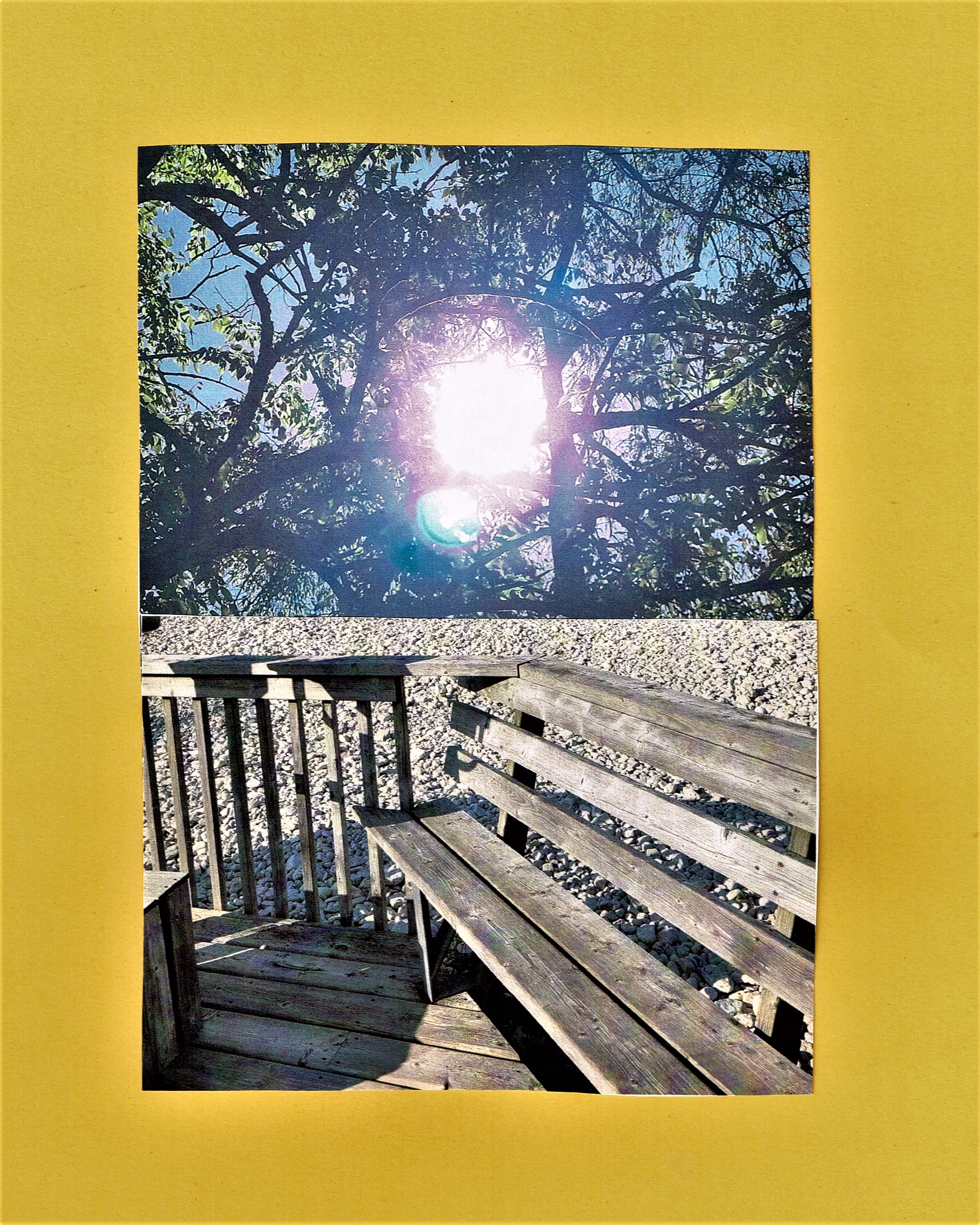
illustration created from two personal photos scanned together

story previously published in Piker Press


Read Full Post »

apples in an apple

It’s not what you look at that matters, it’s what you see.  (Henry David Thoreau)

The Seed

The seed lay snug within her apple. Wind, rain, and sun brushed the surface of her fruit. Inside, protected, the seed grew dark and smooth. The tree told its growing parts that spring blossoms lived on the tree’s branches before they were formed. However, the seed did not want to hear about anything that happened a long time ago. She preferred to rest in a comfortable, firm sweetness that grew as summer brought warmth and long daylight stretches.

The seed expected endless safety. However, one afternoon in late summer, she felt a sharp jolt as her round, red home was snapped from its branch. Other apples left their places, too. They traveled miles from their birthplace.

The seed felt its fleshy home split with a sharp object. She was scooped out with the other seeds who lived with her. They were tossed aside.

“What is happening to me?” she called.

“Or us?” the other seeds replied.

But the seed didn’t hear. She was already taken away.

A dark time passed as the seed lay surrounded by moist soil in a small container for what seemed to be a century. Then something happened. She felt a violent tug in her center. She knew she was changing.

A creature, a lot like the one who pulled her from her home, grabbed her from the smaller container and placed her inside the ground. In time, she realized she looked much different. She was frightened.

“What is happening to me?”

A tall tree towered above her. She did not yet realize that she was also a tree, not until the days warmed and white blossoms appeared on her branches. They became fruit when the heat continued.

“Why did I worry so much. Everything I have experienced is natural. I must warn the other seeds. Somehow. They must not suffer like I did.”

She spoke to her own seeds. They didn’t listen. No matter how loud she yelled.

“Hush,” the wind told her. “You can’t find instant wisdom, especially if you haven’t discovered it for yourself.”

As the season passed, another creature appeared and stole one apple, and then another.

The seed, now a tree herself, watched.

“Wind,” she called. “Have I found wisdom yet?”

The wind did not answer. Nevertheless, the new apple tree waited even as winter came and robbed her of her gifts.

Read Full Post »

sun

“It`s not how old you are, it`s how you are old.” Jules Renard 

This week I will tell another short story. The world is full of ugly. It needs to be faced. However, sometimes we need a moment with a happy ending. 

Callie, Meet Callie

The young man in the driver’s seat glances toward me after he makes a left turn into city traffic. He tells me everything is going to be okay. My shoulder will get repaired, and I will be pitching a baseball game. The first octogenarian in the major leagues. He says it too many times. I can’t tell whether he is trying to be funny or not.  

I look out the window and watch the traffic. I wonder if I ever drove a car or lived in a brick house with a flower garden in the yard. Right now, all I remember is a sour, skinny someone coming into this small room where I stay in this big building.

“The medicine I am giving you doesn’t taste bad at all,” she told me. She should have added, compared to swallowing liquid bleach. I don’t know if she was trying to fool me or just get an addled old lady to toe the line. After all, the place I could call home if I wanted to, is unpleasant to every sense: hearing, smell, taste, touch, sight. Old folk, some much frailer than I am, fill small rooms like the one I occupy. Roommates come. And go.

 The deep ache in my shoulder doesn’t go away. No matter how many times my young escort says it will. Of course, he doesn’t say how and when that is going to happen. And he isn’t talking to me right now. He tells the traffic light something about cracked bones. “Not for one second do I believe she fell.”

He finally turns to me. “It was Sadie, that new aide, wasn’t it? She pulled your arm. She throws temper tantrums toddler-style and gets by with it. That girl should be fired!”

I don’t answer. He must have been telling traffic signals and passing trucks about how my shoulder got hurt, but he doesn’t continue his rant or give details. Chances are no one would have believed me if I said anything, even if this pulled-arm story is true. I have a difficult time keeping names in my memory—or remembering much of anything for that matter. My thoughts feel like scattered puzzle pieces outside a crushed cardboard box—with no way of getting the pieces back where they belong.

Right now, the puzzle piece I see has a picture of a frowning aide on it. No name that fits and stays in place. I remember the pain.

Then the young man turns to me with a softer, less irritated voice. “Grandma Callie, you know I’m Kevin, don’t you?”

“I know you come to see me. And you make me smile.” I want to lie, to say of course I remember everything about you. But he could start asking questions I can’t answer.

Kevin is the only face I recognize as someone who bothers to visit me—on purpose. That much I know, even if I can’t hold onto his name for long. Besides, this peculiar sadness comes to me, and it doesn’t have words. Just a sense. Something happened that I’m not sure I want to recall anyway. Something sad and big. Not big like an empty room. Big like a hole in the ground with an ugliness at the bottom.

“Thank you.” I look at Kevin and want to say more but words don’t come. I have no idea where we are going until we reach a building even bigger than my so-called home. We are at a hospital.

He stays with me, fills out papers, pats my good arm, and tells me I will be as good as new until this lady in what looks like dull green pajamas is ready to take me to the operating room.

I watch the tiny holes in the ceiling as I ride down a long hallway. The holes are all the same size. All empty.

“You have naturally curly hair, don’t you?” the lady asks.

“Probably.”

“The pattern of ringlets is unusual. And you were a redhead. Your eyebrows. That’s how I guess. The color shines through the gray.”

Chances are, this lady is making conversation, trying to keep me from being nervous, and yet she has triggered a memory. I see my hair at the age of 25, as golden as the sun at midday. Then I see a man, his arm around me, but the image is interrupted because we have reached the operating room.

“Hi, I’m the anesthesiologist,” a woman completely covered with green pajama material says. “It’s my job to make sure you sleep well while the doctor works.”

“We definitely want you to be having pleasant dreams,” a man who is likely the doctor says.

I close my eyes and float. I’m asleep. Even so, before long I hear a voice holler, “No pulse!”

Then the faraway words. “Cardiac failure…no code.”

But my dream is too good. A man has his arm around me. I know who he is. My husband. Andrew. Tall. Dark as the bark of an ash tree. He draws me to him. I hear a baby cry, turn, and pick him up from his crib. Our son, Michael. Yes…yes. Kevin’s father has become an infant again.

 Another dream slips in. Earlier. Less pleasant. My parents.  “Marry him and you will never see us again.”

Locks changed on their door. The inside space remained sealed against us.

Andrew died from cancer. Then our son, Michael, died because of complications from a bout of pneumonia. He was buried next to his father, an ancient stone with a fresh death underneath.

“We are sorry about your loss,” my mother said. No comforting arms were offered. Not even a greeting card.

I feel myself slowly waking in what is probably the recovery room. But the anesthesiologist and the doctor told me to have pleasant dreams. Only the reappearance of my sweet Andrew had been pleasant.

Finally, I feel a gentle hand rouse me. “Wow! You must have been having a wild dream.  You were kicking the sheets.”

I look up to see a nurse wearing the brightest white scrubs I have ever seen.

“Not only that…” I decide not to mention what I heard in the OR as I slept. It was just too strange.

 “Well, there’s a party waiting for you.”

 “A party? How did Kevin arrange that in such a short period of time?”

 “Oh, you don’t know yet. Don’t worry. Kevin will grieve. Long and hard. He’s a good man. But those of us on this side of the clouds will lead him to the insurance policy Andrew left for him. It’s big enough for him to finish that engineering degree he’s always wanted. And there’s this girl. I think they are getting serious…”

 “Huh?” I check out at my shoulders. Both of them. No sign of a scar. No pain. “So, I really didn’t make it through surgery.”

“I guess that depends upon how you want to define didn’t make it. Could you tell me a story about your life if you wanted?”

“I could take all day and tell one tale after the other. I remember when Michael, Andrew, and I were looking through a family photo album, and he asked why we only had pictures of our darker-skinned family. I groaned, but Andrew’s smile never stopped.

Instead, he scooped Michael into his arms. I’m sad they missed the roasted marshmallows at the picnic and Great Uncle Lou’s band concert, too. But it’s a small complaint, like complaining you can’t own the sky when the blue over your head is so beautiful you can’t take in anything more wonderful, so it doesn’t matter.”

I look at the bright nurse as every memory fits back into place: the ugly ones that had seemed so close when ugly had described the pattern of my memory-vacant life. I see the ordinary as well as the extraordinary times. The broken puzzle box is reassembled. The picture pieces fit—none missing.

“Then you made it, Callie. True, time doesn’t matter anymore. Today. Tomorrow. Next week. They don’t exist here. But, come on now anyway. You have a whole group of family and friends waiting for you.”

Read Full Post »