Feeds:
Posts
Comments

Posts Tagged ‘choice’

Families are the deepest, most screwed up relationships that we have. Antony Starr


THE DOLL HOUSE

Her pink shirt stained
with chocolate birthday cake,
the little girl moves miniature figures
through her new doll house.
The adults talk.
Their voices rise and fall with
grunts and whines. 

That child’s daddy needs a new attitude.

Ray should knock off the bourbon
before his liver turns into a sponge
like the one in Nita’s filthy sink.

What’s the point of a 25-cent coupon 
on four cans of tuna?

High-priced gas in a rusty Chevy is
like pouring diamonds
into a broken goddamn gumball ring.

The little girl pauses,
interrupted by dull laughter, a cynic’s applause,
as she prepares her doll family for a special trip
under the stairway,
where purple sand and white sea waits, 
with a sky where the only clouds permitted 
are made of ice cream and marshmallows,
and no one over the age of six may enter. 


Read Full Post »

“The truth is I'm getting old, I said. We already are old, she said with a sigh. What happens is that you don't feel it on the inside, but from the outside everybody can see it.” 
― Gabriel García Márquez


Parallel Places
                                                                         
Two men lie parallel
in geri-chairs.
Mesmerized, one
watches the other sleep,
acts as his protector.
When the sleeping man gasps
and coughs, the first
jolts upright. On unsteady feet
he stands, ready 
to save his comrade.

Two aides rush
to settle the first man.
One of them leans forward
and shouts into his ear. 
You fell this morning. Remember?

I did? 
He appears perplexed, then
does as he is told.
On his side, with his
eyes open wide, he watches,
breath timed
with his wheelchair-bound friend,
even though his sleeping comrade
floats unaware in distant dreams.

The sleeping man’s visitors,
a man and a woman,
notice the gentle guard.
They smile and assure
the old gentleman
he can stay where he is.
He nods.
He may hear.
Or not. He continues his
quiet watch.

The sleeping man's visitors talk about
their grandchildren,
vacations, ordinary tasks.
until the summer heat 
breaks into a storm.

The woman rises
to kiss the sleeping
man on his forehead.
His eyes flutter, 
but he doesn't rouse.

She pauses. The space between
real and unreal appears, 
a shore cracking and dividing.
She fears touching a place
that doesn’t promise an exit. 

Read Full Post »

An eye for an eye will only make the whole world blind. 
― Mahatma Gandhi

Men willing to break their own arms
rather than race into fire and death,
war games played without winners.
The news spreads in endless loops
on screens with color but no dimension
while some watchers gasp, yet
others pass a bowl of snacks,
grateful the pain strikes in another
language, continent, time zone.

Human beings willing to reach
beyond a huff or pant. One country
touching another. One person
letting peace stretch beyond a closed
room. We will not let war
cage the world with hate. Or apathy.
Or depression. It will take time, but,
let us discover peace. Together.

Read Full Post »


When someone loves you, the way they talk about you is different. You feel safe and comfortable.”
― Jess C. Scott, The Intern

Future Life Dancer

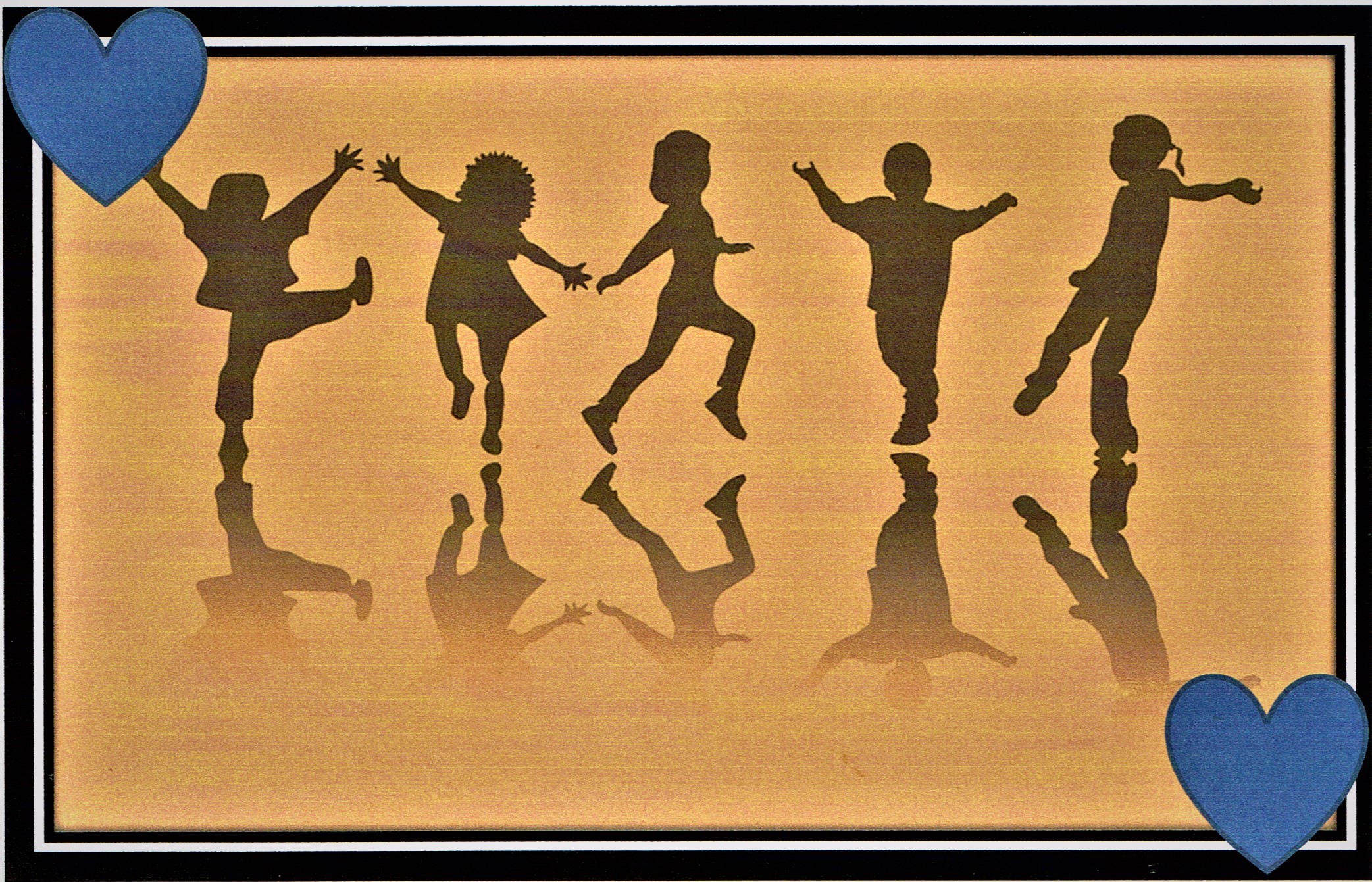
Two little girls dance
on an empty open stage.
They twirl exploring dizziness
and laugh as song rhythms repeat.

A man comes and pulls
the older child away while
the smaller one continues
to explore her own feet,

to pat her toes in syncopated
rhythms on the wooden floor
as if she notices her shoes 
and their sounds for the first time.

My brow lowers as the
scene continues and I wonder
if I am making judgments based
on fact. To bless all possibilities

I slip by the father and his two
small girls. “You have beautiful
children,” I say, then grin at the
older child. My words are for her.

illustration made from public domain image


Read Full Post »

black squirrel (2)

"Rarely does one see a squirrel tremble." 
Zadie Smith.

The air in Canada carries peace—until a black 
squirrel attack begins.
“Watch out!” a fellow traveler calls as an 
acorn whizzes past me from the roof 
of the motel.

Squashed acorns appear all over 
the parking lot.

The squirrel appears and searches through 
the pieces. Humans aren’t a target now. 
It’s buffet time. 


All I know for certain is that I am not 
invited. The woman who saw the critter's
prank,smiles. 


She and I talk. We feast on the moment,
the serendipity of meeting others. 
illustration made from cut paper and colored pencil


Read Full Post »

sun

“It`s not how old you are, it`s how you are old.” Jules Renard 

This week I will tell another short story. The world is full of ugly. It needs to be faced. However, sometimes we need a moment with a happy ending. 

Callie, Meet Callie

The young man in the driver’s seat glances toward me after he makes a left turn into city traffic. He tells me everything is going to be okay. My shoulder will get repaired, and I will be pitching a baseball game. The first octogenarian in the major leagues. He says it too many times. I can’t tell whether he is trying to be funny or not.  

I look out the window and watch the traffic. I wonder if I ever drove a car or lived in a brick house with a flower garden in the yard. Right now, all I remember is a sour, skinny someone coming into this small room where I stay in this big building.

“The medicine I am giving you doesn’t taste bad at all,” she told me. She should have added, compared to swallowing liquid bleach. I don’t know if she was trying to fool me or just get an addled old lady to toe the line. After all, the place I could call home if I wanted to, is unpleasant to every sense: hearing, smell, taste, touch, sight. Old folk, some much frailer than I am, fill small rooms like the one I occupy. Roommates come. And go.

 The deep ache in my shoulder doesn’t go away. No matter how many times my young escort says it will. Of course, he doesn’t say how and when that is going to happen. And he isn’t talking to me right now. He tells the traffic light something about cracked bones. “Not for one second do I believe she fell.”

He finally turns to me. “It was Sadie, that new aide, wasn’t it? She pulled your arm. She throws temper tantrums toddler-style and gets by with it. That girl should be fired!”

I don’t answer. He must have been telling traffic signals and passing trucks about how my shoulder got hurt, but he doesn’t continue his rant or give details. Chances are no one would have believed me if I said anything, even if this pulled-arm story is true. I have a difficult time keeping names in my memory—or remembering much of anything for that matter. My thoughts feel like scattered puzzle pieces outside a crushed cardboard box—with no way of getting the pieces back where they belong.

Right now, the puzzle piece I see has a picture of a frowning aide on it. No name that fits and stays in place. I remember the pain.

Then the young man turns to me with a softer, less irritated voice. “Grandma Callie, you know I’m Kevin, don’t you?”

“I know you come to see me. And you make me smile.” I want to lie, to say of course I remember everything about you. But he could start asking questions I can’t answer.

Kevin is the only face I recognize as someone who bothers to visit me—on purpose. That much I know, even if I can’t hold onto his name for long. Besides, this peculiar sadness comes to me, and it doesn’t have words. Just a sense. Something happened that I’m not sure I want to recall anyway. Something sad and big. Not big like an empty room. Big like a hole in the ground with an ugliness at the bottom.

“Thank you.” I look at Kevin and want to say more but words don’t come. I have no idea where we are going until we reach a building even bigger than my so-called home. We are at a hospital.

He stays with me, fills out papers, pats my good arm, and tells me I will be as good as new until this lady in what looks like dull green pajamas is ready to take me to the operating room.

I watch the tiny holes in the ceiling as I ride down a long hallway. The holes are all the same size. All empty.

“You have naturally curly hair, don’t you?” the lady asks.

“Probably.”

“The pattern of ringlets is unusual. And you were a redhead. Your eyebrows. That’s how I guess. The color shines through the gray.”

Chances are, this lady is making conversation, trying to keep me from being nervous, and yet she has triggered a memory. I see my hair at the age of 25, as golden as the sun at midday. Then I see a man, his arm around me, but the image is interrupted because we have reached the operating room.

“Hi, I’m the anesthesiologist,” a woman completely covered with green pajama material says. “It’s my job to make sure you sleep well while the doctor works.”

“We definitely want you to be having pleasant dreams,” a man who is likely the doctor says.

I close my eyes and float. I’m asleep. Even so, before long I hear a voice holler, “No pulse!”

Then the faraway words. “Cardiac failure…no code.”

But my dream is too good. A man has his arm around me. I know who he is. My husband. Andrew. Tall. Dark as the bark of an ash tree. He draws me to him. I hear a baby cry, turn, and pick him up from his crib. Our son, Michael. Yes…yes. Kevin’s father has become an infant again.

 Another dream slips in. Earlier. Less pleasant. My parents.  “Marry him and you will never see us again.”

Locks changed on their door. The inside space remained sealed against us.

Andrew died from cancer. Then our son, Michael, died because of complications from a bout of pneumonia. He was buried next to his father, an ancient stone with a fresh death underneath.

“We are sorry about your loss,” my mother said. No comforting arms were offered. Not even a greeting card.

I feel myself slowly waking in what is probably the recovery room. But the anesthesiologist and the doctor told me to have pleasant dreams. Only the reappearance of my sweet Andrew had been pleasant.

Finally, I feel a gentle hand rouse me. “Wow! You must have been having a wild dream.  You were kicking the sheets.”

I look up to see a nurse wearing the brightest white scrubs I have ever seen.

“Not only that…” I decide not to mention what I heard in the OR as I slept. It was just too strange.

 “Well, there’s a party waiting for you.”

 “A party? How did Kevin arrange that in such a short period of time?”

 “Oh, you don’t know yet. Don’t worry. Kevin will grieve. Long and hard. He’s a good man. But those of us on this side of the clouds will lead him to the insurance policy Andrew left for him. It’s big enough for him to finish that engineering degree he’s always wanted. And there’s this girl. I think they are getting serious…”

 “Huh?” I check out at my shoulders. Both of them. No sign of a scar. No pain. “So, I really didn’t make it through surgery.”

“I guess that depends upon how you want to define didn’t make it. Could you tell me a story about your life if you wanted?”

“I could take all day and tell one tale after the other. I remember when Michael, Andrew, and I were looking through a family photo album, and he asked why we only had pictures of our darker-skinned family. I groaned, but Andrew’s smile never stopped.

Instead, he scooped Michael into his arms. I’m sad they missed the roasted marshmallows at the picnic and Great Uncle Lou’s band concert, too. But it’s a small complaint, like complaining you can’t own the sky when the blue over your head is so beautiful you can’t take in anything more wonderful, so it doesn’t matter.”

I look at the bright nurse as every memory fits back into place: the ugly ones that had seemed so close when ugly had described the pattern of my memory-vacant life. I see the ordinary as well as the extraordinary times. The broken puzzle box is reassembled. The picture pieces fit—none missing.

“Then you made it, Callie. True, time doesn’t matter anymore. Today. Tomorrow. Next week. They don’t exist here. But, come on now anyway. You have a whole group of family and friends waiting for you.”

Read Full Post »

ring

All my life I have maintained that the people of the world can learn to live in peace together if they are not brought up with prejudice. (Josephine Baker) 

My blogs have always included either facts or poetry with one exception. Once I wrote a flash fiction piece, The Inside of a Ping Pong Ball, published in 1995. While looking for another document, I discovered a short story I had published in Dream Weaver, a local magazine that unfortunately is no longer operating. This fictional piece is longer than my usual entries. However, I think it fits as well today as it did in any century.

BETWEEN CHESTER AND ME

     Mom and her friends said Chester’s dad was nuts for sending him to an expensive private school after he failed third grade in public school. Again. Especially since the money he spent on out-of-parish tuition could have replaced that worthless pickup truck he drove. But I pretended I didn’t hear. Mom didn’t care what I thought anyway. She said that I may be eight years old, but I could give out eighty years’ worth of opinions. Seems to me I wasn’t allowed to have one different notion about anything, much less too many.

     “We get nasty notes about how much money we owe,” Chester told me, his mouth so full of crooked teeth, even I stared, and I was his best friend. “But Dad always pays. Late maybe. Just has to borrow a little once in a while.”

     “So, doesn’t change a single game we play,” I said. “Uhm. You can’t come over today. I’ve got a doctor’s appointment, just for a check-up. See you at school tomorrow.”    

     I ran off before Chester saw the lie in me. I wish he wouldn’t tell me about his money problems. His dad’s dark shaggy beard and one pair of paint-spattered jeans told me he didn’t have much. Unless he owned more than the one pair of pants I saw, with a star-shaped tear in the knee and copper flecks of something on the seat. Chester wore old clothes like the ones we gave to the Salvation Army, things that were too shabby to wear, but too good for rags. Mom said I should never say anything mean to him. But I shouldn’t bring him home either.

     “Stacey, Chester’s not all there. Do you know what I mean?” she said.

     “Not all where?” I lifted the lid to the sugar jar and tapped the sides a few times. I thought about sucking on one of the crystal chunks that fell into the center, but I didn’t really want it. Besides, it would fall apart as soon as I picked it up. Just like most of my arguments with my mother.

     “Don’t pretend ignorance,” Mom said. “You never know what someone like that is going to do. Besides, it wouldn’t hurt for you to play with another girl now and then.”

     I knew better than to argue anymore. I always ended up with extra chores if I did. But Mom didn’t understand. The other girls wanted to be fashion designers or actresses. Or they played with dolls in boring lace dresses and talked for them in voices that sounded like they’d been sucking-in helium balloons. I never understood how someone could prefer fancy pretend to football. Of course, some of the boys would think since they were boys, they had to be boss. I hated that. Chester never played by those rules.

     Once I broke a string on a brand-new gold yo-yo. I tried to tie the broken part back on, but I knew that wouldn’t work. I was just being stubborn and trying to prove a point about how I lost good birthday money on a piece of junk. So, I got mad and hurled the worthless thing at a fat, old tree. Chester grabbed the two broken halves and covered his ears with them.

     “Hey, Stacey? Look, my head’s winding the string.” He squatted down and stood up again until he got dizzy. Then he stuck his tongue out at me and I laughed so hard I forgot to be in a bad mood.

     In class, Chester would suck in air through his teeth and fold his arithmetic papers like an accordion. Sometimes his answers were so wrong the other kids laughed their heads off. Then it would take Mrs. Craftwood at least five minutes to quiet everybody down. But I wouldn’t laugh, even if Chester said something really funny, like the time he asked if the earth was hollow like the globe in the science room.

     “Yeah, hollow like his head,” Jerry Freeman whispered. Then he stared at me. “Are you going to marry Hollow Head?” Every freckle on Jerry’s face flashed malice.

     I tripped him when he went to sharpen his pencil. He bruised his elbow when he fell into another kid’s desk. I claimed it was an accident, but I know I didn’t look the least bit sorry. Mrs. Craftwood sent me to spend the afternoon in the principal’s office, and I had to sweep floors after school, but it was worth it.

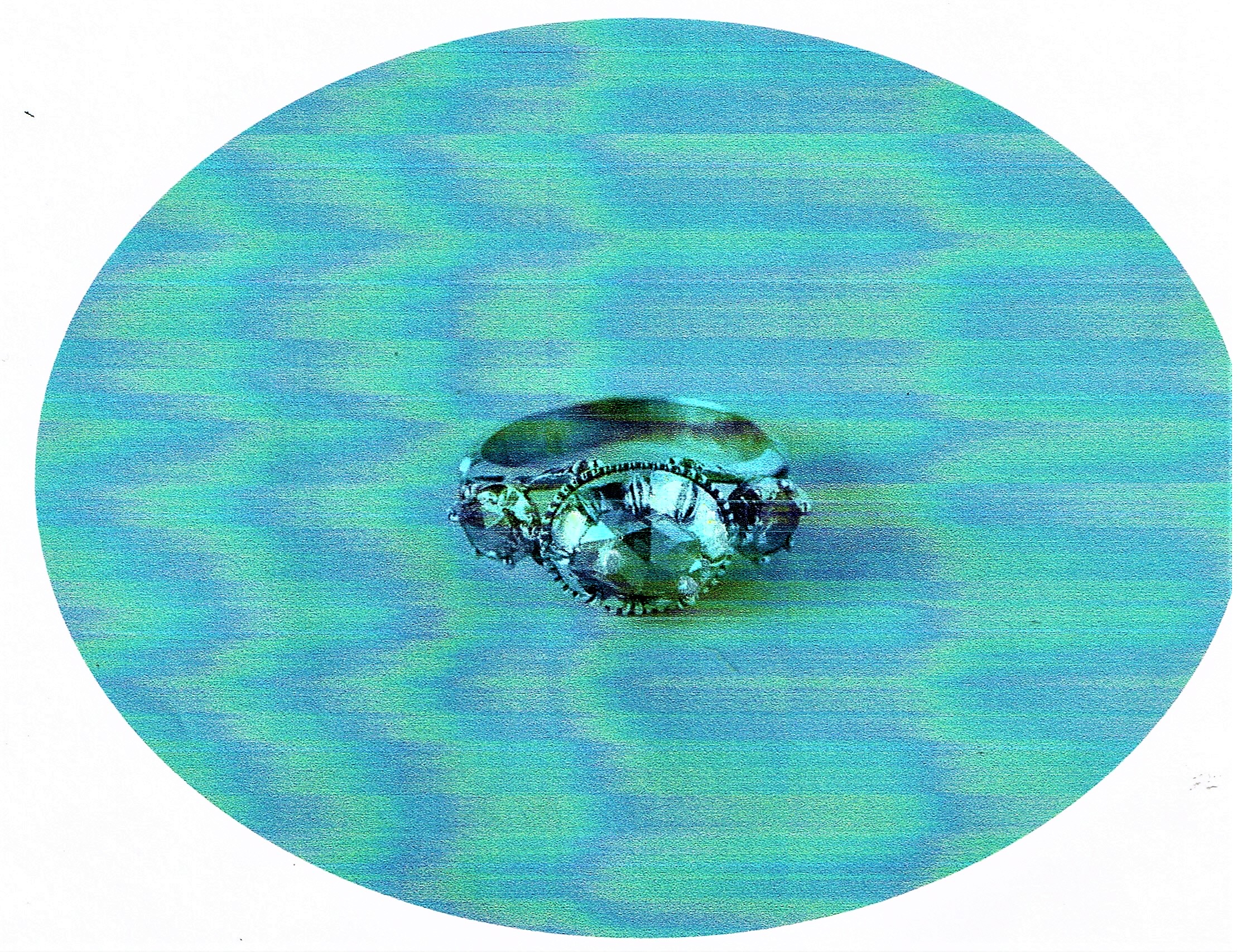
     Chester kept a tiny, gray velvet box hidden in his pocket. A ring with a big white diamond lay in a soft spongy space inside. He said it belonged to his mom. She died and went to heaven not long after he was born.

     “You can’t touch it, Stacey,” he said. “Only I can do that ‘cause it belonged to my mom. I like to hold it and pretend she’s right next to me. Dad said she had hair dark as molasses and a voice that made the angels cry.”

     He rolled the ring in his palm, then held the jewel to the sun, as if he could see more than a few sparkly places. Then he carefully put the ring back inside, and we ran to find swings next to one another on the playground. If there weren’t any, we climbed the monkey bars and he never seemed to care that I always beat him to the top.

     One day in the lunchroom, Mrs. Craftwood saw Chester take the ring out of his pocket. She dragged him to the principal’s office. I threw away the other half of my bologna sandwich and followed them. They didn’t close the door. I saw everything.

     “This ring had to be stolen,” Mrs. Craftwood told Mrs. Austin, “Because this boy’s father is entirely incapable of affording something like this.”

     Mrs. Austin glared at Chester. “Stealing is a sin, son. You should know that.”

     After school when Chester’s dad got to the principal’s office I sat outside the office and listened again. I knew that he had a job in a big, important office a long time ago, but the company closed one day, and he never found another job like it. Then after his wife died, he moved into an old four-room house on the edge of town and did odd jobs now and then. Folks said he didn’t seem to care anymore. But when he charged into Mrs. Austin’s office, it was clear he cared about something.

     He didn’t say anything while she and Mrs. Craftwood accused Chester of stealing. Then he asked if either one of them took a close look at the ring.

     “Why should that be necessary?” Mrs. Austin asked.

     “Because it doesn’t take much light to see the truth in that diamond.  Let me guess.  Came in a gray box. Smells a little like grass stains and peanut butter.”

     “What are you talking about, sir?” Mrs. Austin said.

     I had to cover my ears because Chester’s dad got so loud. And this time the door was shut. He’d slammed it when he went inside. Hard.

     “Would a real diamond look as scratched up as the side of a matchbox?”

     “Please lower your voice,” Mrs. Craftwood said.

     “Not until you return his mother’s ring.”

     I wanted to lean into the door and catch everything that went on, but then Chester’s dad started talking about how his wife deserved better, and so does Chester. Wasn’t so exciting anymore. Something I couldn’t explain made me feel strange, almost like I walked into the boys’ dressing room by mistake. So, I sat on the bench outside the door and waited for what seemed like a long time.

      “Thank you,” Chester said as his dad opened the door. Simple, like nothing was ever taken from him in the first place. He didn’t even see me right away because he was too busy slipping the ring on and off of his finger.

     But his dad’s face looked so red it must have hurt. I could have sworn it burned right through his whiskers. He stopped when he saw me. “Stacey, you’re a good kid. Chester’s crazy about you. Don’t ever get too big for yourself.”

     “I won’t,” I said. But I thought that was a strange thing to say.

     Chester never did come back. He went away to a special-needs school on the other side of town. Mom said it was time for me to start playing with normal children.

     “What’s normal?” I asked, and Mom accused me of being smart aleck.

     But this time I wasn’t.

     After that, I decided it was best to be vague about what I was doing. Sometimes I went to Chester’s house, and we explored the woods behind it. We hoisted ourselves into the trees with lower branches and hunted for birds’ nests and woodpecker holes. He carved our names into a young beech tree.

     “Someday when we’re old enough, let’s get married,” he said. “We’ll come back here, and I’ll draw the heart and put the date on it.”

     “Maybe,” I said. “But let’s look for salamanders down by the creek now.”

     “Okay. But why can’t we ever go to your house to play?”

     “Mom said I had to play outside. She’s cleaning.”

     “You said she was sick last time,” he said.

     “That’s because all she does is clean. And that much cleaning would make anyone sick.”

     I stopped going to his house as much because I got tired of lying. To Mom. To Chester. Then one day I told Mom I was going for a long bike ride all by myself. I went to Chester’s house, but no one was there. When I peeked into his house it was empty, blind-dark. On the way home I felt mean like somehow, I made Chester move away. I stopped at our beech tree in the woods, took a sharp rock, and etched a shallow, lopsided heart around our names. It didn’t look very good. I’m not sure why I did it. Playing house never appealed to me. And Chester and I were never boyfriend and girlfriend.

     But when I went to my cousin Janet’s wedding that summer, I thought about what it would be like to be a grown-up getting married. Maybe just for that day, I would be willing to wear a lace dress, one made by a silly third-grade girl who grew up to be a fashion designer. Of course, I didn’t want to marry just anybody. The groom needed to be special, someone like Chester, who could give me a fake diamond, yet be real inside.


Read Full Post »
“Wrinkles should merely indicate where smiles have been.” – Mark Twain

No Clapping Zone

Dupuytren’s Contracture in my left hand
joins with an arthritic thumb to create
its own clumsy five-digit island.

On my right hand, a long-ago 
partially healed broken middle finger
refuses to bend. And avoids vulgar messages.

None of the ten appendages chooses 
to juggle anything more challenging
than a dose of Tylenol.

On one point both hands agree.
No clapping possible.
We look like drunk spiders.

And yet, both left and right concur
in more important matters.
In everyday places.

Let’s cook a meal. Ignore the spills.
Or type this poem, or send a message
to someone who needs support.

Let the larger audience carry
the greater approval for performances.
These hands will offer gifts. Just give them time.


Read Full Post »

Let’s stop believing that our differences make us superior or inferior to one another. (Don Miguel Ruiz)

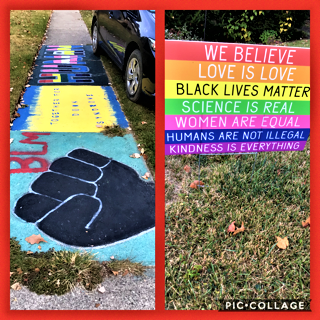
Juneteenth. I was in my seventies when I heard about the event. And the real-person images of human beings sold like cattle, fill my mind.

Have you seen my husband, brother, and child? an old letter reads. The question remains from the day when slavery ended. Legally. An end to the practice came later in name only. Loss remains. Law could not outlaw bigotry and hate. 

I think about how blessed I am to live in a multi-cultured neighborhood where I see color. The way I see the beauty inside a rose garden or a watercolor pallet.

Centuries-old black and white pictures appeared before the day approached. Without moving text. History. In words. Inside the eyes of a captured individual is a fear that must stay hidden. A numbness that was mistaken for ignorance. Stay inside the master’s rules, young man. Consequences can be fatal.

Now. Freedom has come. Listen. Juneteenth. I hope for a time when equality will move with the in-and-out breath of all living creatures. Taken for granted.

Read Full Post »


Peace comes from being able to contribute the best that we have, and all that we are, toward creating a world that supports everyone. But it is also securing the space for others to contribute the best that they have and all that they are. (Hafsat Abiola)

Peace Recipe
Set spirit temperature at warm.

Forgive. Inside and outside
the home receptacle. Sprinkle awareness.
Listen for minor changes and slow cook.

Watch the product, not the clock.
Peace can be both served and recreated
as ingredients intermix. 

Add truth and blend it with patience,
an uneven, unpredictable process.

The mixture is as necessary 
for an effective final product
as oxygen for breathing.
Water for life.

Allow contents to simmer, open-lidded. 
Take care. Hate enters and boils 
when placed in a closed pot on high flames. 

When the recipe is
denied by someone or something, 
begin again. Vent excess heat
in a safe environment.

Practice the recipe and serve daily 
without expecting instant satisfaction.

Peace development can take many forms.
It can be the yeast in bread dough
in another family’s house. 

Let it rise where it can.
And know you are part of the core
of world change. 
 

published in For A Better World 2022

Read Full Post »

« Newer Posts - Older Posts »