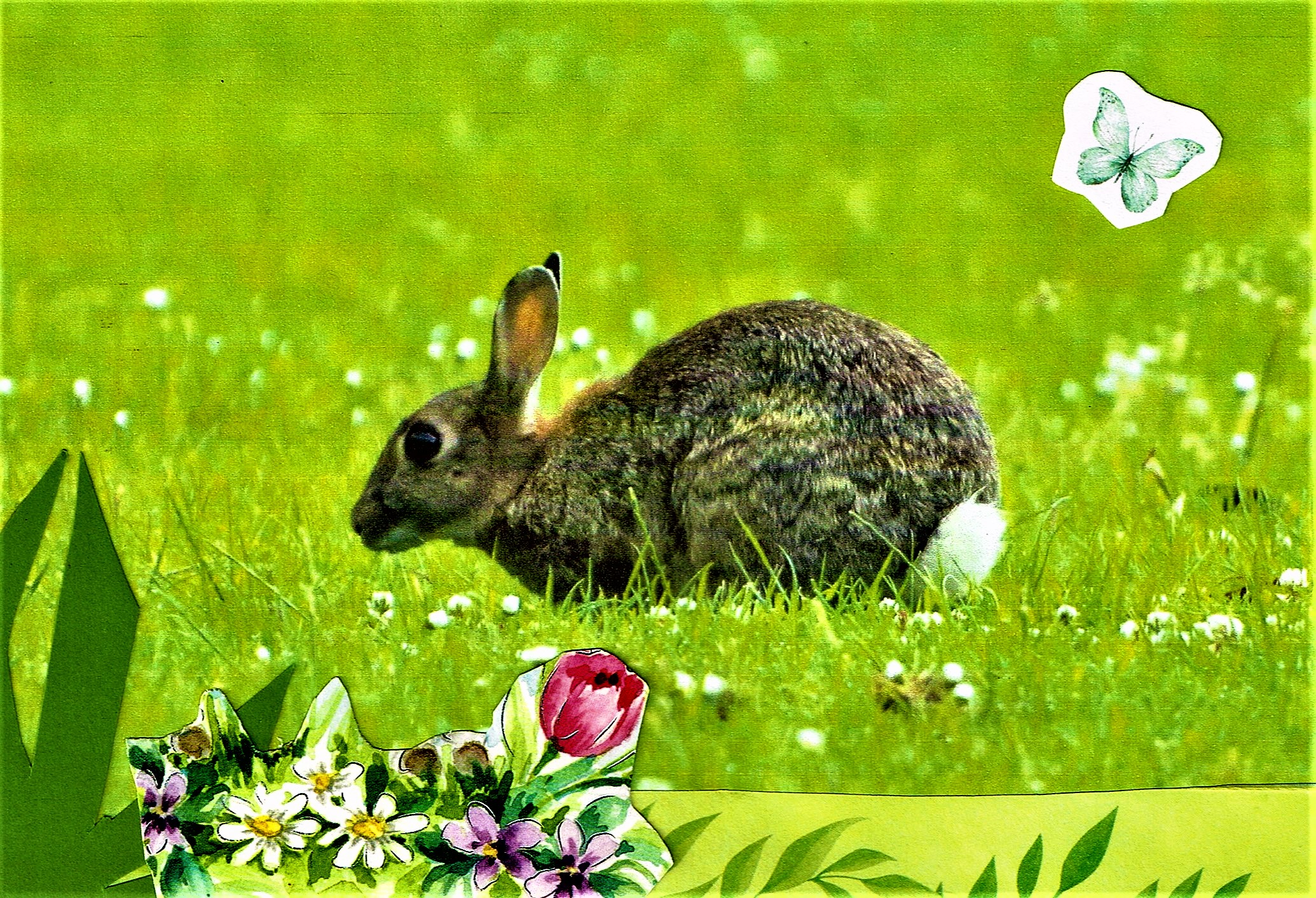
“He who does not understand your silence will probably not understand your words.” Elbert Hubbard
AMONG THE RABBITS
Carson had a knack for quiet. He sat as still as the broken clock that stood on a pole outside his school building, obvious yet ignored. He would talk in class, when necessary, about how numbers fit together or an e at the end of a word changed its sound. That one muted vowel grabbed the end of a word and changed its meaning. He understood.
Silence didn’t necessarily mean safety.
Carson had hair bright as a ripe tangerine, tiny freckles across the bridge of a small nose, the kind of face adults called endearing. Yet, he had learned trust and grownups didn’t necessarily mix. No matter how nice they appeared. It isn’t a good idea to touch a colorful frog; it’s poisonous. Inside and out.
His third-grade teacher smiled and called him an ideal student. She never threw him against a wall for reasons more silent than the e, the way his foster mother did. Carson, however, couldn’t take any chances. He measured syllables as if they had the power of a summer storm that could stop a clock.
Reading helped as a temporary escape, especially library books about animals. Dolphins swam in oceans as blue as ink. Beavers built dams and he imagined joining them. He traveled across Australia with joeys and flew with eagles over canyons. He loved wild, free rabbits. He watched for them as he rode the bus in the morning, in the center of a lawn one moment, out of sight the next.
Carson had no place to go. As soon as he got home at three o’clock, his foster mother locked him in the tiny storage room. He never knew when she would return. Their apartment had designer couches and expensive antique vases; they could have been gold-plated garbage cans. Carson never experienced the gold.
Summer vacation began in one week, and his stomach hurt whenever he thought about it. He would spend long stifling hours alone. Or, when his stepmother stayed home, he would iron, scrub floors, and scour the toilet with undiluted bleach, his usual chores.
He remembered his real mother who had been taken from him when he turned five. The grownups were all wrong; she wasn’t crazy, only sad. Besides, they talked about her as if she had done something wrong. She just cried a lot, saying horrible people surrounded the house. They listened to her conversations. She warned him that their cat had swallowed a microphone; he needed to be careful about petting her.
The last he had heard, his dad lived someplace on the west coast, or was it Florida?
His foster mother, however, seemed to enjoy meanness. “If you tell anyone about the bruises on your back, you’ll get worse. I swear.” Carson didn’t doubt it for a second. She wore each threat like a funnel cloud, no warning siren necessary. He could feel it in the atmosphere.
At school, Carson had one friend, Robin. She talked enough for the two of them. “Beat you to the cafeteria line,” she always said, but never did. One of her legs hadn’t grown as long as the other.
None of the other kids bothered with her, except to call her Wobbles. Her teeth lined up as crooked as a rock fence and her eyes looked no bigger than uneven pebbles. She told Carson the kids who made fun of her needed to grow up. Although he noticed Robin was the shortest kid in the class.
Sometimes she shared homemade quickbreads from her lunch: a muffin, biscuit, or cornbread.
“Mom and I had a flour fight last night,” she told him as she cut an oversized banana muffin with a plastic knife.
“What’s a flour fight?” Carson devoured his half of the muffin and then folded the paper as if it were going into a shirt drawer instead of the trash.
“You know, where you take flour and throw it at one another when you make cakes or bread.”
“Doesn’t that make a mess?”
“Sure, then we clean up, and laugh about it.”
“Oh. Okay.” It didn’t make sense at all, although he remembered when he lived in a house that wasn’t neat, especially toward the end. No flour anywhere. The garbage overflowed and the house smelled like a cat box. All the blinds stayed shut night and day with the lights turned out.
“What would you like Mom to bake next?” Robin gathered their paper trash into a crumpled ball.
“Whatever she wants.”
“But what is your favorite?”
“Biscuits. Big ones.”
“You got it. Maybe your mom should make some biscuits for you. That same old skinny bologna on white has got to be boring after a while.”
Carson stared at the lunchroom table until the time came to go out to the playground. Remembering his mother made his head hurt.
“Let’s hurry to the playground before the other kids get to the swings. Beat you there.” Robin grinned.
Carson didn’t try to run. He wanted his friend to win for a change.
“Doing anything this summer?” Robin stretched her belly over the lowest swing on the school grounds, arms and legs dangling.
He had heard one of the teachers tell another they might take the swings out during the summer and replace them with safer equipment. Carson hoped that didn’t happen. He liked joining the sky and feeling power. Besides, swings made him forget about danger. He never saw anyone get hurt. What made the playground unsafe now? Why hadn’t the change been made last year, or the year before if they were so awful?
“No, I’m not doing anything. Nothing special anyway.” He stared into the sky as he pumped his legs and kicked the air until the chain jerked
“Not even read?”
“Well, sure. About animals.”
“Yeah? I live where rabbits come out of the woods because we feed them. Lettuce. Tomatoes. Every morning, early.”
“No cages?”
“Uh uh. Why don’t you come to my house and see them?
“Not allowed.”
She dragged her shoes through the dust. “Oh.”
Carson’s throat tightened. He wouldn’t dare get his feet that dirty.
“Follow me. Over there.” She pointed to a wide tree at the left of the playground.
She spit on her hand. “You do it, too. Then we shake hands, share secrets, and become best friends forever. We die if we tell.”
“That’s silly.”
“Carson, don’t you trust me?”
He looked at her, grimaced, spit on his hand, and then slapped it onto hers.
“I have a toad-shaped birthmark on my back. When I wiggle, it hops.”
He shrugged, pretending to smile. “My best friend next to you is a pee jar.”
He expected her to laugh, but she didn’t. Instead, she frowned, and opened her mouth to say something, but didn’t. Instead, she ran, awkwardly, toward the slide. He climbed the ladder behind her. The metal surface gave a scalding warning. He should not have hinted at anything about his home life.
The next day Robin asked about a burn on his hand.
“An accident. Sort of.”
“From what?”
“Ironing my foster mother’s stuff.”
“You iron? Wow.”
Carson re-tied a shoelace that didn’t need it.
“I’ll go to your house. How about tomorrow?”
“Bad idea.”
“Why?”
He paused and then shrugged.
Grinning, she tugged at the back of his collar, gasped, and suddenly let go. Her smile evaporated. “I didn’t. I didn’t.”
“What?”
“Sorry, I didn’t mean to pull on your shirt so hard.”
“It’s okay.”
But chirping Robin turned into a mother hen. If Carson dropped a pencil she dived for it, as if it were breakable glass. He felt her eyes on him almost all the time. She never explained why.
On the last day of class, she almost turned back into herself. “I brought two muffins today instead of one.” However, she peeled off the wrapper of both pieces of bread as if he were a toddler.
“Okay,” Carson said. “What’s up?”
“Nothing. Mom just made extra.”
“I iron. Remember? I can handle paper.”
“Oh. Sorry. Just being polite.”
After Carson arrived home he made a peanut butter sandwich, washed the knife, poured a cup of water, got his own pee jar, and smoothed a blanket under the single light bulb in his tiny hideaway. Three books lay unopened on the floor. He had already read them. No more library books during the summer. His foster mother would never let him go. All his new reading came from the school library. He only had a few books now.
He thought about the rabbits at Robin’s house as they ran through the yard, free, fed, happy. He bowed his head when he heard the storage room door lock from the other side, then the front door slam. He waited until his foster mother had been gone at least five minutes before he cried.
Scarcely an hour passed when he heard the door reopen. She couldn’t be home already. Then he heard the landlord’s voice. “Really, officer, if there’s been any trouble, I knew nothing about it. Honest.”
“Carson, where are you?” Robin shouted. “Mom’s made a snack for you.”
Then a woman with a musical drawl called, “This is Robin’s mom. It’s going to be okay, honey.”
Carson felt his heart fight to get out of his chest.
“Got some homemade biscuits with butter if you’re hungry.”
“In here.” His answer came as a dry squeak. The lock slid open.
Outside the door stood the tallest, darkest policeman Carson had ever seen, a plump woman the color of spicy pumpkin pie, and Robin.
“We are here to help you, son.” The policeman extended his hand.
Carson held his breath.
“I’m sorry. I had to tell Mom and Dad. Especially since he’s a policeman. He promised me it would be okay. Dad doesn’t lie.” Robin bit at her thumbnail.
“Huh?”
“Oh, guess you didn’t know. I’m foster, too. When I saw the cuts and bruises on the back of your neck, they made me remember.”
Carson heard footsteps in the hall outside the front door. He was surprised he didn’t pass out when the apartment door opened, and the footsteps got louder.
A woman he didn’t know appeared. “Sorry that I’m late. Construction detour. Traffic backed up for miles.”
“Oh, that’s the social worker. Don’t worry,” Robin said. “You’ll like her. She’s a good person, not just nice.”
“Where am I going?” Carson whispered.
Robin smiled. “If everything works out okay, with me to watch the rabbits.”
First appeared in Piker Press in August of 2014
Read Full Post »



 terrypetersen